Archive for the 'Front Line' Category

New EU Toolkit on Women Human Rights Defenders

July 8, 2020

On 7 July 2020 Front Line Defenders made public the toolkit on woman HRDs, a companion to the EU Guidelines of Human Rights Defenders (2004) which provide practical actions for EU staff in Brussels and in human rights defenders’ (HRDs) home countries to support and protect HRDs.

While useful, the Guidelines do not contain recommendations or actions that consider the varied experiences of women human rights defenders (WHRDs) with regard to gender, sexuality, race, class, family life, etc. This EU Toolkit on WHRDs provides practical steps for the EU to better meet the needs of WHRDs, from a gendered, intersectional perspective.

You can Download the EU Toolkit on WHRDs here.

As outlined in the UN Resolution on Women Human Rights Defenders, WHRDs experience violence in differentiated ways because of the work they do and who they are, as women. The UN Special Rapporteur on HRDs reports that “women defenders often face additional and different risks and obstacles that are gendered, intersectional and shaped by entrenched gender stereotypes and deeply held ideas and norms about who women are and how women should be.” In addition, there are many economic, social, cultural and geographical factors that affect how WHRDs experience violations. These factors include class, religion, age, language, sexual orientation, location, race and ethnicity. The UN calls all actors to develop specific gendered protection measures, and the inclusion of WHRDs in their design and implementation. The need for the toolkit has arisen because many protection measures are difficult to access for WHRDs as they face not only societal barriers to their work, but also in accessing the international community. The toolkit will help bridge that divide.

Following consultations with international WHRD networks, the EU Office of Front Line Defenders drafted a Toolkit for diplomats on how to address the specific protection needs of women human rights defenders at risk. It was presented to the EU Council Working Group on Human Rights, bringing together the EU institutions and diplomats from the 28 Member States, in Helsinki in October 2019, and shared again on occasion of the preparation of the Guidance Note for Delegations and Embassies by the EU Council Working Group on Human Rights. There are plans to have it tested in collaboration with WHRDs and diplomats in one or two countries per continent; the goal is to have this Toolkit adopted as an annex to the EU Guidelines on HRDs.

https://www.frontlinedefenders.org/en/resource-publication/eu-toolkit-whrds

Appeal to support human rights defender Waldo Albarracín in Bolivia

July 8, 2020

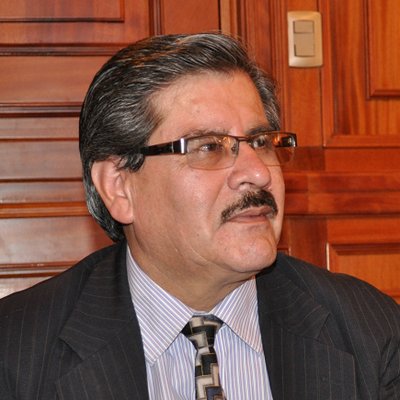
Human rights defender Waldo Albarracín continues to be the subject of death threats and may be the target of surveillance, as a result of his work in Bolivia. Since October 2019, the defender has been targeted on a regular basis with threatening messages via his Facebook account by known and unknown individuals. The messages include threats to incriminate him and to set his house on fire.

Waldo Albarracin

About Waldo Albarracín: Waldo Albarracín is a well established and widely recognised human rights defender in Bolivia. He was the President of the Permanent Assembly of Human Rights of Bolivia (APDHB) from 1992 to 2003 and the Bolivian Ombudsman from 2004 to 2010. He is the current Rector of Universidad Mayor de San Andrés in La Paz and President of the National Committee for the Defence of Democracy (CONADE), a civil platform defending political rights.

1 July 2020 Front Line Defenders called for urgent action. Those of you who want to take action in this and other cases of threatened HRDs, should subsctibe to Front Line’s almost daily information.

Download the Urgent Appeal

In May 2020, Waldo Albarracín was mentioned as a target in a threatening video posted and circulated on social media by the illegal armed group Resistencia Juvenil Cochala. At 1:10 in the video, one man of a group of six men, hooded and armed, stated: “Resistencia Juvenil Cochala will fight on behalf of the Bolivia against Waldo Albarracín and Bolivian political leaders.” The armed group currently exceeds 5,000 members online and describes itself as a citizen’s platform, formed to fight against tyranny and in promotion of democracy in Bolivia. According to the group, it has no one leader.

In June 2020, the Fake Antenna Detection Project, an initiative established by the South Lighthouse organisation, released its findings that Waldo Albarracín, along with a number of human rights organizations and academic entities, may have had their mobile phones intercepted. The study identified 24 suspicious antennas, capable of interfering with mobile phones, some of which were located by the Office of the Permanent Assembly of Human Rights in Bolivia and also by the University Mayor de San Andres, both places where Waldo Albarracín works from. It has been suggested by local media that the interceptions were orchestrated by the military and government authorities, however the authorities are yet to comment publicly on the existence of the antennas and how permanent they are. South Lighthouse researches and monitors surveillance activities and abusive technological practices threatening human rights, security, and privacy in Latin America and other parts of the world.

Front Line Defenders has previously expressed concern regarding the risks faced by Waldo Albarracín. Although the human rights defender has faced risks since 2004 as a result of his human rights work, there has been a worrying escalation since the protests in 2019 regarding the results of the presidential election. On 10 November 2019, the defender’s house was set on fire by a crowd of around 500 people, whilst his family were still inside.

..Front Line Defenders believes he is being targeted solely as a result of his peaceful and legitimate human rights activities.

https://www.frontlinedefenders.org/en/case/ongoing-death-threats-against-and-potential-surveillance-waldo-albarracin

Front Line Defenders publishes its Annual Report for 2019

April 22, 2020

Front Line Defenders just published ‘Dispatches 2019′  its annual magazine showcasing the work the organisation is doing to support human rights defenders. Together with Global Analysis 2019 (on which I reported already: https://humanrightsdefenders.blog/2020/01/14/front-line-defenders-global-analysis-2019-is-out-304-hrds-killed/), it offers a valuable reminder of the courage of human rights defenders in driving positive social change around the world and maintaining hope in the face of enormous adversity:

Over the last year, Front Line Defenders has continued to expand its support to human rights defenders most at risk. In 2019, FLD provided rapid and practical support to 2,307 human rights defenders and 366 organisations in 117 countries. Through the Protection Grants programme alone, FLD provided direct support through 626 grants totalling over euro 1.5 million to HRDs facing urgent threats, an increase of 17% compared to 2018.

As highlighted in its 2019-2022 Strategic Plan <https://www.frontlinedefenders.org/en/strategic-plan>, it is an organisational priority to support most-marginalised HRDs, including women human rights defenders, LGBTI rights defenders and defenders working on land, environment and indigenous peoples’ rights. Some examples of that commitment in 2019 include the provision of an unprecedented number of protection grants to environmental rights defenders (+51%), the presentation of the Front Line Defenders Annual Award to five LGBTI+ Rights Defenders, the beginning of a new learning and consultation process focused on defamation facing women human rights defenders at risk, and the publication (with Irish writing centre Fighting Words) of the anthology Yes, We Still Drink Coffee, Stories of Women Human Rights Defenders.

A highlight of 2019 was the biennial Dublin Platform <https://www.frontlinedefenders.org/en/2019-dublin-platform> , bringing together 114 HRDs at risk and over 100 other international stakeholders. We hope that the encouragement and support shared by so many brave HRDs from around the world during the Platform can help sustain and energize them for the challenging months ahead.….As the COVID-19 crisis further develops and impacts on human rights defenders (https://www.frontlinedefenders.org/en/statement-report/defending-rights-during-pandemic-impact-covid-19-safety-and-work-human-rights)  and those they work for, Front Line Defenders has been taking necessary measures to ensure that our support to HRDs at risk can be maintained. See also: https://humanrightsdefenders.blog/2020/04/10/policy-response-from-human-rights-ngos-to-covid-19-front-line-tips-for-human-rights-defenders-working-from-home/….And to continue providing a platform for HRD voices, even when convening is not possible, FLD has re-launched its podcast series “Rights on the Line” <https://open.spotify.com/show/2v4KDqlWf0I2uFNninRl6A>  – new episodes will be launched each week.

——-

https://www.frontlinedefenders.org/en/resource-publication/dispatches-2019

Policy response from Human Rights NGOs to COVID-19: Front Line (tips for human rights defenders working from home)

April 10, 2020

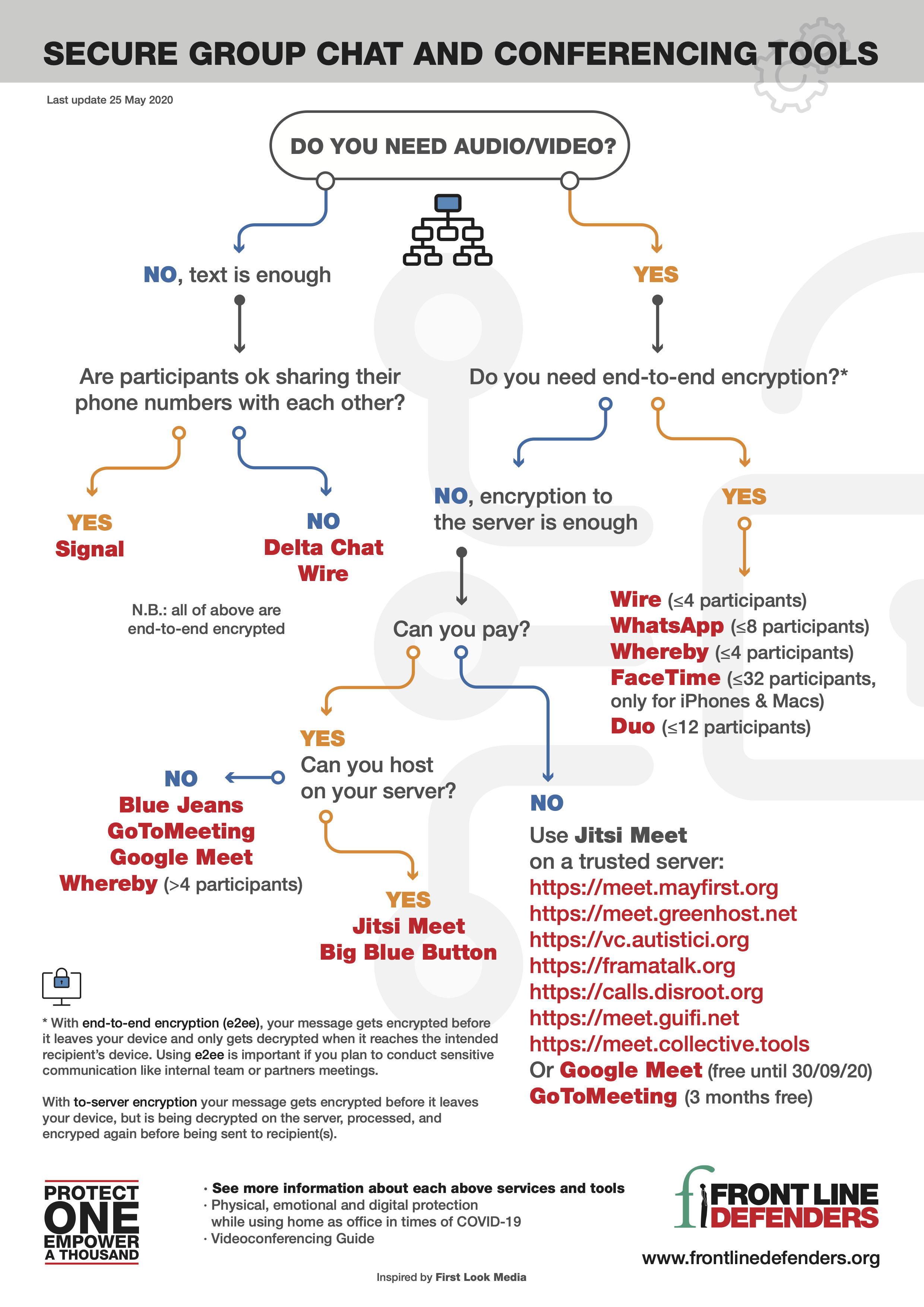
In the midst of the COVID-19 crisis, many human rights organisations have been formulating a policy response. While I cannot be complete or undertake comparisons, I will try and give some examples in the course of these weeks. Here one by Front Line Defenders on the “Physical, emotional and digital protection while using home as office in times of COVID-19

Ideas & tips for human rights defenders

….. Front Line Defenders has experience advising HRDs working remotely and part of its own team has been working remotely – and securely – for years. Below is some of our thinking and learning around the challenges of this modality of work. It is hard to put down one size fits all solutions, especially for physical and emotional protection. This is offered as inspiration to evaluate and improve protection of your particular situation. And if you are a HRD or HRO at risk in your country, you may always reach out to Front Line Defenders for help – the organisation is at work and fully operational during this time.

We encourage you to communicate clearly and promptly with your donors and partners regarding your particular situation. Donors in the human rights space are highly sensitive to the difficulties this crisis is posing to its partners and grantees, even as they face a variety of unprecedented challenges. We believe it makes situation much more manageable if they know what is possible and impossible at this moment for you and your organisation regarding your work or cooperation with them. They also may be able to help you with your specific needs right now, things like portable equipment to work from home or additional at-home security measures.

Physical protection

physical_protection.jpg

Consider which place or room is best to be working on sensitive issues. Is, for example, a basement a best option? How easy is it to get to your work space from entry doors to your apartment or house? Can people see your computer screen or desk/papers from the outside? Do you want/can you avoid house-mates see you working? Or overhear sensitive conversations on the phone or over the internet. You can try to talk quietly if neighbours can overhear conversations, use a headset, close windows when you talk, or use veiled/coded language.

Try not to leave your work around the house (leaving USBs & documents around). Stay organised and protect sensitive information. Think about getting locks on drawers, or lockable cabinets etc. Consider locating some good hiding places (or some kind of safety box) for your valuable information if you need to quickly hide them. Be creative eg. taking out a brick or tile in the floor or wall, in the rooftop, under a floorboard, taped inside a shower drain, etc. At the end of each day, put everything away in a safe space including documents, computers and phones. Keep a clean desk policy. Turn off computers, don’t just put them to sleep or leave them on. Have a system for destroying sensitive information and files. This could be shredding it, tearing into small pieces, burning it, etc.

Consider using a simple surveillance system of the space at times when you are not there. This could be simple traps to detect if someone has entered has the house or room, or opened a drawer. Alternatively, there are digital solutions such as mobile phone applications such as Haven app which you could use with an old Android phone to monitor your work space.

Make sure you have a good ergonomic set up of your work station so that you are sitting comfortably without straining your back, neck or other parts of your body – and take regular breaks.  Reduce tripping hazards. Have first aid kits and sufficient medications. Have enough water for 4 days, and some hibernation kits.

If you share accommodation with others (family, friends, room-mates), have a meeting to make sure everyone is aware of the security rules you want to apply ( i.e. don’t open the door without first checking who it is, don’t touch the laptop, etc.) It is good to have a security check-in meeting with them everyday to see how situation is changing and if they notice anything new or out of place.

Prepare emergency numbers and have them handy such as written/printed and stuck up on the wall, saved in your phone, and kept in your wallet. Consider having a household communication planin case you need support. This means calling one or two people, and then they themselves know who to call and what to do to give you support.

Have an evacuation plan prepared, with different exits and an outside meeting point. It is recommended that you practice it. Sometimes simply placing a ladder near a fence can make a big security improvement in your home. Some people also have a pre-packed bag that they keep next to the exits, that contains copies of sensitive documents, some cash, phone charger, torch/flashlight, medication and other items you would want to have with you.

If you consider the risks are increasing as an HRD and you might need to relocate, review your relocation plan. Are the travel arrangements and end destination still feasible? How can you adapt your plan to reduce your visibility and physical presence?

If you are considering having sensitive in-person meetings in your home, be aware of the restrictions in place and comply with health advisories. Prepare a cover story with your visitors, including who are they and why are they visiting you, in case your neighbours or somebody else asks. Also, it can be a good idea for visitors not to tell taxis (including ride-hailing apps) your exact address, but somewhere close like a well-known place of worship, park, shop, etc. If they come in their own vehicle, it is better that they not park out the front of your house – they can park further down the street so they are not immediately connected with you. Make sure you give very clear instructions so visitors do not have to ask anybody how to find you.

Always consider safety risks like fire in homes. You might be cooking more indoors, using more electricity outlets, smoking indoors, children might be more housebound, and your neighbours will also be home, increasing the risk of them starting a fire. Have a fire plan. Consider things like woollen blankets as fire blankets, smoke detectors if possible, manage your electricity usage and try to use surge protectors, reduce fuel load, etc.

Consider having a personal alarm with you in the home and when you leave to attract attention if you need, this could be something like a whistle.

Keep your doors locked, with the key in the lock on the inside of the door – unless someone on the outside can reach through to open it. In this case, keep the key in a set location, away from the door (and out of sight) ready in case it is needed in an emergency. Consider what is a pattern of criminal attacks in your area. Rates of home burglaries generally fall when more people are at home, but other crime (against offices or shops) may increase. Protect (or take with you) the valuable information from your office before leaving. Consider how your adversaries will try to benefit from you working from home and then mitigate that.

Avoid regular routines especially in leaving and travelling around. When leaving your home to go shopping, consider the risks of leaving your devices in the home vs taking the devices with you. If you leave home, switch off devices and hide them. When leaving, ensure that someone knows where you are going, how you will get there (the route), what time you are expected to return, how to contact you if there is any reason, etc. You may also use things like live location sharing, check-in procedures (“I’ve arrived”, “I’m leaving now”, “should be there in 20 minutes”, etc.)

Be discreet and avoid being targeted by police or security forces by violating any legal local rules.

It is easier said than done but try to plan for economic security or sustainability, this situation could go on for longer than currently envisaged. If possible discuss this with donors or supporters. Try to identify an emergency fund you can establish or have access to – perhaps in cooperation with others. Connect online with your local communities to see what are possible self-organizing strategies for mutual support.

Let Front Line know of your protection ideas or suggestions based on your experience that may benefit other HRDs or HROs at risk, it will develop this guide further.

See also: https://humanrightsdefenders.blog/2020/04/10/policy-response-from-human-rights-ngos-to-covid-19-civicus-protocol/

Front Line Defenders Global Analysis 2019 is out: 304 HRDs killed

January 14, 2020
The most dangerous and deadly sector of human rights defenders remains land, environmental and indigenous rights, according to the Global Analysis report 2019 by Front Line Defenders. 304 people across 31 countries were targeted and killed last year and the document starts by listing their names.

Front Line Defenders said this was due to “the profit driven exploitation of natural resources, combined with corruption, weak governments and poverty“. Speaking to RTÉ News, Executive Director of Front Line Defenders, Andrew Anderson, described the scale of the killings as “horrific” ..almost one person a day is being killed around the world because they are working “peacefully to defend land rights, environmental rights” and to “hold the powerful to account”.  “The true scale of the problem is probably much higher” he said.

In the cases for which the data is available, the report found:

  • 85% of those killed last year had previously been threatened either individually or as part of the community or group in which they worked
  • 13% of those reported killed were women
  • 40% of those killed worked on land, indigenous’ peoples and environmental issues

Last year saw mounting pressure on activists defending LGBTI rights, as well as women’s rights and migrants’ rights. Female activists faced online smear campaigns, trolling and defamation to intimidate, shame or harass in order to push women activists out of online spaces. The statistics show that 13% of human rights defenders killed in 2019 were women. The report also notes some positive developments, including the male guardianship system being revoked in Saudi Arabia, women from the Sulaliyat tribe in Morocco being able to inherit and own land, and Sudan removing a law where women could be arrested if found dancing, wearing trousers or mixing with men who were not their relatives.

With massive protests in Iran, Hong Kong and Chile, Front Line Defenders said that 2019 was characterised by waves of public uprisings of “remarkable magnitude”, which demanded change of how people are governed. However, it said there were restrictions on freedom of expression and authorities often invoked “security” as a justification to ban all peaceful demonstrations Physical assaults, defamation campaigns and digital attacks were major issues.

Internet shutdowns, restricting access or blocking communication tools, such as social media, were common. Messaging app WhatsApp, which is popular for organising and communications, became a “serious threat” when it was used against human rights defenders in a number of cases.

As the role of human rights defenders ranged from organising and mobilising to monitoring and documenting human rights violations, the human rights organisation said it provided more than 620 protection grants to activists at risk in 2019.

For last year’s report see: https://humanrightsdefenders.blog/2019/01/09/front-line-defenders-says-record-number-of-activists-killed-in-2018/

https://www.rte.ie/news/ireland/2020/0114/1107280-front-line-defenders/

https://www.theguardian.com/law/2020/jan/14/300-human-rights-activists-killed-2019-report

Egyptian human rights defender Gamal Eid assaulted

December 31, 2019
On 30 December 2019 Front Line Defenders and others reported that Egyptian human rights defender Gamal Eid was assaulted outside his home on Sunday, 29 December 2019 by up to a dozen men. They beat him and when neighbors tried to intervene, they were threatened at gunpoint. After, the men dumped paint on Gamal Eid and threatened him to stop his human rights work. The human rights defender recognized one of the men as a “state security officer” who was with the men “giving orders and saying this is that he should be ‘disciplined’.”

Gamal Eid is a renowned lawyer and advocate of freedom of expression in Egypt. He is the founder and director of the Arab Network of Human Rights Information (ANHRI), which was established in 2003 to promote freedom of expression, campaign against censorship in the Middle East and North Africa, and provide legal assistance to journalists and internet activists.

According to the ANHRI website, this is the fourth attack on Gamal Eid this year and comes amidst a wider crackdown on Egyptian civil society and human rights defenders. [see also: https://humanrightsdefenders.blog/2016/09/18/egypt-court-freezes-assets-of-rights-defenders-and-ngos/]

Following the attack, Gamal Eid released a statement: “I think they do not want to repeat the scandal of torturing Julio Regeni to death, so they resorted to attacking me one time after another, to punish me, silence me and stop me from doing human rights work and my frequent criticism of the gruesome human rights violations, but again, silence and collusion are not our choices.”

https://www.frontlinedefenders.org/en/case/gamal-eid-assaulted-outside-his-home

Egypt: Rights activist Gamal Eid brutally attacked by security forces

Algerian human rights defender Halim Feddal sent to preventive detention

November 26, 2019
Front Line Defenders reports that on 20 November 2019, the Public Prosecution in Chlef ordered the preventive detention of human rights defender Halim Feddal, after he was arbitrarily arrested on 17 November 2019. He had been taking part in a peaceful demonstration demanding the release of a number of Algerian political prisoners.

Halim Feddal is the founder and secretary general of the Algerian National Association Against Corruption (ANLC) which works on exposing and fighting corruption in Algeria. He is also a member of the Hirak Movement, which is a grassroots human rights movement that calls for the promotion of civil and political rights in Algeria. The human rights defender frequently participates in peaceful demonstrations in the city of Chlef.

On 17 November 2019, Halim Feddal was arrested by security forces in plain clothes from a peaceful demonstration that he was attending in front of the court in Chlef. The protesters were demonstrating against the politically motivated detention of some members of the Hirak movement. Halim Feddal was taken to a local police station where he spent three days under interrogation and was not allowed to contact his lawyer or his family. On 20 November 2019, the Public Prosecution charged him with “threatening the unity of the country” and “incitement of an illegal gathering”. The Public Prosecution ordered preventive detention for Halim Feddal without scheduling a date for his court hearing.

Human rights defenders in Algeria are continually harassed and arbitrarily detained by the authorities. Halim Feddal has frequently been called to the police station and interrogated about his human rights work. Front Line Defenders is deeply concerned about the detention and harassment of Halim Feddal, and finds the general crackdown on human rights defenders in Algeria increasingly worrying. Front Line Defenders believes that Halim Feddal is being detained solely as a result of his peaceful and legitimate human right work.

Download the Urgent Appeal

https://www.frontlinedefenders.org/en/case/halim-feddal-sent-preventive-detention

2019 Dublin Platform opens with 120 HRDs but five not able to attend

October 2, 2019

The 3-day 2019 Dublin Platform for Human Rights Defenders at Risk was opened on 2 October by Irish Foreign Minister, Simon Coveney, and UN High Commissioner for Human Rights, Michelle Bachelet. Over 120 human rights defenders (HRDs) from more than 80 countries are attending. Front Line Defenders Executive Director, Andrew Anderson, said that five human rights defenders were prevented from traveling to Dublin – Khadija Ismayilova (Azerbaijan), Oyub Titiev (Russia), Said Boudour (Algeria), Michel Matos (Cuba) and Marivic Danyan (Philippines). See more below.

The opening ceremony featured a testimony by Bahraini woman human rights defender (WHRD) Ebtisam Alsaegh, who was finally able to leave Bahrain and attend Dublin Platform years after first being invited. Speaking in Dublin, she called for an immediate end to gendered and sexualized attacks against women human rights defenders around the world.

Over three days, human rights defenders will share tactics and strategies for their protection and security, while learning from each other about their struggles, protests, resistance movements and victories. On Thursday evening, the HRDs will march in a procession to Christchurch Cathedral as part of the “Set Them Free” campaign, calling for the release of HRDs facing multi-decade prison sentences around the world. The campaign includes former Front Line Defenders Protection Coordinator for the Middle East and North Africa, Bahraini HRD Abdulhadi Al-Khawaja, now serving a life sentence for his role in the peaceful pro-democracy uprising of 2011.

Four human rights defenders were either prevented from leaving their countries – or decided not to risk it due to pending charges. [see also: https://humanrightsdefenders.blog/2017/10/18/repressive-governments-and-ophelia-compete-to-prevent-hrds-to-travel-to-dublin/]

On 26 September, Cuban cultural rights defender Michel Matos was banned from travelling from José Martí International Airport in Havana while en route to attend the event in Ireland. Michel is an activist for cultural rights in Cuba. He, along with other artists, musicians and performers, has taken a stand against the controversial Decree 349, signed by Cuba’s President Miguel Díaz-Canel in April 2018, which grants the Ministry of Culture disproportionate power to control, cancel and sanction artistic expression, while containing vague and overly broad restrictions. While being processed at passport control, officials informed him he was not permitted to board the plane as he is on an automatic travel ban list. He was not shown any documents or given any further details on the ban, other than being told that the officials “were following orders”.

Due to his work advocating for the rights of political prisoners in Algeria, Said Boudour has been informed that he is currently being sought by the Algerian authorities. As he prepared to travel to Ireland to attend the Platform, he received advice from his lawyer that should he attempt to leave the country he would almost certainly be arrested at the airport. Said is a member of the Algerian League for Human Rights. He works on a range of civil and political rights in Algeria, with a particular focus on the rights of prisoners in the context of the ongoing anti-government demonstrations, and on democracy in Algeria. The human rights defender has been frequently harassed by the Algerian authorities; he has been previously detained three times and has been under regular police surveillance.

Khadija Ismayilova, a woman human rights defender and journalist from Azerbaijan, was also unable to accept her invite to the Dublin Platform due to a travel ban imposed against her following her release from prison in 2016. In 2018 the Baku Court of Appeal refused for the third time to lift the ban. Khadija is well known for her investigative reports on corruption in Azerbaijan, including the President’s family’s involvement.

Oyub Titiev, a human rights defender from Chechnya, was similarly prevented from travelling due to a travel ban stemming from his conditional release from prison in June 2019. He was detained in January 2018 on fabricated drug charges in retaliation for his work with Human Rights Center Memorial in Chechnya. Both Oyub and Front Line Defenders had written without success to the Russian authorities seeking permission for him to allowed travel to attend the Dublin Platform.

https://www.frontlinedefenders.org/en/2019-dublin-platform

Malawi: threats against human rights defenders

July 14, 2019

This is to draw attention to a long-runing battle between civil society and the authorities in Malawi.

The Human Rights Defenders Coalition (HRDC) says it will not be intimidated by arrests of its members. The coalition said on Friday it will continue demanding the resignation of Malawi Electoral Commission Chairperson Justice Dr Jane Ansah. Speaking at a press briefing at the HRDC Offices in Lilongwe, Vice Chairperson for HRDC Gift Trapence said his arrest has reinvigorated the coalition. “We will continue to fight for justice. They are not going to win and suppress this justice,” he explained. Trapence who was arrested for K7 million fraud on Tuesday and released on bail on Friday refused to comment on the case saying it is in court. The activist was arrested together with HRDC member Macdonald Sembereka. Trapence revealed that that HRDC members have been receiving threats from people who say they will torch the activists’ houses. He however stated that the HRDC will continue with plans to demonstrate two days a week until Ansah resigns. The coalition therefore encouraged people to join the protests in large numbers on Tuesdays and Fridays.

HRDC wants Ansah to resign saying she mismanaged the 2019 presidential elections in which President Peter Mutharika was declared winner.

See also: https://www.frontlinedefenders.org/en/cases/location/malawi


We will not be intimidated – HRDC  

Court releases Malawi activists Trapence and Sembereka on bail

HRDC women says anti-Ansah demos not gender issue

NGOs ask EU to intervene for human rights defender Azimjon Askarov in Kyrgyzstan

July 10, 2019

On 11 June 2019 NGOs wrote a joint Letter to High Representative Mogherini regarding detained Human Rights Defender Azimjon Askarov in Kyrgyzstan. His is a wellknown case, see e.g.: https://humanrightsdefenders.blog/2015/07/23/fury-about-us-award-for-askarov-in-kyrgyzstan-backlash-or-impact/