The Rafto Conference with a keynote address by the Rafto Laureate will take place 2 November at 11:00-14:00 at Universitetsaulaen, Bergen and the award ceremony the next day 3 November at 18:00 also in Bergen.
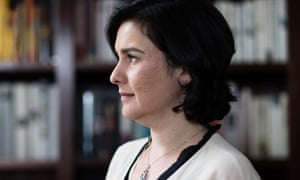
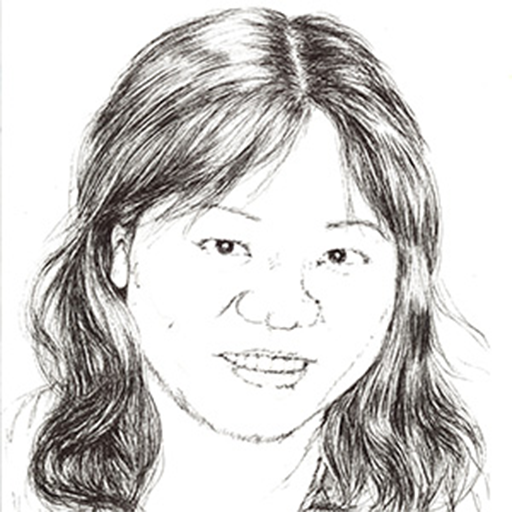
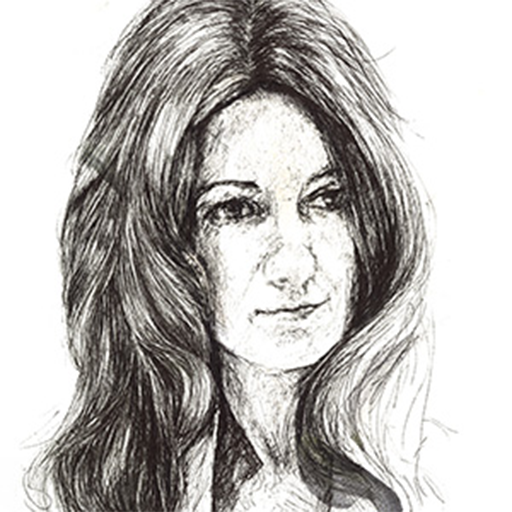
The Prize for Courage, which is given to journalists, media or NGOs who demonstrate courage in the practice, defence or promotion of journalism, was awarded to Saudi journalist Eman al Nafjan. The founder of the SaudiWoman.me website and author of many articles in the international media including the Guardian and New York Times, Eman al Nafjan spearheaded the Saudi women’s campaign for the right to drive and against Saudi Arabia’s oppressive male guardianship system. Arrested along with other women’s rights activists in May 2018, she was freed conditionally on 28 March 2019. According to the Saudi media, she is accused of endangering “national security,” maintaining “suspicious contacts with foreign entities” and of being a “traitor,” for which she could be jailed for up to 20 years.
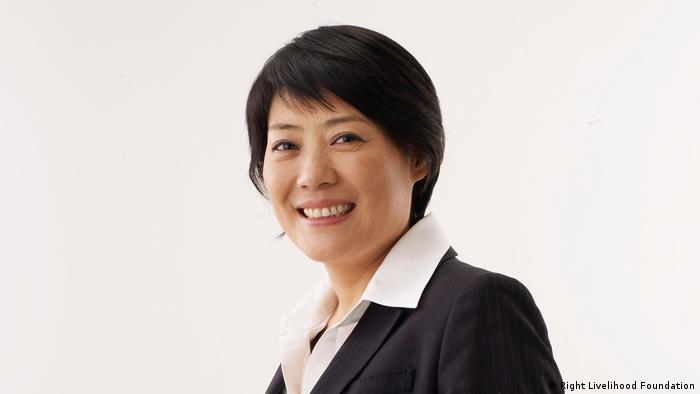
The Prize for Impact, which is given to journalists whose work has led to concrete improvements in journalistic freedom, independence and pluralism, or to an increase in awareness of these matters, was awarded to Vietnamese journalist and blogger Pham Doan Trang. She is the founder of Luât Khoa, an online magazine that specializes in providing information about legal issues, and she edits another, thevietnamese, which also helps Vietnamese citizens to defend their rights and resist the Communist Party’s arbitrary rule. The author of many books including one defending the rights of Vietnam’s LGBT communities, she has been beaten by the police because of her work and was detained arbitrarily twice for several days in 2018.
ThePrize for Independence, awarded to journalists for resisting financial, political, economic or religious pressure, went to Malta’s Caroline Muscat. After fellow Maltese journalist Daphne Caruana Galizia was murdered in October 2017, she helped to create The Shift News, an independent investigative news website committed to combatting corruption and defending press freedom in Malta. In this small island nation where most media outlets are subservient to the government, she has exposed many cases of corruption implicating local politicians. Although the repeated target of gag suits, The Shift News has refused to comply with content take-down demands from Henley & Partners, a British firm that advises governments on residence and citizenship-by-investment policy. She received an award from the European Commission in 2015 for her journalism,
“Every year, award-winners are unable to attend because the leaders of their countries prevent them,” RSF Secretary-General Christophe Deloire said. “Two of this year’s three laureates have been unable to collect their awards personally,………… These journalists, who should be honoured in their countries, are denied the freedom to travel and often their freedom, period. But their commitment transcends borders without the dictators being able to do anything to prevent it.”
The aim of the Balzan prizesis to foster culture, the sciences and the most outstanding humanitarian initiatives of peace and brotherhood among peoples, regardless of nationality, race or creed. The four subject areas for the awards change every year. As stipulated in the Articles of the Balzan Foundation, they are selected from among “literature, the moral sciences and the arts” and “the physical, mathematical and natural sciences and medicine”. Rotating the subjects ensures that new or emerging research gets recognition, while at the same time it supports important fields of study that may have beenoverlooked by other great international awards. Since 2001, the rules of procedure of the Foundation’s General Prize Committee have stipulated that Prizewinners must destine half of the Prize to finance research projects that are preferably carried out by young scholars or scientists. The International Balzan Foundation, founded in 1957, operates through two separate institutions. The International Balzan Foundation “Prize” in Milan, chaired by Enrico Decleva, selects the subjects to be awarded and the candidates through its General Prize Committee. The Balzan Foundation “Fund” in Zurich, chaired by Gisèle Girgis-Musy,administers the estate left by Eugenio Balzan, so as to place at the disposal of the International Balzan Foundation”Prize,” the financial means necessary to realize its objective. The amount of each of the four 2020 Balzan Prizes will be CHF 750 000. Every year, the four Balzan Prizes are awarded to scholars and scientists who are distinguished in their fields on an international level.
At the conclusion of the announcement of the 2019 Balzan Prizewinners, the President of the General Prize Committee, Professor Luciano Maiani, informed the public that the 2020 Balzan Prizes will be awarded in the following fields:
Human Rights
Earth System Dynamics
As a further testimonial to the interdisciplinary mission of the Balzan Prize, for the first time in its history, the two general subject areas of the awards, the sciences and the humanities, will share a common theme that is fundamental and highly pertinent to today’s concern with the future of the planet: Environmental Challenges, which will in turn be divided into these two areas:
Responses from the Social Sciences and the humanities
The winners of the first-ever True Story Award were announced during a ceremony at the Reportagen Festival in Bern on Saturday 31 August 2019. Three journalists from three countries were given top honours for their exceptional and courageous reporting:
Second prize went to the American journalist Mark Arax for A Kingdom from Dust – a sweeping, in-depth investigation into the world of agribusiness in California. Arax was recognised for weaving social themes such as climate change, water resources and California history into the narrative.
Chinese journalist Du Qiang received the third spot for The Vagabond Club, capturing the lives of a rebellious group of migrant workers in Shenzhen. Qiang’s report was “the most surprising story of all the entries” according to the jury and was praised for the way it captured an unknown aspect of society.
The winners were chosen from 39 nominees who were selected from more than 900 submissions from 98 countries in 21 languages. All nominees were invited to the Reportagen Festival taking place on August 30-September 1, of which 36 are attending and sharing their stories throughout the weekend. The True Story Award is a global journalism prize. It aims to recognize quality journalism and make reporters’ voices known beyond the borders of their home countries, and in doing so to increase the diversity of perspectives offered in the media. Winners were chosen by an eight-member jury from eight countries that evaluated submissions based on their depth of research, the quality of the journalism and social relevance.
On 1 September 2019 Sohail Choudhury reported in Blitz that the founding Chair of the Montreal-based Raoul Wallenberg Centre for Human Rights (RWCHR), Dr. Irwin Cotler, was awarded the Heintz Memorial Award for Humanitarian Achievement.
Presented at the International Humanitarian Law Dialogues, the event brought together the founding Prosecutors and Presidents of the world’s International Tribunals and Courts, along with other top international legal experts. The gathering was organized in partnership with the Robert H. Jackson Center, named after the U.S. Supreme Court Justice who served as Chief Prosecutor at the Nuremberg Trials of Nazi War Criminals. In the words of the Jackson Center, “Cotler has been a long-time champion of human rights and supporter of modern international criminal law. As Minister of Justice for Canada, he made the pursuit of international justice a government priority. As an international human rights lawyer, he served as counsel to numerous prisoners of conscience, including Nelson Mandela and Salah Uddin Shoaib Choudhury. His continued work in founding the Raoul Wallenberg Centre places him at the center of human rights advocacy.”
The decision as to the Prize winner will be made by the Selection Panel on 29 September 2019, and its name will be announced in the Chamber of the Parliamentary Assembly of the Council of Europe in Strasbourg, on 30 September 2019 at 12:30pm. The award ceremony for the Prize will subsequently take place in the presence of all three shortlisted candidates. Two other candidates, who have also been shortlisted are Mr Buzurgmehr Yorov (Tajikistan) and the Youth Initiative for Human Rights.
The UNPO is currently campaigning for Mr. Tohti to also be awarded the Sakharov Prize saying that such prizes are an excellent way in which the international community can continue to show support for the Uyghur people in the face of hostile oppression.
China’s predictable reaction came quickly: “Beijing slammed on Thursday the nomination of a jailed academic from China’s Uighur minority for one of Europe’s top human rights awards, saying it equated to “supporting terrorism”.
The International Association of Genocide Scholars (IAGS) has awarded academic Dr Azeem Ibrahim its 2019 Engaged Scholar Prize. Founded in 1994, the IAGS is a global, interdisciplinary, non-partisan organization that seeks to further research and teaching about the nature, causes, and consequences of genocide, and advance policy studies on genocide prevention.
Glasgow born Ibrahim has been recognized principally for his work on the genocide committed by the Myanmar state against the country’s Rohingya minority in his book “Rohingyas: Inside Myanmar’s Genocide (Hurst: 2016).” Ibrahim has also researched and written extensively on the impact of displaced populations including the Syrians, Uyghur Muslims and others. His publications have appeared in prominent media outlets like New York Times, the Washington Post, Newsweek, Foreign Policy, CNN, Daily Telegraph, Yale Global, Dhaka Tribune and many others.
Dr Ibrahim is currently a Director at the Centre for Global Policy in Washington DC and is working on creating the Rohingya Genocide Archives which aims to investigate and document the crimes committed against the Rohingyas by Myanmar and create a databank that can then be used by scholars, historians, researchers and any possible future tribunals. Dr Ibrahim was one of a handful of scholars to foresee and warn of the impending genocide of the Rohingya Muslims in Myanmar in 2016, when the Myanmar military undertook a policy of ethnically cleansing over 700,000 Rohingyas, forcing them into Bangladesh which now houses the largest refugee camp in the world.
IAGS has since its formation presented awards to honor both innovations in and the engaged practice of genocide scholarship. In 2017, these awards were consolidated into four categories: the Emerging Scholar Prize; the Engaged Scholar Prize; the Prize for the Arts; and the IAGS Lifetime Achievement Award. These awards are presented at the IAGS biennial conference and celebrate individuals who make exemplary contributions to the field of genocide studies.
Pax Christi International honoured the European Lawyers in Lesvos (ELIL) as the recipient of the 2019 Pax Christi International Peace Prize at a ceremony held in Brussels on Wednesday evening, 26 June.
The prize was accepted by “European Lawyers in Lesvos” (ELIL’s) managing director, Philip Worthington, who delivered a speech on the work of ELIL and their efforts to protect the human rights of migrants and refugees in crisis. The evening began with a speech highlighting the centrality of recognising the human dignity of every person by Bishop Kevin Dowling (Rustenburg, South Africa), Co-President of Pax Christi International. His speech was followed by his counterpart, Ms Marie Dennis, Co-President of Pax Christi International, addressing the importance of the refugee crisis to Pax Christi sections and member organisations around the world and how we are inspired by the work of ELIL. Ms. Greet Vanaerschot, Pax Christi International’s Secretary General, presented the award to Mr Worthington. Attendees were treated to musical interludes by recording artist Zem. A reception followed the one-hour ceremony.
One of the very few providers of legal assistance on the Greek island of Lesvos (also known as Lesbos, a focal point of mass immigration into Europe), ELIL was founded in June 2016 by the Council of Bars and Law Societies of Europe (CCBE) and the German Bar Association (DAV). Since that time, along with a small permanent staff, almost 150 volunteer asylum lawyers from 17 countries have provided free legal assistance to more than 9,000 people, most of whom are from Syria, Iraq or Afghanistan. ELIL is the largest provider of legal assistance to asylum seekers on Lesvos and is the primary provider of legal assistance to unaccompanied minors who have been incorrectly registered as adults (over 500 cases in total) and asylum seekers in detention (almost 200 cases in total). In addition to other services, ELIL also helps reunite families by assisting with family reunification applications under the Dublin Regulation.
Established in 1988, the Pax Christi International Peace Award is funded by the Cardinal Bernardus Alfrink Peace Fund and honours contemporary individuals and organisations who make a stand for peace, justice and nonviolence in different parts of the world. For text and videos of the speeches, photos of the ceremony & more, please click HERE.
Saudi human rights lawyer Waleed Abu al-Khair, who was convicted on anti-terrorism charges and sentenced to 15 years in prison, is the winner of the 2019 ABA International Human Rights Award. For more on this and other awards for human rights lawyers see: http://www.trueheroesfilms.org/thedigest/awards/aba-international-human-rights-award
The ABA Journal states that Abu al-Khair founded Monitor for Human Rights, one of the only human rights organizations in Saudi Arabia, in 2008. He dedicated his legal career to defending human rights and the right to freedom of expression, and pushed for an elected parliament, independent judiciary, constitutional monarchy and other reforms in his country. Abu al-Khair’s 2014 arrest and conviction largely stemmed from comments he made to the media and on social media that criticized Saudi Arabia’s human rights record, discussions of human rights in his home and his defense of activists who were punished for criticizing the government, according to Human Rights Watch and Amnesty International. The human rights organizations say the specific charges against him included disobeying the ruler and seeking to remove his legitimacy; insulting the judiciary and questioning the integrity of judges; setting up an unlicensed organization; harming the reputation of the state by communicating with international organizations; and preparing, storing and sending information that harms public order.
His full 15-year sentence was upheld by a Saudi appeals court in 2015 after he refused to apologize for the alleged offenses. He is currently in the Dhahban Central Prison in Jeddah, Saudi Arabia. The United Nations Human Rights Council’s Working Group on Arbitrary Detention has twice reviewed the legitimacy of Abu al-Khair’s detention, and in 2018, declared that Saudi Arabia lacked legal basis and grounds for restricting his freedoms of expression and opinion, the ABA press release says.