Archive for the 'awards' Category
September 1, 2019

On 1 September 2019 Sohail Choudhury reported in Blitz that the founding Chair of the Montreal-based Raoul Wallenberg Centre for Human Rights (RWCHR), Dr. Irwin Cotler, was awarded the Heintz Memorial Award for Humanitarian Achievement.
Presented at the International Humanitarian Law Dialogues, the event brought together the founding Prosecutors and Presidents of the world’s International Tribunals and Courts, along with other top international legal experts. The gathering was organized in partnership with the Robert H. Jackson Center, named after the U.S. Supreme Court Justice who served as Chief Prosecutor at the Nuremberg Trials of Nazi War Criminals. In the words of the Jackson Center, “Cotler has been a long-time champion of human rights and supporter of modern international criminal law. As Minister of Justice for Canada, he made the pursuit of international justice a government priority. As an international human rights lawyer, he served as counsel to numerous prisoners of conscience, including Nelson Mandela and Salah Uddin Shoaib Choudhury. His continued work in founding the Raoul Wallenberg Centre places him at the center of human rights advocacy.”
https://www.weeklyblitz.net/news/irwin-cotler-receives-heintz-award-for-humanitarian-achievement/
Posted in awards | Leave a Comment »
Tags: awards, Canada, Heintz Memorial Award for Humanitarian Achievement., Heinz award, International Humanitarian Law Dialogues, international tribunal, Irwin Cotler, Prosecutor, Raoul Wallenberg Centre for Human Rights (RWCHR), Robert H. Jackson Center
August 29, 2019

Photo courtesy of Martin Ennals Award
Ilham Tohti, a Uyghur scholar who has been serving a life sentence in Chinese prison since 2014, has been chosen as a finalist for the Vaclav Havel Human Rights Prize. [see: http://www.trueheroesfilms.org/thedigest/awards/vaclav-havel-prize-for-human-rights-pace]. The Germany-based Ilham Tohti Initiative e.V. (ITI) had nominated Prof. Tohti to the Prize on April 29, with support of four other human rights activists and NGOs. [see also: https://humanrightsdefenders.blog/2018/01/15/today-ilham-tohti-completes-his-fourth-year-in-chinese-detention/].
The decision as to the Prize winner will be made by the Selection Panel on 29 September 2019, and its name will be announced in the Chamber of the Parliamentary Assembly of the Council of Europe in Strasbourg, on 30 September 2019 at 12:30pm. The award ceremony for the Prize will subsequently take place in the presence of all three shortlisted candidates. Two other candidates, who have also been shortlisted are Mr Buzurgmehr Yorov (Tajikistan) and the Youth Initiative for Human Rights.
The UNPO is currently campaigning for Mr. Tohti to also be awarded the Sakharov Prize saying that such prizes are an excellent way in which the international community can continue to show support for the Uyghur people in the face of hostile oppression.
China’s predictable reaction came quickly: “Beijing slammed on Thursday the nomination of a jailed academic from China’s Uighur minority for one of Europe’s top human rights awards, saying it equated to “supporting terrorism”.
Posted in awards, Human Rights Defenders | 2 Comments »
Tags: Buzurgmehr Yorov, China, digest of human rights awards, finalists, human rights awards, Ilham Tohti, Ilham Tohti Initiative e.V. (ITI), Tajikistan, UNPO, Uyghurs, Vaclav Havel Human Rights Prize of the Council of Europe Parliamentary Assembly, Youth Initiative for Human Rights
August 20, 2019

The International Association of Genocide Scholars (IAGS) has awarded academic Dr Azeem Ibrahim its 2019 Engaged Scholar Prize. Founded in 1994, the IAGS is a global, interdisciplinary, non-partisan organization that seeks to further research and teaching about the nature, causes, and consequences of genocide, and advance policy studies on genocide prevention.
Glasgow born Ibrahim has been recognized principally for his work on the genocide committed by the Myanmar state against the country’s Rohingya minority in his book “Rohingyas: Inside Myanmar’s Genocide (Hurst: 2016).” Ibrahim has also researched and written extensively on the impact of displaced populations including the Syrians, Uyghur Muslims and others. His publications have appeared in prominent media outlets like New York Times, the Washington Post, Newsweek, Foreign Policy, CNN, Daily Telegraph, Yale Global, Dhaka Tribune and many others.
Dr Ibrahim is currently a Director at the Centre for Global Policy in Washington DC and is working on creating the Rohingya Genocide Archives which aims to investigate and document the crimes committed against the Rohingyas by Myanmar and create a databank that can then be used by scholars, historians, researchers and any possible future tribunals. Dr Ibrahim was one of a handful of scholars to foresee and warn of the impending genocide of the Rohingya Muslims in Myanmar in 2016, when the Myanmar military undertook a policy of ethnically cleansing over 700,000 Rohingyas, forcing them into Bangladesh which now houses the largest refugee camp in the world.
IAGS has since its formation presented awards to honor both innovations in and the engaged practice of genocide scholarship. In 2017, these awards were consolidated into four categories: the Emerging Scholar Prize; the Engaged Scholar Prize; the Prize for the Arts; and the IAGS Lifetime Achievement Award. These awards are presented at the IAGS biennial conference and celebrate individuals who make exemplary contributions to the field of genocide studies.
https://www.dhakatribune.com/bangladesh/2019/08/19/bangladeshi-academic-wins-prestigious-global-scholar-prize
About Us
Posted in awards | Leave a Comment »
Tags: academic, awards, Azeem Ibrahim, Engaged Scholar Prize, genocide, International Association of Genocide Scholars (IAGS), mass killings, Myanmar, research, Rohingya Genocide Archives, Rohingya people
August 14, 2019

Pax Christi International honoured the European Lawyers in Lesvos (ELIL) as the recipient of the 2019 Pax Christi International Peace Prize at a ceremony held in Brussels on Wednesday evening, 26 June.
The prize was accepted by “European Lawyers in Lesvos” (ELIL’s) managing director, Philip Worthington, who delivered a speech on the work of ELIL and their efforts to protect the human rights of migrants and refugees in crisis. The evening began with a speech highlighting the centrality of recognising the human dignity of every person by Bishop Kevin Dowling (Rustenburg, South Africa), Co-President of Pax Christi International. His speech was followed by his counterpart, Ms Marie Dennis, Co-President of Pax Christi International, addressing the importance of the refugee crisis to Pax Christi sections and member organisations around the world and how we are inspired by the work of ELIL. Ms. Greet Vanaerschot, Pax Christi International’s Secretary General, presented the award to Mr Worthington. Attendees were treated to musical interludes by recording artist Zem. A reception followed the one-hour ceremony.
One of the very few providers of legal assistance on the Greek island of Lesvos (also known as Lesbos, a focal point of mass immigration into Europe), ELIL was founded in June 2016 by the Council of Bars and Law Societies of Europe (CCBE) and the German Bar Association (DAV). Since that time, along with a small permanent staff, almost 150 volunteer asylum lawyers from 17 countries have provided free legal assistance to more than 9,000 people, most of whom are from Syria, Iraq or Afghanistan. ELIL is the largest provider of legal assistance to asylum seekers on Lesvos and is the primary provider of legal assistance to unaccompanied minors who have been incorrectly registered as adults (over 500 cases in total) and asylum seekers in detention (almost 200 cases in total). In addition to other services, ELIL also helps reunite families by assisting with family reunification applications under the Dublin Regulation.
Established in 1988, the Pax Christi International Peace Award is funded by the Cardinal Bernardus Alfrink Peace Fund and honours contemporary individuals and organisations who make a stand for peace, justice and nonviolence in different parts of the world. For text and videos of the speeches, photos of the ceremony & more, please click HERE.
Read more about European Lawyers in Lesvos (ELIL): www.europeanlawyersinlesvos.eu
Posted in awards, human rights, Human Rights Defenders | Leave a Comment »
Tags: awards, Council of Bars and Law Societies of Europe (CCBE), European Lawyers in Lesvos (ELIL), Greece, human rights lawyers, lesbos, migrants, Pax Christi International, Pax Christi Peace Prize, Philip Worthington, refugees
August 14, 2019

Waleed Abu al-Khair.
Saudi human rights lawyer Waleed Abu al-Khair, who was convicted on anti-terrorism charges and sentenced to 15 years in prison, is the winner of the 2019 ABA International Human Rights Award. For more on this and other awards for human rights lawyers see: http://www.trueheroesfilms.org/thedigest/awards/aba-international-human-rights-award
The ABA Journal states that Abu al-Khair founded Monitor for Human Rights, one of the only human rights organizations in Saudi Arabia, in 2008. He dedicated his legal career to defending human rights and the right to freedom of expression, and pushed for an elected parliament, independent judiciary, constitutional monarchy and other reforms in his country. Abu al-Khair’s 2014 arrest and conviction largely stemmed from comments he made to the media and on social media that criticized Saudi Arabia’s human rights record, discussions of human rights in his home and his defense of activists who were punished for criticizing the government, according to Human Rights Watch and Amnesty International. The human rights organizations say the specific charges against him included disobeying the ruler and seeking to remove his legitimacy; insulting the judiciary and questioning the integrity of judges; setting up an unlicensed organization; harming the reputation of the state by communicating with international organizations; and preparing, storing and sending information that harms public order.
His full 15-year sentence was upheld by a Saudi appeals court in 2015 after he refused to apologize for the alleged offenses. He is currently in the Dhahban Central Prison in Jeddah, Saudi Arabia. The United Nations Human Rights Council’s Working Group on Arbitrary Detention has twice reviewed the legitimacy of Abu al-Khair’s detention, and in 2018, declared that Saudi Arabia lacked legal basis and grounds for restricting his freedoms of expression and opinion, the ABA press release says.
Abu al-Khair earlier also received the Olof Palme Prize, Ludovic-Trarieux International Human Rights Prize, Law Society of Ontario’s Human Rights Award and Right Livelihood Award. [see: https://humanrightsdefenders.blog/2017/02/28/saudi-arabia-imprisoned-waleed-abu-al-khair-receives-another-human-rights-award/ and https://humanrightsdefenders.blog/2018/11/14/right-livelihood-award-urges-freedom-for-3-saudi-laureates/]
http://www.abajournal.com/web/article/imprisoned-saudi-lawyer-receives-this-years-international-human-rights-award
Posted in awards, human rights, Human Rights Defenders | Leave a Comment »
Tags: ABA, ABA International Human Rights Award, digest of human rights awards, human rights award, Human rights defender, human rights lawyer, illegal detention, Saudi Arabia, Waleed Abu Al-Khair
August 12, 2019
An award-winning documentary following Thuli Madonsela’s time as Public Protector has officially been released. The film focuses mostly on Madonsela’s last year in office and is called Whispering Truth to Power.
Behind-the-scenes footage shows Madonsela’s fight for justice for ordinary South Africans. As Public Protector for South Africa, Thuli Madonsela made an impact. The film has won the Special Jury Prize at Hot Docs, a collection of awards at FESPACO, Luxor African Film Festival and Jozi Film Festival.
Madonsela has become a celebrated name for many in South Africa, after she managed to successfully challenge former SA President, Jacob Zuma, on his illegal use of state funds. “In other countries, people don’t know who the ombudsman is,” Madonsela’s son, Wantu explains, “If the government is doing their job properly, then the ombudsman is not this celebrated figure who is fighting the good fight, because there shouldn’t be that fight.” The documentary is filmmaker, Shameela Seedat’s first ever release. The documentary on Madonsela is available to stream at Showmax.
Posted in awards, films, Human Rights Defenders | Leave a Comment »
Tags: anti corruption, award, Documentary film, film festival, human rights films, Luxor African Film Festival and Jozi Film Festival, Prosecutor, Shameela Seedat, South Africa, Thuli Madonsela, Whispering Truth to Power (film), Zuma
August 8, 2019
Gladys Mmari is a driven Tanzanian human rights defender (HRD), and the founder of MAFGE (Male Advocacy For Gender Equality) – a non-governmental organisation (NGO) focused on women empowerment through educating both women and men. “So much of the work that I do is cultural conversation. We have grown up talking about these issues among women, but now, I have to work with men as well – making it more challenging,” Mmari stresses. She fosters the idea that male voices should be heard, and educated, in women’s rights, and that it is important to establish an equitable understanding between the genders, while breaking down gender stereotypes. “We need to stop romanticising the idea of women empowerment, and co-empower one another to achieve the goals of an equal world,” Mmari affirms.
After obtaining a law degree, she worked as a human rights researcher in Tanzania, with a focus on the African Court on Human and Peoples’ Rights and indigenous rights. Then, she worked for AfricAid, an NGO specialised in cultivating leadership in young women and girls. She recalls a young boy who, following one of her sessions, asked her why he could not participate in the dialogues. He also wanted to boost women and girls’ rights. “It was a turning point for me,” Mmari says. “The time has come to work together and empower each other to revisit the many socio-cultural constraints that have stopped us from equality.” Her organisation MAFGE was hereby born.
She pinpoints numerous challenges faced in her work. “It is challenging to mobilise men to join, to ensure impact to women empowerment.” Furthermore, “most organisations that deal with women empowerment want to fund women organisations. And they do not want to see men in women organisations.”
She also points out the political situation in Tanzania as a great hurdle. Political rallies in the state deviate and misconceive the importance of HRDs, putting them at risk. As she expresses a sincere concern for Tanzanian HRDs, she mentions that the government is currently registering all NGOs under a single entity. “Here there is potential importance of this initiative, as this could be used for something productive such as acting as a more centralised human rights platform allowing more structured approaches, information passage, and funding opportunities. It is a step forward, unless it is a political interest”.
Gladys will continue to fight for women’s rights. “Women are born into unequal societies, and their achievements are unacknowledged and their potential left untapped [..] I can imagine my children and grandchildren living in a world with equal rights, and that they’ll get the opportunities and securities that I missed as a woman. That’s what keeps me going.”
Through MAFGE, she is also running a crowdfunding campaign, to strengthen gender equality in Tanzania.
https://www.defenddefenders.org/blog/human-rights-defender-of-the-month-july-2019-gladys-mmari/
Posted in awards, Human Rights Defenders | Leave a Comment »
Tags: Africa, award, DefendDefenders, gender equality, Gladys Mmari, Human rights defender, human rights lawyer, human rights of women, MAFGE (Male Advocacy For Gender Equality), profile, Tanzania, woman human rights defender
August 5, 2019
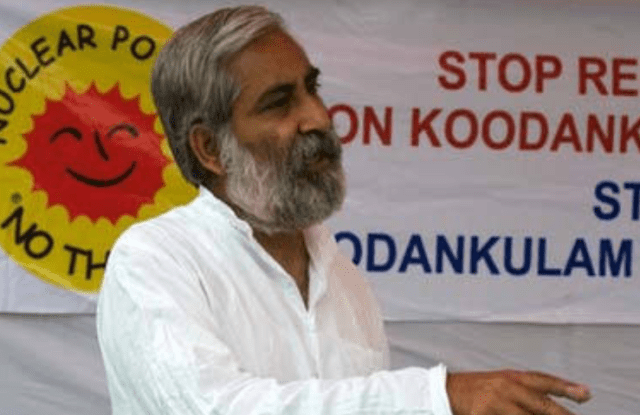
“Award a protection against autocratic tendencies, but Magsaysay is ‘not infallible” says Sandeep Pandey, a social activist and academic, a Magsasay recipient, who returned his award in 2002.
There could not have been a better choice than Ravish Kumar for this year’s Magsaysay Award. Ravish has demonstrated exemplary courage in questioning the sectarian, communal, jingoistic and irrational politics which has dominated the narrative in this country over the last five years when one by one most of the saner voices were made to disappear, some made compromises or simply surrendered and worst there were others who decided to collaborate with this insidious project of right wing fundamentalism. [see: https://humanrightsdefenders.blog/2019/08/03/magsaysay-awards-2019-honor-4-outstanding-asians/]
..
The Magsaysay Award will definitely bring more credibility to his work and hopefully some of the opposition from right wing forces, who are known to troll in an organised manner any sane voice in support of human rights, democracy, justice, communal harmony, peace and friendship, especially with Pakistan, and who’ve targeted Ravish in the past, will subside.
..
However, the aura of Magsaysay is quite exaggerated in India than other countries of Asia, and outside of Asia very few people have heard of it, probably because there are many well known Indians who have won it. Part of the reason for its popularity in India is that it and its winners feature prominently in most General Knowledge books which are used by students preparing for competitive examinations. But the Magsaysay Foundation itself is not infallible, unlike its reputation.
I went to Manila in 2002 to receive the Magsaysay Award as well as participate in a Peace conference organised at the University there in the wake of impending US attack on Iraq. It was a mere coincidence that both events were happening on same dates. There was a demonstration outside the US Embassy the day after the Award ceremony. The chairperson of the Foundation asked me not to participate in the demonstration as it could tarnish its image. ..
I argued that US was a bigger culprit in the game of warfare and I considered it part of my activism to oppose the US policy. Before landing in Manila I had little idea that the Foundation was completely US funded — by the Rockefeller and Ford Foundations. Obviously the Magsaysay Foundation was quite uncomfortable with my stand. The fears of Magsaysay Foundation came true. Even the Hindi Indian media back home covered the demonstration outside US Embassy in Manila highlighting my participation. An editorial in a Manila newspaper asked me to return the $50,000 Award money to the US Embassy before I returned to India if I was the principled man I wanted them to believe. I returned the cheque from the airport to the Magsaysay Foundation before embarking the plane out of Manila.
..
But the Award is prestigious and definitely is a protection against autocratic tendencies of the state and its cronies in India, especially for human rights defenders and upright journalists like Ravish Kumar. We hope that the right-wing fundamentalists will take his viewpoint more seriously and the media fraternity will start considering him as an ideal rather than an exception. He has now emerged as the hope for a free media in India and by extension a democratic polity. This is a victory of progressive forces, sanity and humanity and we must celebrate it. Most of all it is a victory for truth which has become a casualty in the era of post-truth. The post-truth has created only strife and conflicts. If we have to return to the human endeavour of making this world a better place for everybody, there is no option but to go back to recognizing truth as the most important values. In spite of Nathuram Godse having become a hero for a fringe group in this country, the universal ideal continues to be Mahatma Gandhi.
—
Posted in awards, human rights, Human Rights Defenders | Leave a Comment »
Tags: India, Kumar Ravish, Philippines, Ramon Magsaysay Award, Ravish Kumar, Sandeep Pandey, USA
August 3, 2019
 The Ramon Magsaysay Award, one of Asia’s best known prizes, celebrates transformative leadership. In the past five decades, the award has been bestowed on over three hundred men, women and organizations whose selfless service has offered their societies, Asia, and the world successful solutions to some of the most intractable problems of human development. For more on this regional award, see: http://www.trueheroesfilms.org/thedigest/awards/ramon-magsaysay-award-for-community-leadership] The trustees of the Ramon Magsaysay Award Foundation annually select the awardees. The Award is presented to them in formal ceremonies in Manila, Philippines on August 31st, the birth anniversary of the much-esteemed Philippine President whose ideals inspired the Award’s creation in 1957.
The winners for 2019 are:
Kim, Jong-ki, South Korea

- Such a journalist is 41-year-old Ko Swe Win. Born to a poor family in Yangon, he grew up in politically turbulent times and fell victim to state repression early on.
- In 2017, he criticized a powerful, ultranationalist Buddhist monk, Ashin Wirathu, for purveying “hate speech” and publicly commending the killer of a Muslim human rights activist. Wirathu, Swe Win wrote, had desecrated Buddhism and should be punished for endorsing assassination and fomenting hate.
- Swe Win and Myanmar Now draw strength from the fact that they are making a difference. With a current readership of 350,000, the news service is highly regarded for the quality, balance, and depth of its reporting on high-impact issues, including land grabbing, child labor, and abuse of domestic workers.
- In electing Ko Swe Win to receive the 2019 Ramon Magsaysay Award for Emergent Leadership, the board of trustees recognizes his undaunted commitment to practice independent, ethical, and socially engaged journalism in Myanmar; his incorruptible sense of justice and unflinching pursuit of the truth in crucial but under-reported issues; and his resolute insistence that it is in the quality and force of media’s truth-telling that we can convincingly protect human rights in the world. [see also: https://humanrightsdefenders.blog/2017/09/03/myanmar-time-for-aung-san-suu-kyi-to-return-at-least-some-of-her-many-human-rights-awards/]
The fifth award winner is Mr Cayabyab, 65, who was recognised for “his compositions and performances that have defined and inspired Filipino popular music across generations”.
—
http://festival.rmaf.org.ph/?page_id=35
Posted in awards, Human Rights Defenders | 3 Comments »
Tags: Angkhana Neelapaijit, awards, bullying, Cayabyab, digest of human rights awards, India, Jong-ki, journalists, Justice for Peace Foundation (JPF Thai NGO)), Kim, Ko Swe Win, Kumar Ravish, media, Myanmar, Ramon Magsaysay Award, regional award, Somchai Neelapaijit, South Korea, Thailand
July 22, 2019

The Committee to Protect Journalists on 16 July gave one of its International Press Freedom Awards 2019 to Neha Dixit, an Indian freelance reporter, who has covered politics, gender, and social justice in print, TV, and online media for more than a decade. [see: https://humanrightsdefenders.blog/2019/07/17/international-press-freedom-awards-2019/]
She began her career at Tehelka magazine and then joined the special investigation team at India Today. In 2019, Dixit spent months investigating and reporting stories that shed a light on important issues in the country, including extrajudicial killings by police. She also reported on the illegal detention of citizens under draconian laws that appeared to be motivated by political interests. In January 2019, the Office of the United Nations High Commissioner for Human Rights sent a notice to the Indian government to express its concern about the detentions. In 2018, Dixit reported on the damage to the health of poor Indians who were being used as guinea pigs by pharmaceutical companies in illegal drug trials.
In 2016, she wrote a story for Outlook magazine that accused members of a right-wing nationalist group of trafficking more than 31 girls in Assam state to other parts of India in order to inculcate them with a nationalist ideology. After the story was published, members of the ruling party filed a criminal defamation suit against Dixit and Outlook, accusing both of violating Indian law. CPJ condemned the case, which continues today, and provided Dixit with support for its legal fees. CPJ’s research has found that section 153A of India’s colonial-era penal code, under which the suit was filed, has been used to silence journalists, writers, and academics in India. Dixit was also charged with “inciting communal hatred through writing,” for which she could face a five-year prison term.
After Dixit’s exposé on extrajudicial killings by the police, she said high-ranking police officials threatened her family’s safety if she continued to report on the issue. She is frequently harassed online as a result of her reporting, especially from alleged right-wing extremists. She has been threatened with physical attacks, rape, and death, and her personal information has been exposed online. She told CPJ in May 2019 that she faces up to 300 abusive messages a day.
Dixit’s work has been published in international outlets including The New York Times, Al-Jazeera, Caravan, and The Wire. She has received numerous awards, including the European Commission’s Lorenzo Natali Media Prize in 2011, the Kurt Schork Award in International Journalism in 2014, and the 2016 Chameli Devi Jain Award for Outstanding Woman Journalist.
https://cpj.org/awards/2019/neha-dixit-india.php
Posted in awards, human rights, Human Rights Defenders | Leave a Comment »
Tags: Committee to Protect Journalists, critical journalists, Extrajudicial killing, freedom of expression, India, International Press Freedom Awards, Lorenzo Natali Media Prize, Neha Dixit, profile


 Hans Thoolen on Human Rights Defenders and their awards