Posts Tagged ‘The New Humanitarian’

Sudanese Human Rights Defenders risk their lives to document the war

March 13, 2024

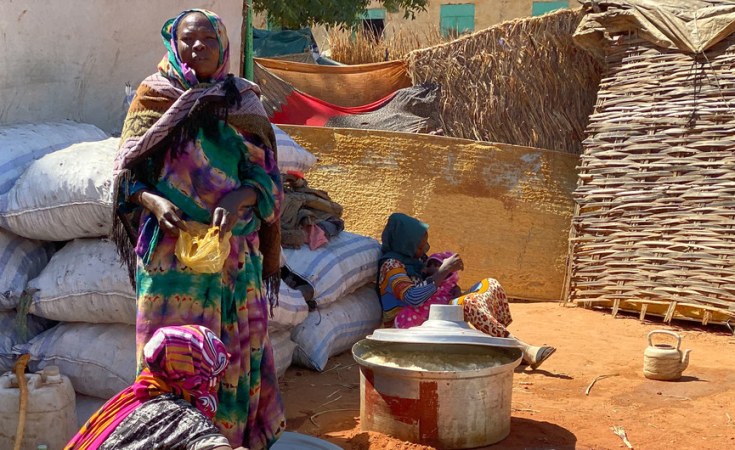
Internally displaced families gather at a temporary gathering point outside a school in El Geneina town following recent intercommunal conflict in West Darfur. Modesta Ndubi/UNHCR

Ela Yokes in The New Humanitarian (Geneva) of 11 March 2024 reports on the role of young people documenting the abuses in the war in the hope that it will contribute to justrice in the future.

Sudanese civil society groups are playing a pivotal role in documenting human rights abuses committed during 10 months of conflict, even as volunteers risk being arrested by the warring parties and are struggling with a month-long internet blackout. Youth groups, legal associations, and civilians acting in a personal capacity have all been involved in cataloguing the human rights impacts of the conflict that commenced in April 2023 and sets the army against the paramilitary Rapid Support Forces (RSF).

Documentation is a pathway to justice,” Noon Kashkoush of the Emergency Lawyers, a legal group monitoring abuses, told The New Humanitarian. She said she hopes the evidence her group has gathered will be used one day in the Sudanese justice system….

Access challenges for international aid agencies mean local mutual aid groups have shouldered the bulk of the relief effort in the most conflict-affected places. And likewise, civil society initiatives have carried the burden of human rights documentation. Despite the volatile security situation, local groups have led efforts to document sexual violence and killings, monitor ceasefire violations, track down missing persons, and report on the makeshift detention sites run by both the army and the RSF.

The findings of these civil society groups have fed into numerous human rights reports, including a detailed report last month by the UN, which charges both sides of the conflict of committing widespread abuses, some of which may amount to war crimes.

The report accuses RSF fighters of occupying residential buildings to shield themselves from army attacks, of massacring thousands of people in the Darfur region, and of committing extensive sexual abuse, including cases of rape and gang rape.

For its part, the army is accused of killing more than 100 civilians in airstrikes that were ostensibly targeting RSF positions but carried out in densely populated urban areas, or on public buildings including churches and hospitals.

The report also documents attacks on human rights defenders. It states that activists have been kidnapped and subjected to death threats and smear campaigns organised by army supporters, while several Darfuri rights monitors have been killed by the RSF.

Many groups documenting rights violations were active during the 2018-2019 Sudanese Revolution that toppled dictator Omar al-Bashir, and during the protests that followed the 2021 army-RSF coup that ended the post-Bashir democratic transition. Prior to the war, the Emergency Lawyers group was providing legal assistance to the families of pro-democracy protestors and activists who had been arbitrarily arrested, tortured, or killed by security forces.

Kashkoush said the group is now focused on war-related abuses, including the bombardment of civilian areas and the detention centres set up by the army and RSF in the capital, Khartoum, and the neighbouring cities of Omdurman and Bahri.

Kashkoush said the publication of the group’s reports and announcements have helped secure the release of hundreds of detainees – including some from the Emergency Lawyers network itself – though she described facing many difficulties.

“All of those documenting violations face the issue that movement on the ground is very challenging,” she said. “We depend a lot on open-source [information], such as video footage, and we work to verify it using witness statements.”

Another group involved in documenting abuses is the Youth Citizens Observers Network (YCON). It was established in late 2021 by volunteers wanting to shed light on violations committed against pro-democracy protesters and civil society activists. After the current conflict broke out, the network relaunched its platform under an anti-war stance, according to one of the group’s volunteers, who requested to remain anonymous to ensure their safety.

The volunteer said YCON has observers across Sudan and releases monthly reports on the impact of the war and the human rights situation. It also monitored several army-RSF truces that were violated last year. “In any given region, civilian monitors who are trained in documentation and verification methods are present on the ground and have a very wide network of connections,” said the volunteer. “Any event happening in a specific area, they would know about it.”

In cases where access to places affected by fighting has been too difficult for civil society groups, civilians already on the ground have taken it upon themselves to document what they are witnessing and publish evidence on social media.

When clashes between the RSF and the army first broke out in Khartoum, Hassan Abd al-Rauf, a local shop owner who ran a travel agency and a men’s clothing store, found himself caught in the epicentre.

Instead of escaping or complying with an RSF order that civilians should leave his neighbourhood, al-Rauf decided to stay, guard his properties, and offer assistance to others who were struggling to flee.

Walking through deserted streets, al-Rauf began recording live broadcasts on his Facebook page. His footage revealed the extent of the destruction and showed unarmed civilians who had been killed in the crossfire or targeted by snipers.

“When I started with the broadcasts, the aim was to connect people with what was happening on the ground and send photos [of the damage] back to the property owners in the area,” al-Rauf said in an interview after escaping Sudan for Qatar.

Two weeks after starting the broadcasts – which were getting hundreds of thousands of views – al-Rauf’s uploads suddenly stopped. He said he was captured by RSF fighters in the capital and held in a detention centre for 25 days.

“[The RSF] were certainly aware and it was the reason for my arrest,” al-Rauf said. “[One of my videos showed] a number of RSF vehicles after they had robbed the Bank of Khartoum and were hit by army aircraft.”

The volunteer at YCON said members of their group have faced harassment and the threat of detention from security forces as they attempt to move across different locations to document violations.

Similar threats were also described by Thouiba Hashim Galad, a member of the Missing Initiative, a local group with a platform that lets people post information about missing people. The group has a Facebook page with hundreds of thousands of followers.

“On a personal level, I receive private messages that include threats and very bad language,” Galad said. “Before the war, [the military authorities] were trying to hack our page many times,” she added.

On top of the security risks, volunteers told The New Humanitarian they are also struggling with a nationwide communication blackout that began in early February and has been blamed on the RSF.

Kashkoush of the Emergency Lawyers group said her organisation is unable to receive daily updates about human rights abuses, and instead gets a flurry of reports during the brief moments when they have an internet connection.

Kashkoush called for an international investigation into the blackout, which she described as a “constitutional violation” and a “deliberate attempt by one or both sides” to restrict access to information and thwart documentation efforts.

Documenting rights abuses has also had a psychological impact on volunteers, according to Galad of the Missing Initiative, which was founded in 2019 shortly after the RSF killed over 120 pro-democracy protesters at a Khartoum sit-in.

Galad, who currently volunteers for the initiative from outside Sudan, said the most difficult aspect of her work is delivering bad news to families when she learns that a missing person has been found dead.

During the first few weeks of the conflict, the Missing Initiative’s Facebook page was flooded with requests for information about people who had gone out to buy groceries or fuel and hadn’t returned.

Between April and August 2023, Galad said the group received over 600 reports of missing persons. She added that they stopped publishing statistics when they realised the actual number of cases was likely much greater than those reported to them.

Despite the challenges the group faces, Galad told The New Humanitarian she is determined to keep the initiative alive, especially as the conflict slips out of international focus.

“The main reason I am doing this is because I am a defender of human rights,” Galad said. “This is a continuation of the work we began after the [2019 Khartoum sit-in] massacre, on the basis that, in the future, both sides will be held accountable.”

The volunteer from YCON shared a similar view: “The fundamental motivation that allows us to continue monitoring the situation… is that this will provide accurate, recorded information for the institutions that will later work on [justice].”

Read this report on The New Humanitarian. The New Humanitarian puts quality, independent journalism at the service of the millions of people affected by humanitarian crises around the world.

Nicaragua: things getting worse and worse for human rights defenders: COVID-19 and foreign agents

October 17, 2020
The New Humanitarian of 2 September 2020 carried a special feature on Nicaragua. President Daniel Ortega is making life increasingly hard for aid and human rights groups in Nicaragua even as poverty, malnutrition, and emigration due to political strife are on the rise, and as he is criticised for a dismissive and reckless response to the coronavirus outbreak. Moreover, a new law for the regulation of “foreign agents” was passed on 15 October.

“In Nicaragua, simply existing as a person carries a risk,” Ana Quirós, director of the Center for Information and Advisory Services in Health, or CISAS, told The New Humanitarian. “You do not need a particular reason to become a victim of violence, of repression, kidnapping or assassination. It is a general risk.

Quirós was deported and stripped of citizenship in November 2018 after the government accused CISAS, which had been working on health education and HIV prevention in Nicaragua with the support of several international aid groups and actors – including Medico International, Medicus Mundi, and the EU – of “participating in destabilising activities”.

Quirós said individuals still working with aid and civic groups in the country are under great threat, and that several people who had been working with CISAS in Nicaragua since it was banned had been forced to flee the Central American country.

It has been during this pandemic that the absence of the NGOs has been most strongly felt, especially for us working in health,” the CISAS director said. “The government hasn’t made any efforts regarding communication, training, education in health, and with regard to the other basic human rights of the population,” Quirós said. “The population is very unprotected, and is hungry for information and real knowledge about the risks and measures that one needs to take to prevent illnesses.

Forty years after Ortega led a socialist revolution to uproot the dictatorship of Anastasio Somoza, Nicaragua continues to be burdened by a host of humanitarian concerns, albeit as it isolates itself from international aid institutions.

Under the government leadership of Ortega and his influential wife, Vice-President Rosario Murillo, the country remains one of the poorest in Latin America, while the violent repression of political opponents since April 2018 has generated a migration crisis proportionately comparable to that of Venezuela. After Ortega’s re-election in 2006, Nicaragua’s poverty rate fell, following a similar trend throughout Latin America, but an independent report published at the end of 2019 estimates that it has since soared, and that roughly a third of the population, or more than two million people, now live on less than $1.76 per day.

According to the World Food Programme, 17 percent of children under five suffer from chronic malnutrition, with the rate at nearly 30 percent – similar to humanitarian crisis settings such as Somalia – in Nicaragua’s northern provinces, which form part of Central America’s dry corridor. In 2019, WFP provided assistance to 45,000 people in Nicaragua affected by the seasonal climate change-linked emergency.

Due to severe restrictions on free assembly and expression, it is probable that protection and humanitarian needs are under-reported in Nicaragua,” ACLED wrote in an email to TNH. “It is clear from current political violence and demonstration trends in Nicaragua – particularly amid the pandemic – that the situation requires urgent attention from international humanitarian actors.

Demonstrations initially flared in April 2018 against a social security reform, which has since been scrapped. They later morphed into broader political unrest as the government responded with heavy-handed measures against student protesters, and as dissatisfaction grew at government corruption and the Ortegas’ increasingly autocratic rule.

The ensuing government crackdown led to the deaths of hundreds of people – the government set the number at 197, while human rights groups say it was at least 325 – and drove more than 103,000 people to seek asylum abroad. Most fled to neighbouring Costa Rica, where at least 400,000 Nicaraguans had already been living.

In July, Michelle Bachelet, the UN High Commissioner for Human Rights, condemned the ongoing repression in the country two years after the initial protests, listing a litany of government offences between March and June, including arbitrary arrests, house searches without warrants, and detentions, threats, and intimidation.

Line graph of demonstrations in Nicaragua, 2019-2020

Human rights violations continue to be documented against those who the government perceives as opponents, including human rights defenders, journalists, social leaders, and former political detainees,” Bachelet reported.

The crushing of the opposition included, in 2019, the revocation of the legal status of a number of civil society groups and local NGOs – the Nicaragua Centre for Human Rights (CENIDH) and CISAS among them.

Here, one cannot organise trade unions or teachers. One cannot organise any group that is not under the auspice of the regime,” Monica Baltodano, director of the Popol Na Foundation, another of the banned groups, told the independent news site Confidencial last December.

….Vice-President Murillo told Nicaraguans that the country was under divine protection, while officials ordered medical staff not to wear personal protective equipment (PPE) in order not to scare patients. In July, 25 doctors were fired for signing a letter critical of the government’s handling of the pandemic. It asked simply that health workers should not be persecuted and that they be allowed to use PPE.

After the United States and the EU imposed financial sanctions on Nicaraguan officials last year, 65 of the 148 officially recognised political prisoners were released from prison in December. Further sanctions have been imposed since, including on a second son of the presidential couple. But international political pressure has routinely been countered by the message that Nicaragua will manage on its own.

International aid groups and agencies have also experienced government pressure as it attempts to influence and define their roles. Ever since Ortega resumed the presidency in 2007, the organisations have had to operate with increasing care, former aid workers familiar with the country told TNH.

In 2015, the United Nations Development Programme was told by the government that it was no longer needed as an intermediary between donors and those executing development projects. Without providing further details, the authorities said the agency and its country chief were accused of “political meddling”, and of maintaining a “hidden agenda”.

UNDP told TNH at the end of July that its operations in Nicaragua were now “limited” and that it did not have a resident representative or a deputy representative. The UN agency did not respond to requests for further comment on the situation in the country.

In 2018, the government expelled a UN human rights team after the Office of the UN High Commissioner for Human Rights requested an immediate end to the persecution of political opponents and called for the disarming of masked civilians responsible for a string of killings and detentions. Soon after, two missions of the Inter-American Commission on Human Rights (IACHR) investigating violence during the anti-government protests were also thrown out.

As COVID-19 cases appear to mount, the Pan American Health Organization (PAHO) – the regional wing of the World Health Organization – has urged the government to take stronger measures to curb the spread of the virus.

PAHO continues to await authorisation to send a team of experts to evaluate the situation. Since the beginning of the outbreak, it has donated PPE to the health ministry, while repeatedly stating that the official COVID-19 data provided is incomplete.

In spite of donations from various international sources, doctors have argued that distribution of masks and other PPE items remains inadequate. As of 26 August, Citizen’s COVID-19 Observatory estimated that 107 health workers in Nicaragua had died from the coronavirus…

Meanwhile, the International Committee of the Red Cross, one of the few international aid groups with a presence in Nicaragua, has offered its support to help with the release of what human rights groups estimate – following the protest crackdown – to be more than 6,000 political prisoners.

In a written statement to TNH, the organisation said: “The ICRC returned permanently to Nicaragua in 2018. We have been visiting detention sites since 2019, and in November 2019 renewed our host country agreement. We can develop our humanitarian action with openness, in dialogue with the authorities and civil society, according to our humanitarian principles and working methods.”

Last Thursday 15 October Nicaragua’s National Assembly approved the law for the regulation of ‘foreign agents “. The law requires any Nicaraguan citizen working for “governments, companies, foundations or foreign organizations” to register with the Interior Ministry, report monthly their income and spending and provide prior notice of what the foreign funds will be spent on. The law establishes sanctions for those who do not register. Once registered as “foreign agents,” those Nicaraguans may not “finance or promote the financing of any type of organization, movement, political party, coalition or political alliance or association” that gets involved in Nicaragua’s internal politics.

https://www.thenewhumanitarian.org/news-feature/2020/09/02/Nicaragua-conflict-political-unrest-poverty-coronavirus

https://federalnewsnetwork.com/government-news/2020/10/nicaragua-passes-controversial-foreign-agent-law/

Human Rights Defenders in Sri Lanka: fear return to a ‘state of fear’

June 14, 2020

Families hold photographs of missing loved ones during a protest in Sri Lanka Families hold photographs of missing loved ones during a protest in Colombo, Sri Lanka’s largest city, in February 2020. (TNH)

Rights groups are warning of a crackdown on dissent and rising authoritarianism in Sri Lanka, raising fears for the future of long-stalled civil war reconciliation efforts. Since President Gotabaya Rajapaksa took office after November elections, local rights activists have reported a rise in surveillance by state security forces, threats, and other measures more common during the country’s 26-year civil war, which ended in 2009, as well as its aftermath. A long piece in the New Humanitarian of 10 june 2020 gives the details:

Surveillance has always been there, but since the election what we have seen is that it’s more open and more rampant,” said Shreen Saroor, a women’s rights activist…

Human Rights Watch says Rajapaksa is re-establishing a “state of fear” in Sri Lanka, citing interviews with dozens of activists and journalists. Many local journalists say they are self-censoring as threatening phone calls and other pressures escalate, acutely aware of the country’s history of unsolved murders and abductions. At least two reporters have already fled the country, according to the Committee to Protect Journalists. 

In February, Sri Lanka announced it was backing out of commitments made to the UN Human Rights Council in 2015 by a previous administration. These promised a range of measures to investigate abuses during the civil war. ..

[see also: from my blog post https://humanrightsdefenders.blog/2020/02/24/human-rights-defenders-issues-on-the-agenda-of-43rd-human-rights-council/ Sri Lanka: Civil society groups are concerned over the backsliding on the commitments made by Sri Lanka in Human Rights Council Resolution 30/1. The recently elected president, Gotabaya Rajapaksa, along with his brother Mahinda Rajapaksa, who has been appointed prime minister, have been implicated in war crimes and numerous human rights violations when they were defence secretary and president respectively from 2005 to 2015. The new Government has made clear its intention to walk away from the Council process on Sri Lanka, a process that is currently the only hope for victims of human rights violations that truth, justice, reparations, and guarantees of non-recurrence are possible. [see https://www.nwaonline.com/news/2020/feb/23/sri-lanka-details-un-case-pullout/] Meanwhile, the relatively open climate for human rights defenders and journalists of the past few years seems to be rapidly closing. More than a dozen human rights and media organisations have received intimidating visits by members of law enforcement and intelligence agencies, while death threats against journalists have resumed. ISHR calls on States to urge for continued cooperation of the Government of Sri Lanka with OHCHR and the Special Procedures. The Council should reiterate the reference in Resolution 40/1 to “the adoption of a time-bound implementation strategy” for implementation of all elements of Resolution 30/1. [see also: https://humanrightsdefenders.blog/2020/01/22/sri-lankan-government-accused-of-embarking-on-process-to-silence-critics/]

And, this month, Rajapaksa created two “task forces” with vague mandates, which rights groups fear could operate parallel to existing institutions. One, a body created to combat “anti-social activities”, is led by security and intelligence officials. Another task force mandated to protect cultural heritage appears to exclude non-Buddhists and non-Sinhalese. Rajapaksa’s first six months in office, the International Crisis Group said in a May report, have been “aggressively Sinhala nationalist, family-centred, and authoritarian”.

….“All these years of looking for justice would be then wasted,” said Yogeshwari, 45, whose husband disappeared 15 years ago.Families hold photographs of missing loved ones during a protest in Sri LankaTNH Families of Sri Lanka’s missing thousands fear the government is aiming to curb investigations into unsolved civil war disappearances.
In announcing his country’s withdrawal from its UN Human Rights Council commitments in February, Sri Lanka’s foreign minister, Dinesh Gunawardena, said the previous pledges would infringe on “the sovereignty of [the] people of Sri Lanka”…

A government body tasked with investigating disappearances, the Office on Missing Persons (OMP), didn’t begin its work until 2018. It’s effectively the only government body actively working on reconciliation issues. Ruki Fernando, an advisor with Inform, a Colombo-based human rights documentation centre, expects the Rajapaksa government to take a similar line domestically by clipping the OMP’s powers.  “It is not about shutting them down,” Fernando said. “It is more about making them administratively limp.”…

Saroor believes the Rajapaksa government will likely ramp up its stance against investigations and reconciliation efforts. “Sri Lanka transitional justice and truth-seeking will come to a standstill,” she said.

This piece was reported by a freelance journalist whose name is being withheld over concerns for their safety. 

https://www.arabnews.com/node/1687911/world

https://www.thenewhumanitarian.org/news/2020/06/10/Sri-Lanka-activists-state-of-fear?utm_source=The+New+Humanitarian&utm_campaign=412d1dac95-EMAIL_CAMPAIGN_2020_06_12_Weekly&utm_medium=email&utm_term=0_d842d98289-412d1dac95-75444053

https://www.tamilguardian.com/content/un-chief-expresses-alarm-clampdown-freedom-expression-sri-lanka

Covid-19 spread leads to reactions and messages of solidarity

March 27, 2020

From the myriad of messages on the spread and impact of the Covid-19 virus, here a few excerpts:

On 27 March 2020, Rosa Kornfeld-Matte, UN Independent Expert on the enjoyment of all human rights by older persons said that society has a duty to exercise solidarity and better protect older persons who are bearing the lion’s share of the COVID-19 pandemic. “Reports of abandoned older persons in care homes or of dead corpses found in nursing homes are alarming. This is unacceptable,” said  “We all have the obligation to exercise solidarity and protect older persons from such harm.” Older persons .. are further threatened by COVID-19 due to their care support needs or by living in high-risk environments such as institutions, the expert said. [https://reliefweb.int/report/world/unacceptable-un-expert-urges-better-protection-older-persons-facing-highest-risk-covid]

—–

Adrien-Claude Zoller, President of the small NGO ‘Geneva for Human Rights – Global Training’ issued a statement of solidiarity ith the marginalised who will suffer most:….As a human rights organisation, Geneva for Human Rights is deeply worried about the situation of the most vulnerable, of the unemployed and homeless, of those in extreme poverty, of people with disabilities, of women already assuming so many tasks, of the elderly, of those arbitrarily detained in overcrowded prisons, of minorities, migrants, internally displaced, refugees, and indigenous peoples. It is a matter of human dignity. Human rights are at stake.
Many Governments first denied, then de-dramatized the spread of the virus, before taking measures to contain it and limit the damage for their economy. Too often in these measures, the social impact of both the health and the economic crises is neglected. We all fully support efforts to eradicate the virus. At the same time, we should not forget the commitment of the international community to eradicate extreme poverty (‘Sustainable Development Goal’, Nr.1). We have to protect the most vulnerable.
….Countrywide lockdowns imply a limitation of human rights. Indeed, complying with these emergency rules, including home confinement, is a moral imperative, a matter of solidarity to slow down the spread of the virus in our communities, and to support those on the frontline, in particular health- and social workers. However, we should recall that measures derogating from human rights obligations in ‘public emergency which threatens the life of the nation’ have to be limited ‘to the extent strictly required by the exigencies of the situation’. They have to be proportionate, limited in time, and in no way discriminatory (International Covenant on Civil and Political Rights, Article 4, United Nations, 16 December 1966). In many countries, such derogations led to special powers attributed to the Executive branch. Still, the principles of proportionality and non-discrimination have to apply. Parliamentary control and the Rule of Law remain a must, as well as transparency and access to all the information. We are dismayed that in several ‘denying’ countries (e.g. China at the beginning of the pandemic, Brazil, Egypt, Turkey) journalists, physicians, health workers and human rights defenders, are targeted for having exposed the gravity of the situation and the fate of marginalized people…………

—–

The New Humanitarian looks at the expected impact on aid:  https://www.thenewhumanitarian.org/news-feature/2020/03/26/coronavirus-international-aid

—–

The G20 seems to be aware as shown by a portion of their recent statement: “Enhancing Global CooperationWe will work swiftly and decisively with the front-line international organizations, notably the WHO, IMF, WBG, and multilateral and regional development banks to deploy a robust, coherent, coordinated, and rapid financial package and to address any gaps in their toolkit. We stand ready to strengthen the global financial safety nets. We call upon all these organizations to further step up coordination of their actions, including with the private sector, to support emerging and developing countries facing the health, economic, and social shocksof COVID-19.We are gravely concerned withthe serious risks posed to all countries, particularly developing and least developed countries, and notably in Africaand small island states, where health systems and economies may be less able to cope with thechallenge, as well as the particular risk faced by refugees and displaced persons. We consider that consolidating Africa’s health defense is a key for the resilience of global health. We will strengthen capacity building and technical assistance, especially to at-risk communities. We stand ready to mobilize development and humanitarian financing” [https://g20.org/en/media/Documents/G20_Extraordinary%20G20%20Leaders%e2%80%99%20Summit_Statement_EN%20(3).pdf]

Launch of the Fragile States Index 2019 on 10 April in Geneva

April 1, 2019

The Fund for Peace and the The New Humanitarian (see: https://humanrightsdefenders.blog/tag/the-new-humanitarian/) will launch on Wednesday 10 April 2019, 18:15 – 20:00 CET their  FRAGILE STATES INDEX 2019 in the Maison de la Paix, Geneva.

Following a tumultuous year around the globe, Cameroon, Brazil, the United Kingdom, and Venezuela are among the countries that have fallen furthest down the Fragile States Index (FSI).

The event is to discuss the findings of the 15th FSI and its relevance to the humanitarian sector at the Graduate Institute’s Centre on Conflict, Development and Peacebuilding (CCDP). The event, jointly convened between the Graduate Institute, The New Humanitarian, and Fund for Peace, will feature a briefing on the FSI and its findings for 2019 and a panel discussion on the changing humanitarian focus on fragile states and the role of the media in chronicling the immediate and long-term impact of social, political, and economic pressures on lives and livelihoods around the world.

The FSI annually highlights the current trends in social, economic and political pressures that affect all states, but can strain some beyond their capacity to cope. Linking robust social science with modern technology, the FSI is unique in its integration of quantitative data with data produced using content-analysis software, processing information from millions of publicly available documents. The result is an empirically-based, comprehensive ranking of the pressures experienced by 178 nations. The Index is used by policy makers, civil society, academics, journalists, investors, and businesses around the world.

For those not in Geneva: the live stream of the event on website.


 IRIN News officially becomes The New Humanitarian

March 22, 2019

Yesterday, IRIN News (often quoted here) officially became The New Humanitarian.

The new website is already live at thenewhumanitarian.org.

You can follow them on social media: @newhumanitarian on Twitter, Facebook, Instagram and LinkedIn.  It celebrated the name change with the world premiere of “The New Humanitarian”, a short play by South African playwright Mike van Graan; an interactive discussion with our editors; and an introduction to the new president of our board of directors.

https://mailchi.mp/thenewhumanitarian/say-hello-to-the-new-humanitarian-218573?e=134def3735