Posts Tagged ‘Sarah Bireete’

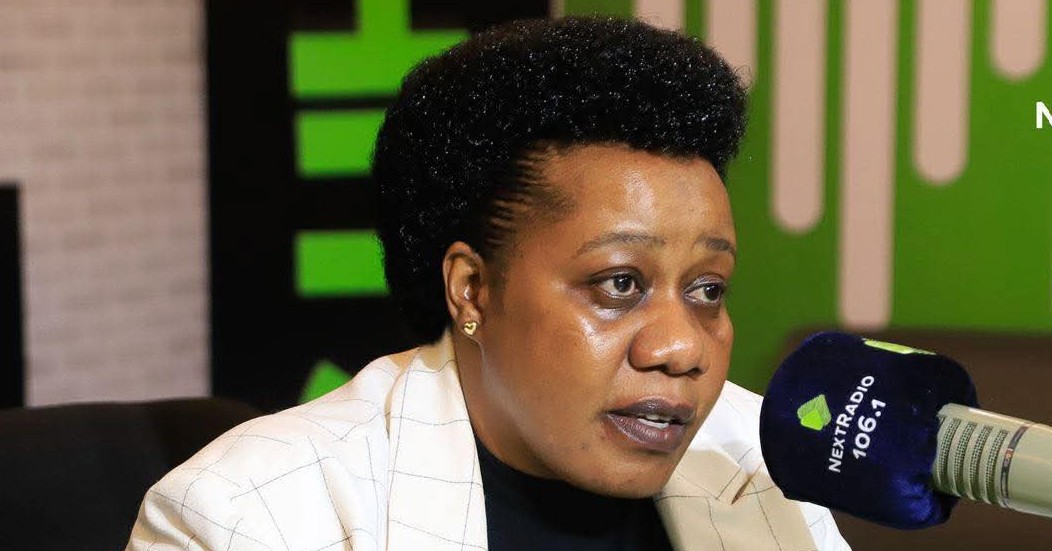
Ugandan human rights lawyer Sarah Bireete detained

January 8, 2026

Sarah Bireete was arrested on December 30, 2025, after police and military personnel surrounded her home in Kampala. Shortly before her arrest, she posted on X, “My house is under siege by police and army”. As reported by East and Horn of Africa Election Observation Network (E-HORN) on 2 January 2026

The Police Reforms Working Group (PRWG) Kenya has called for the immediate release of Uganda’s human rights lawyer and civil society leader, Dr Sarah Bireete, warning that her detention ahead of the January elections threatens civic space and undermines democratic processes.

The Uganda Police confirmed her arrest in a brief social media post, stating she would be produced in court “in due course”. Police spokesperson Rachel Kawaala described the detention as part of “ongoing operations” but offered no further details.

“Dr Bireete is widely recognised for her unwavering passion for the protection of civil liberties, her lifelong quest for justice, and her steadfast commitment to democracy, a clarion call that has consistently advanced accountable governance across the region,” the Group said.

Bireete currently serves as Executive Director of the Centre for Constitutional Governance (CCG), Chairperson of the East Africa Civil Society Forum (EACSOF), and Chairperson of the Horn of Africa Election Observers Network (E-HORN).

PRWG Kenya described these roles as reflective of her integrity, credibility and long-standing contributions to human rights, electoral integrity and democratic governance.

The group urged Ugandan authorities to respect civil liberties, the rule of law and democratic processes.

“Respect for civil liberties, rule of law and democratic processes is fundamental to ensuring free, fair, and transparent elections,” PRWG Kenya said.

The statement also highlighted that Uganda’s constitution, under Article 23, guarantees that anyone arrested must be promptly informed of the reasons for their detention, a step that has not been followed in Dr Bireete’s case.

Bireete’s arrest follows her recent advocacy for Starlink, a satellite internet service operated by SpaceX, as a safeguard against potential internet shutdowns during the elections.

In a post dated December 23, 2025, she wrote, “Dear Ugandans, are you thinking of ways to navigate internet shutdown during elections? Starlink got you covered.”

https://eastleighvoice.co.ke/uganda/263965/rights-group-demands-release-of-ugandan-human-rights-lawyer-sarah-bireete?amp=1

As the country approaches general elections on 15 January 2026, UN experts* today warned that the pervasive climate of fear in Uganda, marked by allegations of enforced disappearance, the use of disproportionate force against political opposition supporters, and the intensified suppression of civil society and independent media, is not conducive to peaceful elections.

https://www.ohchr.org/en/press-releases/2026/01/uganda-un-experts-urge-stronger-human-rights-safeguards-ahead-2026-elections

Interview with Sarah Bireete, executive director of the Center for Constitutional Governance Uganda

October 3, 2020
The Business and human rights resource Centre on 18 august 2020 published an interview with Sarah Bireete, executive director of the Center for Constitutional Governance (CCG), Uganda

Sarah Bireete – Personal Archive

Sarah Bireete is an energetic human rights defender from Uganda, who is currently busy setting up a working group on civic space research in the country, while also running the Center for Constitutional Governance (CCG), a constitutional watchdog. We sat down with her to explore her views on trust between business and civil society, and how multinational companies should respond to a growingly heavy-handed response to protests in the country.

Hi Sarah! Please tell us about you and your work!

I am a lawyer, a Human rights activist, and the executive director of the Center for Constitutional Governance (CCG), a constitutional watchdog in Uganda. I also have my own social media channel, Good Morning Uganda, followed by over 20000 followers.

How are businesses in Uganda affecting civic space and human rights in general? Are they cooperating well with civil society or is there something that could be improved?

The first thing is that international companies should observe the laws of the country in which they operate and the international law and best practice. But the practice is that most international companies that come from democratic countries, where they respect people’s rights, when they come to Uganda they tend to be blind to people’s rights, especially labour rights, people’s protection, especially in risky sectors like the flower farms. We have had experiences in the country where women worked with no protection against the pesticides, and they experienced health hazards, which made them unable to fend for families.

One of the most shocking experiences was from the flower sector, where one of the embassies was protecting an irresponsible investor from their country against the labour rights of local people. It was really amazing that ambassador called the HRD directly, and threatened them to keep quiet about labour rights of ordinary women working on flower farms.

Enno Schröder Flower farm around Kampala, Uganda

In the oil sector as well, most multinational companies are ignoring the basic human rights, the right to property, clean environment, fair and prompt compensation. Civil society believes that most of them are not helpful as they are not upholding practices that are respected in their own countries and are not following best practices established by international processes, such as the Extractive Industries Transparency Initiative. We are struggling with this, because we expect multinational companies to come in with an upper hand, and improve practice in oil governance in the country. What we expect is a partnership with developed countries, in line with international protocols governing diplomacy, and with companies based in this countries – this would help us improve the welfare of the people in the least developed countries. We don’t expect big companies to come in and negatively affect people and shrink space for civil society.

Is there trust between multinational companies and civil society in Uganda? Can multinational companies help civil society protect and expand civic space in some way?

Trust between civil society and multinationals gets eroded when we see them coming in to exploit the most vulnerable of our people.

Multinational companies come into the country and give work to mainly low wage workers – they have limited knowledge, they are vulnerable, they need to make a living for their families – and then they get exploited by people that we would expect would have higher protection standards. This erodes people’s trust because it appears as though they are just trying to exploit the situation, instead of trying to improve the welfare of society they’re coming into. But in the context of the business and human rights approach, we as civil society need to work a lot with these companies to show them that they shouldn’t lower standards – they should maintain the same standards as in their countries of origin.

Multinational companies should also work with civil society actors to help us push back against the government if it is shrinking civic space and to push the government to help improve the welfare of the people, as they make profit.

We have seen more attacks on journalists and opposition figures in Uganda in the past year, and more heavy-handed response to protests – how should have the business community reacted?

When there is unrest in the country, the companies will not be able to do their business they came to do. When people are not happy and are agitated, they will not deliver at their place of work. So these businesses need to come into the country, and make human rights a condition for them doing business in a country: that would ensure human rights are observed. In their conversations, they should tell the government that if they continue to violate human rights, they might suspend business there.

We expect multinationals to say to government ‘these are not the standards we expect to work in. They cannot make profit when country is not governable, so they should help improve the situation and tell government that they cannot violate human rights because it will make situation worse for everyone.