Posts Tagged ‘Right to a Healthy Environment’

HRC52: CIVIL SOCIETY PRESENTS KEY TAKEAWAYS FROM HUMAN RIGHTS COUNCIL

May 9, 2023

With quite a bit of delay I reproduce here the rsults of the 52nd session of the UN Human Rights Council. [see: https://humanrightsdefenders.blog/2023/03/02/human-rights-defenders-at-the-52nd-session-of-the-un-human-rights-council/].

  • The 52nd regular session of the Human Rights Council (HRC52) was held from Monday 27th February to Tuesday 4th April 2023.
  • On 7 March, the UN High Commissioner for Human Rights, Mr. Volker Türk presented an oral update on the human rights situation around the world. In his intervention, the High Commissioner referred to several situations around the world that raise human rights concerns and highlighted several developments. During the session, the High Commissioner also provided oral updates on Nicaragua and on Sudan on March 3,  on the Bolivarian Republic of Venezuela on March 21, on the Democratic Republic of the Congo on March 30, and on Ukraine on March 31. These oral updates given by the High Commissioner provided the basis for the general debate under Item 2 on 7th and 8th March.
  • Ten new Special Procedures mandate-holders were appointed to the following mandates: the Special Rapporteur on the situation of human rights in the Russian Federation, the Special Rapporteur on the right to development, one member to the Working Group of Experts on People of African Descent (from Asia-Pacific States), four members to the Expert Mechanism on the Right to Development (one member from African States, one from Asia-Pacific States, one from Eastern European States and one from Western European and other States), two members to the Expert Mechanism on the Rights of Indigenous Peoples (one from Asia and one from the Arctic), and one member to the Working Group on Enforced or Involuntary Disappearances (one member from Latin American and Caribbean States).
  • 43 texts (all resolutions) were considered by the Council. This represents a 23% increase in the number of adopted texts compared to one-year prior (HRC49). Of the 43 adopted texts, 28 were adopted by consensus (65%) and 15 by a recorded vote (35%).
  • After adopting 43 resolutions, the Council extended the mandates of nine thematic mandate-holders (i.e., adequate housing, foreign debt, freedom of opinion and expression, human rights defenders, migrants, minority issues, racism, sale and sexual exploitation of children, and torture), and nine country mandate-holders (i.e., Belarus, Democratic People’s Republic of Korea, the Islamic Republic of Iran, Mali, Myanmar, Nicaragua, South Sudan, Syrian Arab Republic, and Ukraine).

16 NGOs made a joint analysis:

That this Council has chosen to blatantly ignore the findings of the Fact Finding Mission (FFM) on Libya and end its mandate at a time when crimes against humanity are being perpetrated, with no sign of abating, is shocking. That it is set to replace it with a capacity-building resolution, with no ongoing monitoring and investigative component, is shameful. It sends a to message to abusive militias and armed groups that they can continue to perpetrate crimes under international law without fear of consequences. These crimes include arbitrary detention, murder, rape, enslavement, sexual enslavement, extrajudicial killing and enforced disappearance in detentions, and increasingly, repressive measures against civic groups.  David Yambio, a co-founder and speaker of the self-organized protest movement Refugees in Libya and a refugee in Libya who was forcibly conscripted by the RADA militias, and sent to war fronts, asked UN Member States in his statement before the Council, if the mandate of the FFM on Libya is discontinued who will document the violations in Libya, including against migrants, and how will the victims find justice and accountability.  Instead of appeasing unaccountable warlords and officials, the Council should let victims of violations in Libya and their loved ones know that they matter, and that committing a crime comes at a cost because no one is above the law. As a matter of priority, as per the FFM’s recommendations, the Council should establish an independent international investigative mechanism and an OHCHR established autonomous mechanism to monitor and report on gross human rights violations. See also: https://www.hrw.org/news/2023/04/07/weak-un-resolution-libya-exposes-eu-bias

We are deeply concerned by the push to undermine language on gender based discrimination and violence evidenced by the amendments tabled to replace gender with sex, or gender responsive with gender sensitive, across resolutions. This is a continuation of the trend at HRC sessions to deliberately use disinformation to attack gender equality and measures to address gender based discrimination. We remind States of their obligation to prevent and eliminate gender based discrimination and violence, it is not optional and should not be reduced in its scope. We are also deeply concerned by the attempts by some States to question the fact that a clean, healthy and sustainable environment is a universal human right, despite the recognition of this right by both the HRC and the UNGA, and in the context of the triple planetary crisis and the strong demands for environmental justice across the world. We are equally concerned about growing and coordinated efforts to undermine or outright delete standard language on the need for a ‘human rights based approach’ to development and other rights agendas, offering as a subpar substitute undefined and duplicative concepts such as a ‘people-centered approach.’ 

We welcome the adoption of the resolution on the human right to a clean, healthy and sustainable environment. The fact that all tabled amendments were massively rejected and that no State eventually called for a vote shows how much this right is important for the work of the HRC and for the international community as a whole.

We welcome the resolution on the contribution of the Human Rights Council with regard to the human rights implications of drug policy, which comes at a critical time, as States prepare for next year’s mid-term review of the 2019 political declaration. It underlines the role of the Human Rights Council, as the UN’s premier human rights body, in contributing to human rights strengthening throughout the UN system.  We welcome that the resolution promotes an approach centered on human rights and public health, including harm reduction, and that some of the amendments tabled to weaken this approach were rejected, but we regret that other amendments aimed at continuing a harmful and punitive approach to drugs were adopted. We now call on States to ensure that they comply with their human rights obligations in the design and implementation of drug policies.

Civil society participation is a cornerstone of the HRC. It brings voices from local communities and organisations who can effectively inform the HRC of human rights priorities and needs on the ground. Yet the special emergency measures and ongoing budget constraints adopted by the HRC in 2019, 2020, 2021 and 2022, coupled with measures adopted to respond to the Covid-19 crisis, and the ongoing Strategic Heritage Plan, have heavily restricted civil society participation at the HRC. We appreciate the reinstatement of side events and request that the Council continues to work with UNOG and New York to ensure that side events are kept in place amidst the implementation of the Strategic Heritage Plan. We reiterate our calls on the HRC to maintain hybrid modalities (remote participation in all debates and informal consultations) for all Observers of the HRC (States and civil society organisations with ECOSOC status), as complementary to in-person participation; to reinstate General Debates in June sessions and maintain them unrestricted; and to ensure that efficiency is not prioritised over effectiveness, expertise and inclusiveness, including by addressing the chronic underfunding of the UN’s human rights pillar. Furthermore, civil society must be able to access and communicate with the HRC freely and safely. They should not be intimidated nor suffer reprisals related to that engagement.

We welcome the renewal of the mandate of the Special Rapporteur on Human Rights Defenders. Coinciding with the 25th anniversary of the Declaration on HRDs and the 75th anniversary of the Universal Declaration of Human Rights, this reflects that the unhindered work of defenders is integral to the realisation of all human rights for all people, particularly those who have suffered discrimination or repression.

We welcome the renewal of the Special Rapporteur on the promotion and protection of the right to freedom of opinion and expression, on the thirty-year anniversary of the creation of the mandate. Over 30 years, the mandate has played an essential role in creating a robust set of international standards and shaping how we understand the right to freedom of expression in the digital age, as well as responding to violations and helping ensure accountability and justice.

We welcome the renewal of the mandate of the Special Rapporteur on the sale, sexual exploitation and sexual abuse of children. We welcome the change in the title of the mandate in line with the Luxembourg Guidelines and the inclusion of children among the stakeholders the mandate should consult with.

We welcome the resolution on the situation of human rights in Belarus in the run-up to the 2020 presidential election and in its aftermath, given the strong report of the High Commissioner following the OHCHR examination of the human rights situation in Belarus, and the need to renew the mandate of the mechanism. However, we express disappointment that the call of Belarusian and international organisations to establish an independent investigative mechanism went unheeded.

We welcome the adoption by consensus of the resolution on the situation of human rights in the Democratic People’s Republic of Korea (DPRK) which renews the mandates of the Special Rapporteur and the OHCHR Seoul office, which are key avenues for accountability for victims and survivors. The consensus adoption demonstrates the isolation of the North Korean government and the universal condemnation of its grave violations of the human rights of its people. States should support efforts to document and preserve evidence of crimes for future prosecutions, and explore other pathways to bring to account those responsible for serious international crimes committed in North Korea.

We welcome the resolution on cooperation with Georgia, however we strongly urge Georgia to remain focused on addressing the human rights challenges in the territory within its control, not just in the Georgian territories of Abkhazia and the Tskhinvali region/South Ossetia.

While we welcome the resolution on technical assistance in Haiti, we regret that the Human Rights Council took years before putting Haiti back on its agenda.  Since the discontinuation of the independent expert in March 2017, the human rights situation in Haiti has deteriorated rapidly. The security crisis has exacerbated inequalities and has pushed thousands of Haitians to be forcibly displaced. This situation has been noted by the report of the OHCHR of February 2023 and by the High Commissioner himself after his official visit earlier this year. We also welcome that the resolution envisages the creation of an Office of the High Commissioner in the future.

We welcome the adoption of the resolution on the situation of human rights in the Islamic Republic of Iran, and the change of approach from a purely procedural resolution merely renewing the mandate of the UN Special Rapporteur on human rights in Iran to a more substantial resolution addressing some of the key issues of concern, including violations committed in the context of the repression of recent protests, violations of the rights of women and girls and of minorities, illegal use of the death penalty and persistent impunity for violations of human rights. For the first time ever, the HRC has adopted a resolution, through which it collectively expresses alarm at these “widespread, repeated and persistent” violations and urges Iranian authorities to take action on them. We also welcome the increased support from States from all regions to this resolution, and we note with appreciation that opposition to the renewal of the mandate has significantly decreased at this session, reflecting growing concerns with the situation of human rights in Iran since the repression of the protests started in September 2022 following the custodial death of Jina Mahsa Amini.  

We welcome the resolution on the situation of human rights in Myanmar maintaining the situation high on the agenda of the HRC and reaffirming the Council’s collective condemnation of the grave violations and abuses of international human rights and humanitarian law in the country. However, we regret that despite clear, repeated calls by the Special Rapporteur and civil society, the Council once again failed to call for a comprehensive arms embargo on Myanmar to prevent the ongoing violations, especially indiscriminate airstrikes on civilians and civilian infrastructure.

We welcome the resolution on the promotion and protection of human rights in Nicaragua that consolidates and extends for two years the mandates of the Group of Human Rights Experts and the OHCHR, with a new emphasis on violence against Indigenous Peoples and Afrodescendants, those forcibly displaced and striped of nationality, and reprisals, including against EMRIP member Anexa Cuningham. The exceptional two-year extension is a sheer reflection of the sustained worsening and gravity of the country’s human rights crisis – where the Group of Experts found crimes against humanity -, fueled by the government’s unprecedented lack of engagement with the UN system. The Group of Experts will be able to deepen its investigation, further identify perpetrators, and preserve evidence for justice processes.

We welcome the resolution on the situation of human rights in Ukraine stemming from the Russian aggression. The report of the Independent International Commission of Inquiry (COI) was clear: war crimes are being committed in Ukraine and the patterns of serious violations suggest other crimes are likely being committed as well, including crimes against humanity. Given the need for further investigation, the HRC is right to mandate the COI for a further year.

We welcome the renewal of the mandate of the Commission of Inquiry on Syria and call on the Council to continue to support scrutiny and accountability for gross human rights violations committed in Syria. We welcome the language in the resolution in support of the establishment of an international mechanism for the missing in Syria, and we call on UN Member States to support the creation of such an institution at the General Assembly.

We welcome the adoption of a resolution that further extends the mandate of the Commission on Human Rights in South Sudan. Such a mechanism remains vital as the conditions that prompted the Council to establish the Commission, in 2016, have not significantly changed to warrant less scru­tiny. Regarding this and other country situations, the Council should stand steadfast in support of accountability for grave violations. We stress that a purely technical assistance and capacity-building focus would be unsui­table to tackle South Sudan’s serious human rights challenges and would risk further emboldening those who perpetrate the most serious crimes.

We regret that the Council failed to respond adequately to several human rights situations including Algeria, China, Egypt, India, and Saudi Arabia.

We regret that the Council failed to respond to the situation in Algeria. Since the beginning of the Hirak pro-democracy movement in Algeria, more than 5500 Algerians have been prosecuted for exercising their fundamental rights and freedoms. According to the documentation of activists in the country, more than 70% of the people detained are in pre-trial detention. In the context of heightening repression against activists and closure of civic space, more than 500 individuals are prosecuted on the basis of so-called terrorism charges pursuant to the 2021 amended article 87 bis of the penal code. Between 2022 and 2023, four Algerians were condemned to lengthy prison sentences ranging between 10 and 15 years on the basis of this article. UN Special Procedures have continued to address the situation in Algeria, regarding the increased use by the authorities of ‘national security laws to prosecute people who exercise their rights to freedoms of opinion and expression, and peaceful assembly and association’ and raise ‘alarm at the extent of crackdown on dissent in Algeria’. In her statement on 22 February 2023, Special Rapporteur on human rights defenders addressed the dissolution of two leading human rights associations, and said “acts of intimidation, silencing and repression against the human rights movement must end”. Algeria, a member of the Council, is failing to cooperate with the Council and its mechanisms, including in the context of the UPR review where Algeria did not accept several important recommendations, especially with regards to amending the counter-terrorism law to meet international law requirements, to guarantee the protection of human rights defenders, and fundamental freedoms, including freedom of assembly and expression.

We regret the ongoing failure of the Council to respond meaningfully to the OHCHR Xinjiang report through a resolution on China. The Council’s ‘China exceptionalism’, facilitated by but by no means solely attributable to the OIC’s shameful double-standards, not only weakens its credibility but also undermines the confidence of victims and human rights defenders everywhere in its ability to respond to international crimes orchestrated by the most powerful governments. With a historic Urgent Action ruling by the CERD in November, countless Treaty Bodies recommendations, an OHCHR report, and three joint statements by over 40 Special Procedures experts, the UN system cannot be clearer: the crisis is severe, and so should be the Council’s response to it.

We regret that the Council failed to respond to the situation in Egypt. Egyptian and international civil society organisations have been calling on the  Council to adopt a resolution on the human rights situation in Egypt. The human rights situation in Egypt merits the Council’s attention according to the objective criteria which States from all regions have committed to apply on whether a situation merits the HRC’s attention. Yet, civil society’s request for HRC action at the 52nd session was declined. WHRD Sanaa Seif, sister of arbitrarily detained British-Egyptian human rights defender Alaa Abdel Fattah, came to the HRC to advocate for her brother’s release and the thousands others arbitrarily detained in Egypt. She told the Council “you can’t keep turning a blind eye on Egypt”, and urged the Council to address the human rights crisis in Egypt.

We regret that the Council once again failed to respond to the situation in India, despite the systematic rollback of fundamental freedoms, the rule of law and independent institutions as well as the ongoing harassment, intimidation and criminalisation of human rights defenders, journalists, and dissidents, and targeting of civil society organisations using national security and counter-terrorism infrastructure. The Council also has responsibility to take appropriate action to prevent potential atrocity crimes against minorities, especially Muslims, as a result of the increasing discrimination and incitement to violence often by Hindu nationalist leaders.

We regret that the Council failed to respond to the situation in Saudi Arabia, where the situation meets the objective criteria. According to ALQST’s 2022 annual report, the Saudi authorities continue patterns of abuse, including arbitrary arrests, severe jail sentences for peaceful, legitimate activity on social media, enforced disappearances, systemic gender discrimination, and harsh restrictions on prisoners of conscience released from prison, including travel bans, thus further deepening the climate of fear. We reiterate our call on the HRC to create a monitoring and reporting mechanism on the ever-deteriorating human rights situation in Saudi Arabia.

Signatories:

  1. ARTICLE 19
  2. Asian Forum for Human Rights and Development (FORUM-ASIA)
  3. Association for Progressive Communications (APC)
  4. Cairo Institute for Human Rights Studies (CIHRS)
  5. Child Rights Connect
  6. CIVICUS: World Alliance for Citizen Participation
  7. Commonwealth Human Rights Initiative (CHRI)
  8. DefendDefenders (East and Horn of Africa Human Rights Defenders Project)
  9. Franciscans International
  10. Gulf Centre for Human Rights
  11. Impact Iran
  12. International Bar Association’s Human Rights Institute (IBAHRI)
  13. International Federation for Human Rights (FIDH)
  14. International Service for Human Rights
  15. Southern Africa Human Rights Defenders
  16. World Uyghur Congress

https://www.universal-rights.org/uncategorized/report-on-the-52nd-session-of-the-human-rights-council/

https://mailchi.mp/ishr/ishrs-human-rights-council-monitor-april2023?e=d1945ebb90

The right to a clean, healthy, and sustainable environment (R2E) – further steps and historical decision in the Case of Torres Strait Islanders

November 9, 2022

Following the Human Rights Council and General Assembly resolutions recognising the right to a clean, healthy, and sustainable environment (R2E), adopted in 2021 and 2022 respectively (HRC/RES/48/13 and A/RES/76/300), people have started to consider appropriate next steps in advancing the legal recognition, implementation, and monitoring of this right. See also: https://humanrightsdefenders.blog/2021/10/11/new-right-to-healthy-environment-ngos-urge-action/

A blog post of the Universal Rights Group on 7 November 2022 reports on meeting on 18 October hosted by the Permanent Mission of Costa Rica in Geneva, UNEP, and the Universal Rights Group bringing together over 20 human rights experts from Geneva Permanent Missions in a non-attributable setting designed to promote open and forward-looking debate on appropriate next steps. The discussion was informed by an ‘options paper’ prepared by the Special Rapporteur on human rights and the environment, Dr David Boyd, detailing three possible ways to advance the R2E, which he argued can and should be carried out concurrently.

In the meantime, a more operational development was the historic decision, the United Nations (UN) Human Rights Committee found on Friday 23 September that Australia’s failure to adequately adapt to climate change violates the human rights of Torres Strait Islanders.   

Karin M Frodé, Andrea Olivares Jones and Joanna Kyriakakis reported on the case:

The Committee, which oversees the implementation of the International Covenant on Civil and Political Rights (ICCPR) received a complaint by eight Torres Strait Islanders and six of their children in 2019. The group called for the Committee to recognise that the Australian Government had violated their human rights by failing to reduce carbon emissions, and introduce measures to adapt to climate change.

The Committee’s decision makes clear that inadequate responses to climate change can result in the violation of human rights. It is a landmark victory worth celebrating as part of a broader trend in climate change litigation which has seen human rights arguments put forward to hold both states (ie, the NetherlandsPakistan and Belgium) and corporations (ie, Shell and other Carbon Majors) accountable. It is also an example of a rise in cases where Indigenous actors are central. 

The Committee’s decision: The Committee found that Australia has violated the Torres Strait Islanders’ rights to private life, home and family and their enjoyment of culture. In doing so, the Committee noted Australia’s efforts to construct a seawall, but found it to be an inadequate response to the alarming threats that had been raised by Torres Strait Islanders since the 1990s, due to its delay initiating the project ([8.12], [8.14]).

While decisions by UN bodies are not automatically binding in Australian law, they are persuasive opinions by independent experts that outline Australia’s international obligations and analyse whether they are complied with. The relationship between climate change impacts and human rights is an emerging area, so the clarity that decisions such as in the present case bring is critical. This decision is therefore important not only to the complainants but for other climate justice advocates. 

The present decision follows other climate related decisions by human rights bodies. In Teitiota, a case brought against New Zealand, the same Committee made important observations about state obligations and climate change in the context of asylum seekers and refugees, though it stopped short of finding a violation. Another complaint brought by young climate activists against five states for climate inaction before the Committee on the Rights of the Child, focused on child-centric impacts of climate change. Although dismissed for technical reasons, that decision made important findings that children fall within the jurisdiction of states where transboundary harm originates, following the approach of the Inter-American Court of Human Rights

See also: https://humanrightsdefenders.blog/2022/03/02/human-rights-high-commissioner-bachelet-urges-support-for-environmental-defenders/

https://www.ohchr.org/en/press-releases/2022/09/australia-violated-torres-strait-islanders-rights-enjoy-culture-and-family

Human Rights High Commissioner Bachelet urges support for environmental defenders

March 2, 2022
United Nations
Protect the defenders of the planet, UN rights chief urges
Poyowari Piyãko, a young activist, poses in his home in the Apiwtxa village, which belongs to the Ashaninka indigenous people, in northern Brazil.

Poyowari Piyãko, a young activist, poses in his home in the Apiwtxa village, which belongs to the Ashaninka indigenous people, in northern Brazil. © UNICEF/Alécio Cézar

The world must be made a safer place for people working to protect the planet, who sometimes pay with their own lives for their activism, UN Human Rights High Commissioner Michelle Bachelet said on Tuesday 1 March 2022.  Protecting the environment goes hand-in-hand with protecting the rights of those who defend it, she told the UN Human Rights Council in Geneva, which is holding its annual month-long session. 

Ms. Bachelet revealed how speaking out and standing up for environmental rights can come at enormous cost as activists have been killed or subjected to abuse, threats and harassment.   

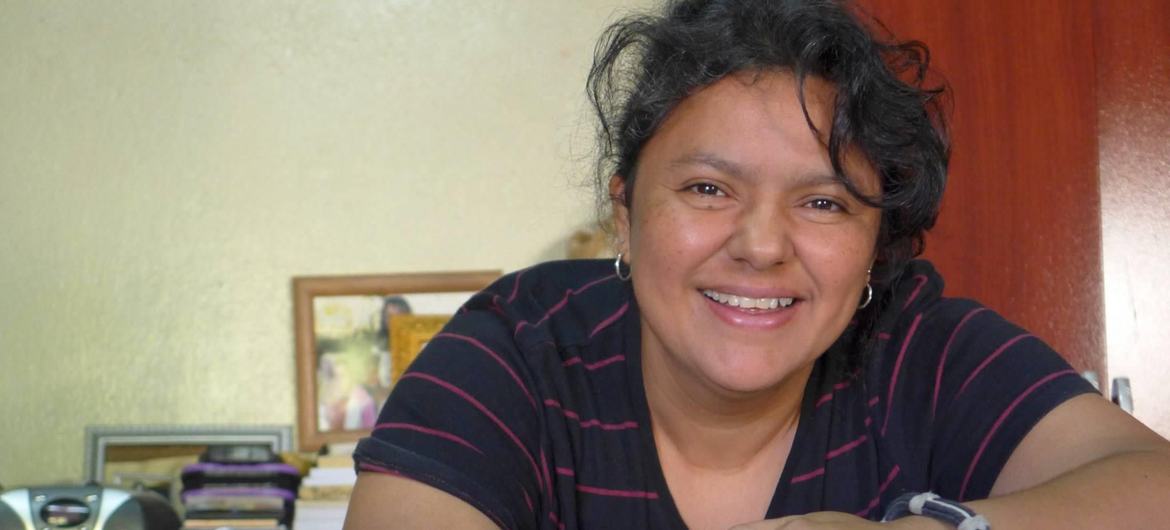
At particular risk are people who speak out against deforestation, extractives, loss of cultural heritage or identity, or large scale-agribusinesses and development projects – including those intended to produce clean energy, such as mega dams,she said.  Many environmental human rights defenders are also indigenous peoples, or members of local communities or minority groups – or those representing them.   Berta Caceres, an environmental activist from Honduras, was assassinated in March 2016.  She was recognized posthumously as a UN Champion of the Earth laureate for her tireless campaign for the rights of indigenous people.

Berta Caceres, an environmental activist from Honduras, was assassinated in March 2016. She was recognized posthumously as a UN Champion of the Earth laureate for her tireless campaign for the rights of indigenous people. © UNEP

She said entire communities may face threats and intimidation when someone speaks out on their behalf.  Ms. Bachelet underlined that States have an obligation to respect and protect the rights of environmental human rights defenders, and the communities they represent.  Authorities must also prevent and ensure accountability for attacks.  These actions are in line with a Council resolution adopted last year which upholds the right to a healthy environment, she said.  See also: https://humanrightsdefenders.blog/2021/10/26/aarhus-convention-gets-new-mechanism-to-protect-environmental-defenders/ and

“In addition, it is critical that States effectively regulate businesses and hold them accountable for human rights violations,” she said, while corporations also have a similar duty, as outlined in the UN Guiding Principles on Business and Human Rights

Ms. Bachelet advised that prior to undertaking any climate project, both governments and businesses must carry out human rights risk assessments.  

If indigenous peoples’ rights are at risk of being adversely affected by such projects, it is crucial that their free, prior and informed consent is obtained,” she said. 

The UN rights chief also reported on some of the global work of her staff.  “All around the world, my Office is committed to supporting States, businesses and environmental human rights defenders in all of their efforts to protect our planet,” she said. 

For example, over 200 human rights defenders in the Pacific region have been trained to help boost sustainable development, business and human rights in the context of climate change.  

In Southeast Asia, OHCHR is monitoring cases of harassment, arrest, killings and disappearances of environmental human rights defenders, while

https://yubanet.com/world/protect-the-defenders-of-the-planet-un-rights-chief-urges/working with governments towards ending punitive measures levelled against activists. 

https://news.un.org/en/story/2022/03/1113022

48th session of the Human Rights Council: outcomes

October 19, 2021

On 11 October 2021 14 NGOs shared reflections on the key outcomes of the 48th session of the UN Human Rights Council, as well as the missed opportunities to address key issues and situations [See also: https://humanrightsdefenders.blog/2021/09/13/human-rights-defenders-issues-in-the-48th-session-of-he-un-human-rights-council/]:

We welcome the adoption of the resolution on the establishment of the UN Special Rapporteur on human rights and climate change, who will focus on the interdependence between human rights, a healthy environment, and combating climate change and we welcome the Council’s historic recognition of the human right to a clean, healthy and sustainable environment. These are vital steps towards addressing the climate crisis and achieving environmental justice.

Ensuring a safe and enabling environment for civil society participation at the national and international levels is essential.

We welcome the adoption by consensus of the resolution on cooperation with the UN in the field of human rights, in particular the invitation to the Secretary-General to submit his annual reprisals report to the General Assembly, which will ensure greater attention to the issue and contribute to a more coherent system-wide response across the UN.

We express concern over the reclassification of NGO written statements submitted to the 48th session of the HRC from Agenda Item 4 to Agenda Item 3 without informing or consulting with the submitting organizations, and without transparency for the reasons or scope of this reclassification.

We welcome that the resolution on equal participation in political and public affairs puts an important focus on the context of elections and on the impact of COVID-19, underscoring the importance of protecting civil society participation at every level  as part of an effective response to the pandemic, in post-pandemic recovery and as a vital component of democratic electoral processes. We regret that, in this and other resolutions, there has been systematic pushbacks against the inclusion of references to children’s right to participate in public affairs, in particular girls, in contravention of international human rights standards.

We also welcome the resolution on privacy in the digital age. Among other issues, the resolution responds to recent Pegasus revelations and includes new commitments on the use of privately-developed surveillance tools against journalists and human rights defenders. It is now essential that the Council goes further and champions the call made by various UN human rights experts to implement a global moratorium on the sale, export, transfer, and use of private surveillance technology without proper human rights safeguards. We also welcome new language in the text on privacy violations and abuses arising from new and emerging technologies, including biometric identification and recognition technologies. In future iterations of the text, we encourage the core group to go further in calling for a ban on technologies that cannot be operated in compliance with international human rights obligations.

With the withdrawal of the resolution on the realisation of a ‘better life’, we are glad to see that the Council’s mandate and resources will not be diverted to efforts that would distract from its core work or dilute human rights standards.

We regret that it was not possible to schedule the briefing by the Peacebuilding Commission (PBC) as per resolution 45/31 – and look forward to future opportunities for exchanges between the HRC and the PBC to learn from one another in efforts to address common contemporary challenges.

We deplore the abandonment of the Yemeni people by the HRC member States who did not support the renewal of the Group of Eminent Experts on Yemen. This failure of the HRC gives the green light to all parties to the conflict to continue their campaign of death and destruction in Yemen. We demand an international criminal investigative mechanism. Anything less is unacceptable.

We regret that the HRC has not responded to the calls of civil society and the evidence of widespread violations in countries including China, Egypt and Saudi Arabia where the situations manifestly warrant the establishment of international investigation and accountability mechanisms.

The establishment of a Special Rapporteur on the situation of human rights in Afghanistan supported by additional and dedicated expertise in OHCHR should bring much needed scrutiny. While we are disappointed that the Council did not establish the full-fledged investigative and monitoring mechanism that the situation warrants, we hope this decision represents a first step towards a stronger response to ensure accountability for human rights violations and crimes under international law in Afghanistan.

While the extension of international scrutiny in Burundi, including through ongoing documentation of violations, is welcome, we regret the absence of a clear strategy post-Commission of Inquiry. As the Burundian government continues to reject cooperation with the Council and its mechanisms and to deny violations, and given that the newly-created Special Rapporteur will not have access to the country for the foreseeable future, it is vital for the Council to rely on benchmarks to design the next steps of its action on, and engagement with, Burundi. We thank the COI for its important work since 2016. It has set the bar high for investigative mechanisms.

We welcome the extension of the mandate of the Special Rapporteur on the situation of human rights in Cambodia with a mandate to provide an additional oral update to the Council. However, the resolution falls short of the minimum action required to credibly address the increasing regression in democratic space and civil and political rights and to put in place necessary measures to create an environment conducive for free, fair and inclusive elections in 2022 and 2023, including mandating enhanced monitoring and reporting by the High Commissioner.

More than four years after the beginning of the conflict in the North-West and South-West regions in Cameroon, we deeply regret States’ failure, once again, to collectively address the country’s human rights crisis. As other international and regional bodies remain silent, the Council has a responsibility to act, including through the creation of an investigative and accountability mechanism. 

We welcome the renewal of the mandate of the Fact-Finding Mission (FFM) on Libya but regret that the mandate has only been extended for a 9-month period. The severity of ongoing and past violations and abuses in Libya, including war crimes, requires an FFM with a sustained and properly resourced mandate.

We welcome a second joint statement on Nicaragua, and urge concerned States to step up collective action in light of increasing repression ahead of the November 7 elections. Should the Government not revert course, it is fundamental that the Council takes stock and provides an adequate, strong response, including the establishment of an international mechanism at its 49th session.

We welcome the High Commissioner’s oral updates on the Philippines.  While the UN Joint Program on Human Rights (UNJP) might provide a framework for improvements, we remain concerned that the UN Joint Programme on Human Rights is instrumentalized by the Government only to please the international community. The national accountability mechanism fails to show meaningful progress. We continue to urge the Council to consider establishing a Commission of Inquiry on the Philippines, to eventually start the long-overdue independent and transparent investigation into the human rights violation in the country.

We welcome the robust resolution that extends the mandate of the Independent Expert on Somalia for a further year. 

While human rights advancements since 2019 in Sudan should be recognized, Sudan still faces significant human rights challenges including threats of the militarization of the State which is also the most challenging peril for women’s rights and WHRDs in Sudan. The transition is not complete, and political uncertainty remains. Against this backdrop, the Council’s decision to discontinue its formal monitoring of and reporting on Sudan is premature as the military establishment continues to pose a threat to democracy and stability in Sudan. We urge the Sudanese authorities to fully cooperate with the UN human rights system to address ongoing violations including sexual and gender based violence and the legacy of 30 years of dictatorship, including impunity for crimes under international law.

Signatories: International Service for Human Rights (ISHR), Cairo Institute for Human Rights Studies; DefendDefenders (East and Horn of Africa Human Rights Defenders Project); Commonwealth Human Rights Initiative (CHRI); FIDH; ARTICLE 19; International Commission of Jurists; FORUM ASIA; International Bar Association; Franciscans International; CIVICUS: World Alliance for Citizen Participation; Association of Progressive Communications – APC; child rights connect; Gulf Center for Human Rights

https://ishr.ch/latest-updates/hrc48-civil-society-presents-key-takeaways-from-human-rights-council/

New Right to Healthy Environment: NGOs urge action

October 11, 2021

On 11 October 2021 ReliefWeb published the open letter signed by 166 civil society organizations and individuals calling upon world leaders to put human rights at the centre of environmental policy (for signatories see link below).

“Respecting and protecting human rights and protecting the environment are inextricably linked. Yet while Heads of State from 88 countries have called to end siloed thinking in the Leaders Pledge for Nature, environmental policy-making still too often excludes or sidelines human rights.

Today we, the undersigned — a broad range of indigenous peoples’ organisations, civil society groups — including human rights, land and environmental defender organisations — academics and [UN] experts from the Global South and North — call on the world’s leaders to bring together human rights, environmental and climate in policy-making in order to secure a just, equitable and ecologically healthy world for all.

The reciprocal relationship between nature and people has existed since time immemorial, but it is now unbalanced. There are countless examples in all parts of the world of how forests, savannas, fresh water sources, oceans, and even the air itself, are being privatised, polluted and destroyed by industries such as agriculture, timber, pulp and paper, mining and oil and gas extraction. These and many other industries not only wreak destruction on Mother Earth, but they also have direct and devastating impacts on human rights. Indigenous peoples and local communities living in close proximity to the production, extraction and processing of raw materials suffer dispossession of their lands, impoverishment, deterioration of their health, and destructive impacts on their culture, among many other abuses. In turn, human rights, land and environmental defenders who seek to prevent these violations suffer threats, criminalisation and violent attacks, and increasingly, killings.

The costs of both environmental destruction and measures to address this often fall disproportionately on those already in precarious positions — such as indigenous peoples, afro-descendants, local communities, women, children and youths, and poorly-paid workers, particularly in the Global South but also in the Global North — while the profits of the largest and most environmentally-damaging industries, and the wealth of their owners and financers, continues to grow. It is unforgivable that polluting industries profit at the expense of the health and human rights of marginalised communities. And, ultimately, this environmental destruction has indirect human rights impacts on us all.

Just this month the Human Rights Council adopted a resolution recognising the Right to a Healthy Environment. Yet while there is evidence that the protection of human rights can lead to better environmental outcomes, calls for recognition of the holistic and indivisible nature of human rights and the environment often go unheeded in global, regional and national environmental and climate policy forums.

This must change. As a global community we face multiple, intersecting crises: increasing human rights abuses and environmental harms by companies, land grabs, the loss of food and water sovereignty, increasing poverty and inequality, increased attacks and killings of defenders, climate change-induced disasters and migration, the diminishing health of the oceans and critical biodiversity loss. Resolving these crises demands a holistic approach to environmental policy that embeds human rights and tackles systemic problems, including historically rooted social injustice, ecological destruction, state capture by corporations, corruption and impunity, as well as and social and economic inequality.

We urge world leaders to ensure that all policymaking related to the environment — including the climate and biodiversity crises, ownership and use of land, water and resources, ecosystem degradation, corporate accountability and trade, among others — address human rights and the environment in an integrated manner. This would help to catalyse the transformative action that is urgently required.

Respect for, protection, promotion and fulfilment of human rights, and the protection of those who defend them, must be an essential and non-negotiable part of measures adopted in upcoming negotiations at the UN Convention of Biological Diversity, COP15, and the UN Framework Convention on Climate Change, COP26. Human rights must also be central to regional and national level climate and environmental policies, such as proposed deforestation legislation in the UK, the EU and the USA, which must be further strengthened.

The time to act is now: we call on you to unite human rights, climate and the environment once and for all. In doing so, you can help us and our future generations to thrive by living in harmony with nature. And in doing so, you can affirm that both nature and people have intrinsic worth and that governments are serious in living up to their duty both to protect Mother Earth and to respect, protect and fulfil human rights.”

See also: https://humanrightsdefenders.blog/2021/09/13/global-witness-2020-the-worst-year-on-record-for-environmental-human-rights-defenders/

https://reliefweb.int/report/world/open-letter-civil-society-world-leaders-put-human-rights-centre-environmental-policy

https://www.scoop.co.nz/stories/WO2110/S00102/civil-society-calls-on-world-leaders-to-put-human-rights-at-the-centre-of-environmental-policy.htm