There is and always will be debate on who is a human rights defender. At a recent meeting in May 2013 at York University, UK, there were several sessions and academic interventions devoted to the topic (when the report is out, I will revert), but in the meantime is interesting to note the use of the term – posthumously – for one of the leading politicians in Nigeria: Read the rest of this entry »
Posts Tagged ‘Nigeria’
The Human Voices of Freedom, Securing Human Rights Online – Event by Internet Freedom Fellows
March 4, 2013On Thursday 7 March 2013 will take place “The Human Voices of Freedom – Securing Human Rights Online” event: a panel discussion and interactive webcast with human rights activists from across the globe at the Human Rights Council, highlighting the importance of protecting freedom of expression on-line. This public event, sponsored by the U.S. Mission to the UN, is to take place from on 7 March from 1pm to 3pm in room XXIII/United Nations Office at Geneva.
The Internet Freedom Fellows program brings human rights activists from across the globe to Geneva, Washington, DC, and Silicon Valley to meet with fellow activists, U.S. and international government leaders, and members of civil society and the private sector engaged in technology and human rights. This year’s Internet Freedom Fellows are human rights activists and active practitioners of digital media from China, Russia, Ghana, Nigeria and Sudan.
Please note: Registration is only required for those attendees who do not hold a United Nations badge.
The state of the States: understanding fragile states
February 22, 2013On 22 February 2013 Dan Smith published a post on his blog on the ‘state of States’. While not directly touching on human rights defenders, it gives in few words an excellent overview of the formation and deformation of States which provide much of the power and abuse that human rights defenders struggle against. I summarize some of the main issues here, but urge you to read the full text:
First he points out that most states are relatively new. By 1900 there were just 48 states in our modern sense of the term. In the years either side of World War I, with the break-up of the Ottoman and Habsburg Empires, there was considerable state-making. Even so, the UN was founded by just 51 states. Today, 193 states make up the UN, the newest being South Sudan in July 2011.
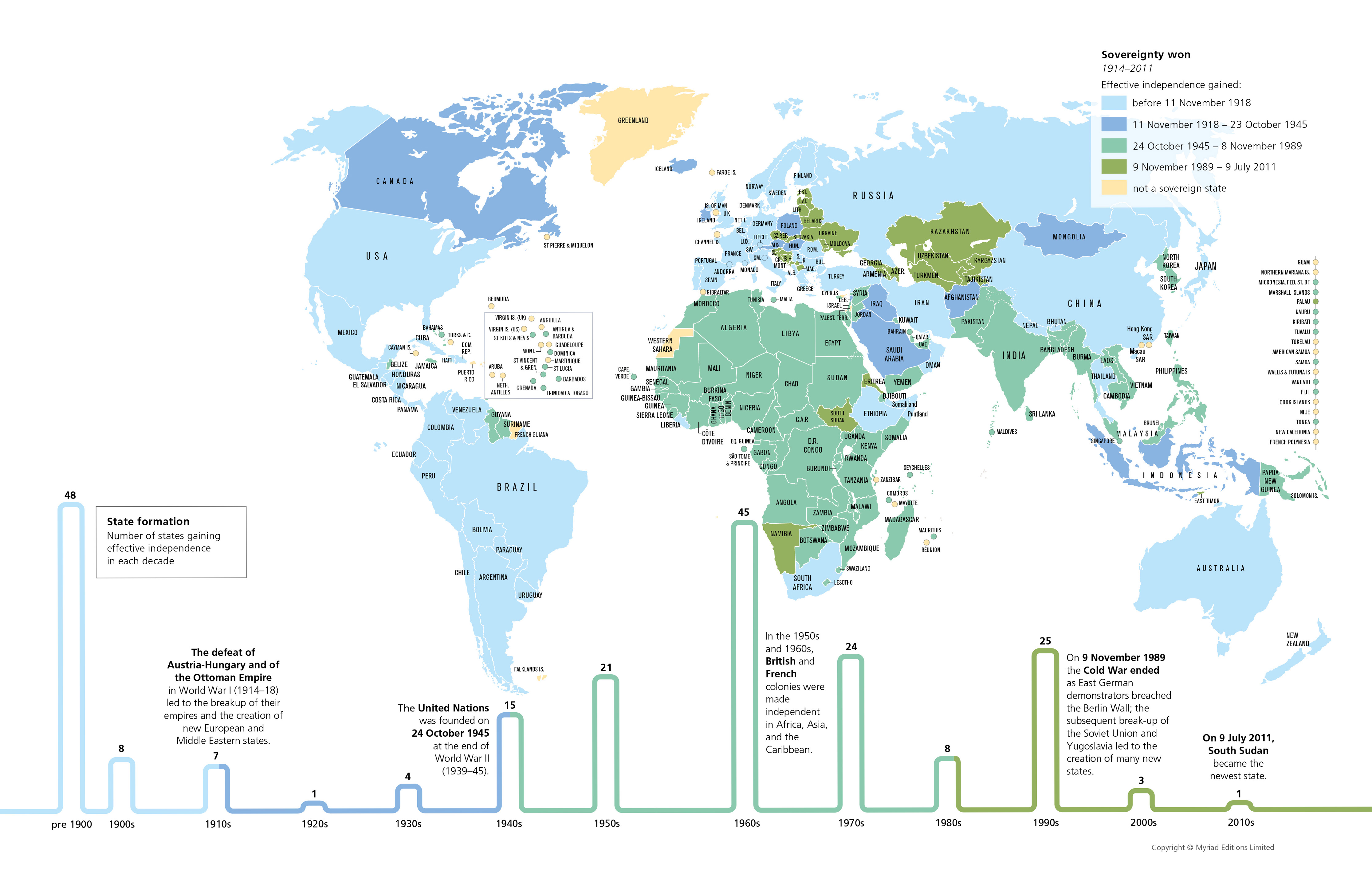
- From 48 to 193 (recognised states, that is) – from The State of the World atlas Read the rest of this entry »
 Hans Thoolen on Human Rights Defenders and their awards