Posts Tagged ‘Minky Worden’

FIFA Broke Human Rights Rules: Saudi Arabia Shouldn’t be Rewarded for Its Repression

November 6, 2023

On 27 October, 2023 Human Rights Watch stated that FIFA has broken its own human rights rules in announcing a plan for hosting the next two men’s World Cups that effectively eliminates bidding and human rights due diligence.

Within hours after FIFA published its arrangements for the 2030World Cup, Saudi Arabia announced its ambitions to host the 2034 World Cup.  

Barely a year after the human rights catastrophes of the 2022 Qatar World Cup, FIFA has failed to learn the lesson that awarding multi-billion dollar events without due diligence and transparency can risk corruption and major human rights abuses,” said Minky Worden, director of global initiatives at Human Rights Watch “The possibility that FIFA could award Saudi Arabia the 2034 World Cup despite its appalling human rights record and closed door to any monitoring exposes FIFA’s commitments to human rights as a sham.” 

In February 2023, Human Rights Watch contacted FIFA to request details on its due diligence and stakeholder consultation for selection of future World Cup hosts and awarding commercial sponsorship contracts. FIFA has not responded.

Because of regional rotation requirements, the six-country 2030 World Cup means that FIFA will only accept bids from Asia or Oceania for 2034, opening the way for Saudi Arabia to be the host. FIFA instead needs to keep open bidding for the 2034 World Cup and apply the same human rights benchmarks to all bidders in advance of selection, Human Rights Watch said.

FIFA’s Human Rights Policy, adopted in 2017, outlines its responsibility to identify and address adverse human rights impacts of its operations, including taking adequate measures to prevent and mitigate human rights abuses. Article 7 of FIFA’s Human Rights Policy states that “FIFA will constructively engage with relevant authorities and other stakeholders and make every effort to uphold its international human rights responsibilities.” This should include consulting a wide range of stakeholders, including potentially affected groups, domestic human rights monitors, athletes, fans, migrant laborers, and unions, before making major hosting decisions. [see also: https://humanrightsdefenders.blog/2022/04/17/fifa-world-cup-the-human-rights-plans-of-host-cities/]

Under FIFA’s human rights policies, countries bidding to host games must commit to strict human rights and labor standards. In the introduction to FIFA’s “Key Principles of the Reformed Bidding Process,” FIFA President Gianni Infantino writes: “Whoever ends up hosting the FIFA World Cup must …formally commit to conducting their activities based on sustainable event management principles and to respecting international human rights and labour standards according to the United Nations’ Guiding Principles.” 

FIFA has so far failed to apply these principles in the award of the 2030 and 2034 World Cups. 

In June, FIFA cancelled its planned announcement about the bidding process for the 2030 World Cup, instead announcing that:

in line with the principle of confederation rotation and of securing the best possible hosting conditions for the tournaments, the bidding processes for both the 2030 and 2034 editions would be conducted concurrently, with FIFA member associations from the territories of the Asian Football Confederations and the Oceania Football Confederation invited to bid to host the FIFA World Cup 2034

FIFA’s Overview of the Bidding Processes document sets a deadline for any member associations to confirm bidding by October 31, 2023, an unreasonably tight deadline for the 2034 World Cup 11 years away that should include national stakeholder consultation and could ultimately cost billions of dollars. Saudi Arabia’s appalling human rights record has deteriorated under Crown Prince Mohammed Bin Salman’s rule, including mass executions, continued repression of women’s rights under its male guardianship system, and the killing of hundreds of migrants at the Saudi-Yemen border. Torture and imprisonment of peaceful critics of the government continues, and courts imposed decades-long imprisonment on Saudi women for tweets. Sex outside marriage, including same-sex relations, is a crime, with punishments including death. Lesbian, gay, bisexual and transgender (LGBT) people in Saudi Arabia practice extreme self-censorship to survive their daily lives. LGBT players and fans visiting Saudi Arabia could face censorship, stigma, and discrimination on the basis on their sexual orientation and gender identity. See e.g.: https://humanrightsdefenders.blog/tag/saudi-arabia/]

Independent human rights monitors, journalists, women’s rights activists, and other peaceful critics are jailed, under house arrest, and cannot safely work in Saudi Arabia. Saudi Arabia has severe restrictions on journalists and free expression, a basic requirement for World Cup hosts, Human Rights watch said. In October 2018, Saudi agents murdered and dismembered the Washington Post columnist Jamal Khashoggi, who had been critical of the Saudi government, an assassination apparently approved by the crown prince himself.

In Saudi Arabia, independent human rights monitoring is not possible due to government repression. This makes it effectively impossible for FIFA to carry out the ongoing monitoring and inspection of human rights its human rights policy requires,” Worden said. 

While welcoming the Saudi bid to host the World Cup in 2034, FIFA has not said anything about how it proposes to assess its human rights conditions.

“With Saudi Arabia’s estimated 13.4 million migrant workers, inadequate labor and heat protections and no unions, no independent human rights monitors, and no press freedom, there is every reason to fear for the lives of those who would build and service stadiums, transit, hotels, and other hosting infrastructure in Saudi Arabia,” Worden said.

“FIFA is failing in its responsibility to the world of football to conduct World Cup bidding and selection procedures in an ethical, transparent, objective, and unbiased way,” Worden said. “If there’s to be any integrity in what remains of this process, FIFA needs to immediately delay and open the bidding process for the 2034 World Cup, make public its labor, human rights, and environment policies, and then make sure protections are fully carried out.”

https://www.hrw.org/news/2023/10/27/fifa-broke-own-human-rights-rules-world-cup-hosts
https://www.forbes.com/sites/minkyworden/2023/11/02/rights-at-risk-as-saudi-arabia-sole-bidder-to-host-2034-world-cup/?sh=394e4fb123de

https://www.ft.com/content/7f86882f-6cc6-4259-9520-6fa07e9669be?segmentId=3f81fe28-ba5d-8a93-616e-4859191fabd8

Olympics: IOC getting closer to a human rights strategy

June 8, 2022

The International Olympic Committee’s (IOC) progress update released on May 20, 2022, is an important step toward adopting a desperately needed human rights strategic framework, the Sport & Rights Alliance said today. The move follows decades of calls from civil society and addresses several long-time demands from nongovernmental organizations and trade unions. [See: https://humanrightsdefenders.blog/2020/12/03/ioc-moves-on-its-human-rights-approach-more-of-a-marathon-than-a-sprint/]

“The International Olympic Committee should immediately adopt and entrench human rights across its operations, and add protecting and respecting human rights to the Olympic Charter as a fundamental principle,” said Minky Worden, director of global initiatives at Human Rights Watch. “Though overdue, this is a critically important step. It is a testament to what happens when athletes, activists, fans, journalists, workers and communities come together to make change.”

The IOC’s progress report acknowledges its responsibility to “respect human rights in accordance with the UN Guiding Principles on Business and Human Rights (the UN Guiding Principles),” and makes a commitment to “amending the Olympic Charter to better articulate human rights responsibilities.” The IOC also rightly focused on salient rights issues, such as equality and non-discrimination; safety and well-being; livelihoods and decent work; voice – including freedom of expression, association and assembly, and meaningful representation –and privacy.

“The IOC report is right to say that athletes sit at the heart of sport, and the IOC’s human rights strategy must deliver for them,” said Brendan Schwab, executive director of the World Players Association. “This means defining athlete rights in accordance with international law, recognizing the right of athletes to organize, and ensuring that bodies such as the Court of Arbitration for Sport will enable athletes to access justice where their human rights have been violated. The IOC has long purported to advance athlete rights without respecting international human rights standards.”

The Sport & Rights Alliance has found key gaps in the document which need to be addressed in the final IOC Human Rights Strategic Framework, scheduled to be launched in September 2022. Most notably, the IOC failed to acknowledge journalists, people with disabilities, spectators and fans, as well as racial and ethnic minority groups as “particularly at-risk populations.”

“The chaos that unfolded around the UEFA Champions League final in Paris clearly shows that the IOC also needs to look closer to how fans are treated, especially for the next Games in Paris 2024,” said Ronan Evain, executive director of Football Supporters Europe. “The Olympic movement has no audience without its spectators. In its role as authoritative leader of the Olympic Movement and global sports governance, the IOC’s decisions determine how and whether fans participate in events, where we travel, how we’re treated, yet it has once again forgotten that fans too have human rights.”

Eli Wolff, director of the Power of Sport Lab and co-founder of Disability in Sport International, said that, “Persons with disabilities are a critically affected group in sport and in society and are protected and recognized by the United Nations and specifically in the Convention on the Rights of Persons with Disabilities. Persons with disabilities are more than 15 percent of the global population and must be recognized in the human rights strategies and all equality and non-discrimination policies of the International Olympic Committee.”

The Sport & Rights Alliance added that the gaps identified in the progress report are not entirely surprising, given that it was developed without direct input from representatives of affected people and communities. Ongoing stakeholder engagement is an essential requirement of the UN Guiding Principles, in the identification and prioritization of human rights risks, when informing effective mitigation strategies, tracking its effectiveness and addressing violations.

Affirming the IOC’s commitment to “integrating meaningful engagement with affected stakeholders” into its ongoing due diligence processes, the Sport & Rights Alliance underlines the need for this to start as soon as possible. As the leader of global sport, the IOC should also take the additional step of including stakeholder representation in its governance structures to ensure the voice and lived experience of affected people are included in all decision-making processes.

“Given the declared launch date of September 2022, the IOC should immediately engage representatives for all affected groups — including spectators, journalists, children, survivors, athletes, LGBTQI+ population and people with disabilities — in meaningful and ongoing consultations for the next steps,” said Andrea Florence, acting director of the Sport & Rights Alliance. “It is only through transparent participation of people and communities directly impacted in decision-making processes that the IOC will actually understand how to prevent and address human rights harms related to their operations.”

Since the UN Guiding Principles were unanimously endorsed by UN Member States in 2011, the IOC has resisted pressures from civil society to adopt human rights across its operations and effectively engage with representatives of affected people and communities, even as it awarded the Olympics to countries with poor or worsening human rights environments.

Members of the Sport & Rights Alliance have long met with Olympic leaders to urge the IOC to adopt a human rights framework, accept their responsibility to seek to prevent and address human rights harms linked to the Olympic Movement, and to mitigate and remedy harms that they cause or contribute to directly. The IOC should also use its enormous power to improve often abysmal human rights conditions in host countries including ChinaBrazilRussiaBelarus and Japan.

https://www.hrw.org/news/2022/06/07/olympics-ioc-heeds-calls-embed-rights

Asian football and human rights: still a long-term goal

April 7, 2019

That there is still a lot that needs to be done in the world of sports and human rights is illustrated in the piece by Minky Worden (director of global initiatives at Human Rights Watch) in the Sydney Herald of 7 April 2019 (“Football leaders stand by as human rights abuses pile up”). Article 3 of the FIFA and AFC Statutes requires the AFC and its leaders “promote and protect
human rights”. [see also: https://humanrightsdefenders.blog/2018/12/03/fifas-second-report-on-human-rights-misses-sustainable-approach/]

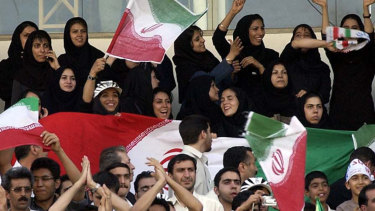
A too-rare sight ... Iranian women cheer their national team in an Asian World Cup qualifying match against Bahrain in 2006. Now women resort to disguising themselves as men to enter stadiums.
A too-rare sight … Iranian women cheer their national team in an Asian World Cup qualifying match against Bahrain in 2006. Now women resort to disguising themselves as men to enter stadiums.CREDIT:AP

Yet Sheikh Salman remained silent when Bahrain attempted to extradite Hakeem Al-Araibi, former national football player who had been accepted as a refugee in Australia, earlier this
year – despite strong statements by FIFA itself calling for his release. [see: https://humanrightsdefenders.blog/2019/02/11/bahrain-feels-forced-to-drop-extradition-request-against-footballer-hakeem-al-araibi-who-is-on-the-plane-back-home/]

..He is not the only high-level football official who may not be acting in accordance with the policy. In 2018, 20 members of Afghanistan’s women’s national team made detailed allegations to the Guardian and to FIFA of sexual and physical abuse they say they suffered at the hands of the president of the Afghan Football Federation, Keramuddin Karim, and other officials. FIFA suspended Karim for two 90-day periods and during this time he has reportedly threatened witnesses in the case. He stands accused of sexual assault, physical attacks and intimidation…. The federation general secretary, Sayed Ali Reza Aghazada of Afghanistan, was suspended, yet was also just elected to the AFC’s powerful governing body, the executive committee.

Finally, Iran’s Football Federation president, Mehdi Taj, was elevated to AFC vice-president……….On Friday, before the AFC election, Iranian women filed an unprecedented FIFA ethics complaint against Mehdi Taj, for his role in presiding over their exclusion from stadiums for years. FIFA has said clearly in its second Human Rights Advisory Board report that the stadium ban for women violates FIFA’s statutes, which say such discrimination is “punishable by suspension or expulsion”.

The AFC football leaders from Bahrain, Afghanistan and Iran are bound by the FIFA code of ethics, the FIFA statutes and the FIFA human rights policy. FIFA has made admirable progress in implementing its new policy , and could even raise the bar for other sports federations. But FIFA’s reform efforts risk derailment if the sport’s leaders in Asia refuse to uphold the new global standards. FIFA’s Gianni Infantino, up for re-election unopposed himself this year, needs to find his voice to call out football federation leaders who are undermining reforms. It is time to hold accountable those who are threatening the “beautiful game” with ugly human rights abuses.

https://www.smh.com.au/sport/soccer/football-leaders-stand-by-as-human-rights-abuses-pile-up-20190407-p51bmp.html

IOC repeats mistake: Winter Olympics 2022 to China

August 11, 2015

After the IOC awarded the winter olympics 2022 to China, Minky Worden, Human Rights Watch’s Director of Global Initiatives, had this to say on 31 July 2015:

http://www.hrw.org/news/2015/07/31/ch…

see earlier: https://thoolen.wordpress.com/2015/02/26/coalition-of-human-rights-defenders-and-others-call-on-olympic-committee-to-change-its-ways/