Posts Tagged ‘Inter-American Court of Human Rights’

Inter-American Court of Human Rights: Historic Victory for CAJAR in Colombia

April 10, 2024

In a landmark ruling for fundamental freedoms in Colombia, the Inter-American Court of Human Rights found that for over two decades the state government harassed, surveilled, and persecuted members of a lawyer’s group that defends human rights defenders, activists, and indigenous people, putting the attorneys’ lives at risk. 

The ruling is a major victory for civil rights in Colombia, which has a long history of abuse and violence against human rights defenders, including murders and death threats. The case involved the unlawful and arbitrary surveillance of members of the Jose Alvear Restrepo Lawyers Collective (CAJAR), a Colombian human rights organization defending victims of political persecution and community activists for over 40 years.

The court found that since at least 1999, Colombian authorities carried out a constant campaign of pervasive secret surveillance of CAJAR members and their families. That state violated their rights to life, personal integrity, private life, freedom of expression and association, and more, the Court said. It noted the particular impact experienced by women defenders and those who had to leave the country amid threat, attacks, and harassment for representing victims.  

The decision is the first by the Inter-American Court to find a State responsible for violating the right to defend human rights. The court is a human rights tribunal that interprets and applies the American Convention on Human Rights, an international treaty ratified by over 20 states in Latin America and the Caribbean. 

In 2022, EFF, Article 19, Fundación Karisma, and Privacy International, represented by Berkeley Law’s International Human Rights Law Clinic, filed an amicus brief in the case. EFF and partners urged the court to rule that Colombia’s legal framework regulating intelligence activity and the surveillance of CAJAR and their families violated a constellation of human rights and forced them to limit their activities, change homes, and go into exile to avoid violence, threats, and harassment. 

Colombia’s intelligence network was behind abusive surveillance practices in violation of the American Convention and did not prevent authorities from unlawfully surveilling, harassing, and attacking CAJAR members, EFF told the court. Even after Colombia enacted a new intelligence law, authorities continued to carry out unlawful communications surveillance against CAJAR members, using an expansive and invasive spying system to target and disrupt the work of not just CAJAR but other human rights defenders and journalists

In examining Colombia’s intelligence law and surveillance actions, the court elaborated on key Inter-American and other international human rights standards, and advanced significant conclusions for the protection of privacy, freedom of expression, and the right to defend human rights. 

The court delved into criteria for intelligence gathering powers, limitations, and controls. It highlighted the need for independent oversight of intelligence activities and effective remedies against arbitrary actions. It also elaborated on standards for the collection, management, and access to personal data held by intelligence agencies, and recognized the protection of informational self-determination by the American Convention.

For more details see: https://www.eff.org/deeplinks/2024/04/historic-victory-human-rights-colombia-inter-american-court-finds-state-agencies
Profile of Valentina Rosendo Cantu, human rights defender in Mexico

March 13, 2019

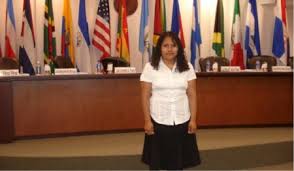
On 8 March 2019 LEXICON marked International Women’s Day  – in partnership with Peace Brigades International,- with a profile of Valentina Rosendo Cantu, a human rights defender in Mexico. This is the story of a woman who fought for her dignity and transformed her trauma and suffering into resilience. Her case led to a groundbreaking verdict by the Inter-American Court in June 2018.

Read the rest of this entry »

Ecuador: Clampdown on Civil Society | Human Rights Watch

August 13, 2013

On 12 August Human Rights Watch issued a report on Ecuador and urged it to revoke a presidential decree that grants far-reaching powers to the government to oversee and dissolve nongovernmental organizations.HRW_logo

On June 4, 2013, President Rafael Correa adopted a decree [a similar decree in December 2010 was shelved after criticism] that creates new procedures for Ecuadorean nongovernmental organizations to obtain legal status and requires international organizations to undergo a screening process to seek permission to work in Ecuador. Read the rest of this entry »

Crime pays in Colombia: Human rights organisation GIDH closes offices

May 30, 2013

The Grupo Interdisciplinario por los Derechos Humanos GIDH (Interdisciplinary Group for Human Rights), based in Medellín, Colombia, has announced that it has been forced to close its offices based on information that threats received by the organisation in the last months would be realised within the next hours. GIDH is a not-for-profit organisation working with victims of state violence. Front Line Defenders Read the rest of this entry »

Link between protecting the environment and human rights asserted by UN Expert Knox (re-issued with working links and references to case law)

March 11, 2013

What is apparent from this blog, which has featured many cases of environmental Human Rights Defenders, has now been clearly stated (on 7 March 2013) by the United Nations Independent Expert on human rights and environment, John Knox. In his report to the Council of Human Rights, he highlighted the urgent need to clarify the human rights obligations linked to the enjoyment of a safe, clean, healthy and sustainable environment. Such clarification, he said, “is necessary in order for States and others to better understand what those obligations require and ensure that they are fully met, at every level from the local to the global.”……………….In his report Mr. Knox also identifies rights whose implementation is vital to environmental policymaking, such as the rights to freedom of expression and association, rights to receive information and participate in decision-making processes, and rights to legal remedies. “The exercise of these rights, makes environmental policies more transparent, better informed and more responsive to those most concerned.” “States should recognize the important work carried out by human rights defenders working on land and environmental issues in trying to find a balance between economic development and environmental protection, should not tolerate their stigmatization and should ensure prompt and impartial investigations into alleged violations of their rights,” he said.

John Knox was appointed as the Independent Expert on human rights and the environment in July 2012 by the United Nations Human Rights Council.humanrightslogo_Goodies_14_LogoVorlagen

Learn more: http://www.ohchr.org/EN/NewsEvents/Pages/DisplayNews.aspx?NewsID=13089&LangID=E

Knox’s full report: http://www.ohchr.org/Documents/HRBodies/HRCouncil/RegularSession/Session22/A-HRC-22-43_en.pdf 

via Link between protecting the environment and human rights | Scoop News.

I would also like to refer now to an article by Lauri R. Tanner  in the Oxford Press Journal of Human Rights Practice on the landmark environmental defenders cases by the Inter-American Court of Human Rights: the milestone case of ‘Kawas v. Honduras‘ and the so-called ‘Mexican Ecologists case‘. In its first-ever ruling on environmental defenders, the Court found a positive obligation on the part of member states in the Hemisphere to protect environmentalists who are in serious jeopardy from human rights violations. The Kawas case is a paradigmatic example of the constant threats these activists encounter, both in the Americas and internationally, and states in the region are now on notice to ensure special protection to those most in danger of harm. The Court arrived at the remarkable juncture of ‘making visible and potentially punishable what heretofore has been invisible and unpunished’. In an epilogue Tanner addresses the subsequent ruling in the ‘Mexican Ecologists’ case, and offers recommendations to human rights and environmental defenders and practitioners both regionally and internationally.

PDF to download:
http://jhrp.oxfordjournals.org/cgi/reprint/hur020?ijkey=TmPlvBcvZYHLh18&keytype=ref

Full Text online:
http://jhrp.oxfordjournals.org/cgi/content/full/hur020?ijkey=TmPlvBcvZYHLh18&keytype=ref