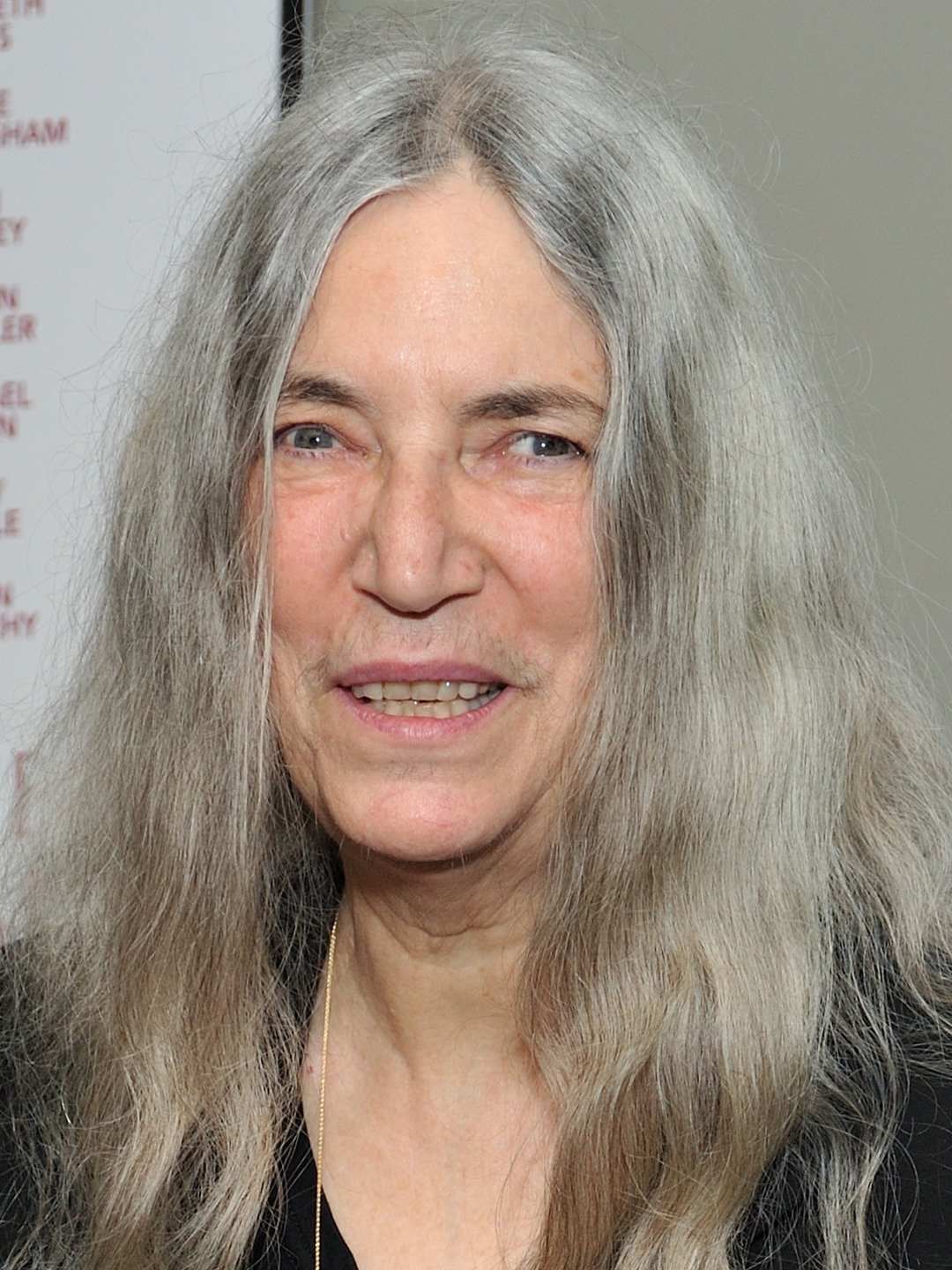
Musician Patti Smith attends a special screening of The Seagull at the Elinor Bunin Munroe Film Center in New York, NY on May 10, 2018. (Photo by Stephen Smith/SIPA USA) (Newscom TagID: sipaphotoseight127601.jpg) [Photo via Newscom]
Patti Smith is honored for her social commitment “She is an activist – with her books, her songs and her life. She stands up for human rights, peace, freedom, poverty reduction, inclusion and climate protection all her life,” the message said. In addition, Smith is a declared Beethoven fan. The Beethoven Academy has taken human rights, peace, freedom, poverty reduction and inclusion as its guiding principles. The International Beethoven Prize was awarded for the sixth time. [see: https://www.trueheroesfilms.org/thedigest/award/c05408e0-e598-11e7-a009-858a33846a9e].
The Argentinian Foreign Ministry on Wednesday 9 December delivered the 2020 edition of the Emilio Mignone International Human Rights Prize to Haiti’s Devoir de Mémoire foundation in a virtual ceremony due to the Covid-19 pandemic.
Founded in 2013, this foundation has pioneered the publication of historic testimony of previous human rights violations in the Caribbean island republic. The prize, awarded since 2007 in recognition of outstanding work abroad to defend human rights, is named after the late Professor Emilio Fermín Mignone, lawyer and founder of CELS (Centro de Estudios Legales y Sociales) human rights organisation. See: https://www.trueheroesfilms.org/thedigest/award/51115C74-AFA5-4D19-BDC1-E31917D770C4
The University of Oslo Human Rights Award 2020 [see: https://www.trueheroesfilms.org/thedigest] goes to the Congolese agronomist Marcelline Budza. Mrs. Budza is awarded the prize for her work in securing women’s financial rights and increasing their participation in society through the coffee cooperative Rebuild Women’s Hope.
Rebuild Women’s Hope (RWH) is an initiative that ensures financial independence and security for women in eastern parts of the Democratic Republic of Congo. The women receive training and the opportunity to become financially self-reliant coffee producers.
– In addition to enabling women to take control of their own lives, Mrs. Budza works to provide clean water and health services. We know this is crucial for both women’s and children’s health, and her commitment creates enormous positive ripple effects, said Stølen.
Marcelline is a trained agronomist, and she herself experienced how her mother as a single parent had to struggle to ensure necessary livelihood for the family.
From gynaecological medical care for victims of ISIS to “Cartoons for Peace”. German Foreign Minister Heiko Maas and his French counterpart Jean-Yves Le Drian on 10 December 2020 honoured 15 individuals from around the world who have shown a special commitment to human rights.
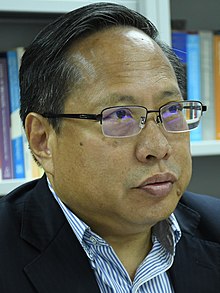
Human Rights First announced today that it will award the 2020 Roger N. Baldwin Medal of Liberty to Hong Kong human rights defender Albert Ho. The award will be presented today 10 December in a virtual event that will include a conversation between Ho and Human Rights First Senior Advisor Brian Dooley.
Albert Ho is a veteran Hong Kong lawyer and advocate whose career in human rights and political activism stretches back almost four decades. A leading figure in the pro-democracy movement for many years, he remains prominent in the protest movement that energized Hong Kong in 2019 and 2020.
“No dictatorship is too big or too strong to take on,” said Vladimir Vladimir Kara-Murza, Senior Advisor for Human Rights Accountability at Human Rights First and 2020 Baldwin Award jury member. “This decision shows who is right and wrong, and Albert Ho is in the right. There are no lost causes, and the cause of democracy in China is not lost.”
Ho is now facing a dozen charges related to those peaceful protests and his law firm continues to represent many others who have protest-related charges.
“I’m honored to accept this award,” said Ho, “but I do it on behalf of many colleagues who have shared the case of human rights in Hong Kong with me for so many years.”
Ho is the co-founder and senior partner of Ho, Tse, Wai and Partners (HTW), a Hong Kong law firm renown for advocacy on landmark human rights cases. Ho and HTW have represented many arrested pro-democracy protestors and challenged many of the Hong Kong government’s dubious actions, such as the banning of face masks under a colonial-era law and the disqualification of numerous pro-democracy lawmakers.
Ho has also done extensive advocacy for human rights lawyers in mainland China. He founded the China Human Rights Lawyers Concern Group in 2007 to provide humanitarian assistance to detained human rights lawyers and their families, advocate on behalf of detained lawyers, and share knowledge and experience with Chinese lawyers.
Despite surveillance and threats by Chinese authorities, Ho has maintained his steadfast support for his peers in mainland China in the face of the government’s crackdown on human rights lawyers, the “709 crackdown” known for the day it began – July 9, 2015. Placing the pursuit of justice before his own safety, Ho continues to raise awareness of the plight of human rights lawyers in China to see that the world holds the Chinese Communist Party accountable for human rights abuses.
Hussein al-Qaidi, director of the Office of Rescuing Kidnapped Yezidis for the Kurdistan Regional Government (KRG), has been named the recipient of the Sergio Vieira De Mello Prize, which is awarded yearly in Poland (!) to individuals and organizations which promote human rights and dialogue.
Qaidi is a Yezidi, born in the Duhok province of Iraqi Kurdistan. In 2014, after ISIS overran the Yezidis’ homeland, he organized campaigns to find missing people, free them, and help then return to a normal life.
The KRG supported Qaida’s efforts and already in August 2014, he was named to lead a new unit: the Office of Rescuing Kidnapped Yezidis. It is based in Duhok, and Qaida remains its head.
Last November, Qaida received the prestigious Mother Teresa Memorial Award for rescuing thousands of Yezidi women from the clutches of the ISIS terrorists.
Raoof hopes that the award will put Yezidis in the spotlight again in Poland, since previous awards were widely reported in the Polish media.
“I believe that it will once again make Polish people aware of the difficult fate of Yezidis and also show that there are still many people and organizations helping Yezidi people with great courage and commitment, ”he continued.
On 10 November 2020 Scholars at Risk (SAR) announced that Dr. Rahile Dawut is the recipient of its Courage to Think Award for 2020. Dr. Dawut is being recognized for her own work, as well as that of all the scholars and students of the Xinjiang Uyghur Autonomous Region, who together struggle for academic freedom and freedom of opinion, expression, belief, association, and movement.
Dr. Dawut is an Associate Professor in the Human Science Institute of Xinjiang University and founder of the Minorities Folklore Research Center in Xinjiang University. In December 2017, Dr. Dawut told a relative of her plans to travel from Urumqi to Beijing. Shortly thereafter, her family and friends lost contact with her. Professor Dawut’s disappearance was made public in August 2018. It is suspected that she is held by state authorities at an undisclosed location.
“My mother is a scholar, not a criminal,” said Akeda Pulati. “She studies the folklore and cultural traditions of minority populations. That is not a threat to the government, other institutions, or the people of China.”
“The imprisonment of Dr. Dawut, an internationally recognized scholar of Uyghur culture, reveals the Chinese government’s blatant repression of voices and ideas it finds displeasing,” said Rob Quinn, executive director of SAR. “This constricts academic activity and public expression, threatening minority traditions, histories, and languages. The disappearance of Dr. Dawut, along with many thousands of others, is an atrocity we should all strive to end.”
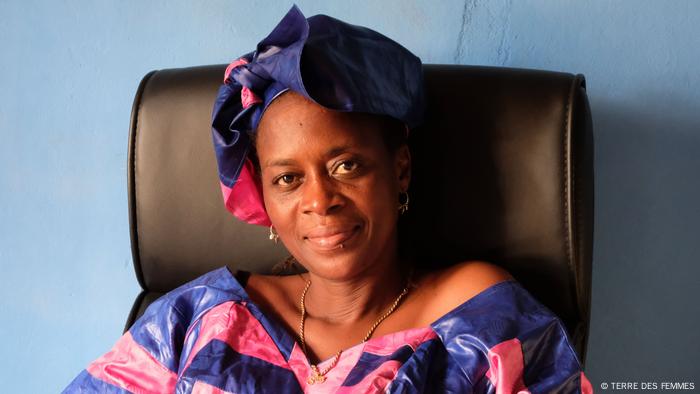
When Rugiati Turay was 12, she was taken to an aunty together with her three sisters and a female cousin.
“We were told it was just a visit,” Turay, now 47, recalls. “But I was grabbed and blindfolded and taken to a room. Women sat on me and held me down.”
Turay’s clitoris was then cut off. She still remembers the pain.
“I bled excessively and I almost lost my life. For one week, I could not walk,” Turay told DW. “All I knew was just the pain and the bleeding.”
Like Turay, some 90% of women and girls in Sierra Leone undergo female genital mutilation, or FGM. It is a cultural practice that involves the partial or total removal of the female genital organs, such as the clitoris or labia.
In Sierra Leone, the cutting is part of the initiation into secret women’s societies, known as Bondo, that prepare girls for marriage and motherhood.
When she was cut as a girl, Turay didn’t have the knowledge to express what had happened to her. She just knew it was wrong, she said in a telephone interview from Lunsar, a town some 120 kilometers (74 miles) from the capital, Freetown. Rugiatu Turay works to persuade traditional practitioners to lay down the tools used to cut girls
“I started talking to my friends, explaining to them what I went through,” she said. “Because we were all eager … to become members of the Bondo society. But when I experienced what I experienced, I thought it is high time to talk to others and not to be fooled.”
More than a decade later, Turay found herself in Kalia refugee camp in Guinea, where she had fled Sierra Leone’s civil war that raged from 1991 to 2002. In the camp, she was shocked that amid the hardship and insanitary conditions of the camp, mothers were still organizing for their daughters to be cut.
That was the moment when Turay, who had trained and worked as a teacher before fleeing the fighting, started on her journey to campaign to stop female genital mutilation in Sierra Leone.
The nation is one of 28 African countries where female genital mutilation is practiced
“I decided [that] we needed to engage these people. They needed to know that we have run away from violence committed to us by people and we are now perpetuating that violence on us,” she said.
In 2000 while still in Kalia camp, Turay founded the Amazonian Initiative Movement (AIM), together with a group of like-minded women, to reduce the incidence of FGM among the refugees.
The name was taken from the “strong and fearless” Amazonian warrior women from Greek mythology, explains Turay, chosen because “looking at the issues I was determined to address and knowing [Sierra Leone] and the people where I came from, I knew it was going to be a rough battle.”
In 2003, when she returned home after the end of the civil war, Turay started up a branch of the grassroots organization in her hometown of Lunsar.
As part of their activities, Turay and other AIM activists visit villages to talk to those involved in FGM, from women and girls, to local chiefs and imams. They also seek out the soweis, the traditional cutters, who earn a living from the practices. They seek to convince them to stop cutting and look for alternative livelihoods for these women. AIM has held several public ceremonies involving hundreds of soweis who have vowed to lay down their knives and razor blades.
It has also held a large alternative rites of passage lasting for 14 days to replace the traditional Bondo bush ceremony that girls usually pass through during initiation but without the cutting.
As well as running a safe house for girls fleeing from FGM and other violence such as forced marriage, AIM has built a school that includes a curriculum teaching about cutting.
Turay’s work hasn’t been easy. Initially, she couldn’t even rent a building for AIM as no one wanted to have anything to do with an anti-FGM organization. Luckily, her father supported her efforts, turning over his own house to use as her office.
She, and others involved in the organization, have also faced numerous death threats as well as being banned by the village chief – something Turay says has only hardened her resolve.
“When you threaten me and say you’ll kill me, I come back and I engage you,” she said.
“I ask, ‘Why do you really want to kill me? Tell me, what have I done? Have I killed anyone? No, I want to change your beliefs that are not progressive, that have killed so many people, that have kept others quiet but suffering in silence’.”
And so I use those threats and I talk to the leaders of the secret society and I engage them.”
Because of coronavirus travel restrictions, Turay will attend the awards ceremony on October 24, 2020 virtually. Turay was nominated by the German women’s rights organization, Terres des Femmes, for the award.
“Human Rights First has tremendous respect and admiration for the work of ALQST for Human Rights and its founder, Yahya Assiri,” said Michael Breen, president and CEO of Human Rights First. “Their work documenting human rights violations in the Kingdom of Saudi Arabia in the face of escalating pressure on human rights defenders couldn’t be more important, especially in an environment where information on these abuses is difficult to come by. In the present climate, where Saudi leaders can kill their critics with impunity, the work of Yahya Assiri and ALQST is critical.” [see also: https://humanrightsdefenders.blog/2019/03/28/3-saudi-women-human-rights-defenders-released-but-for-how-long-and-what-about-the-others/]
ALQST is one of the most active and trusted organizations that consistently monitors and documents human rights issues in Saudi Arabia, where escalating repression in recent years has decimated civil society and criminalized human rights activists. Through its extensive network of local sources, ALQST has unparalleled access to developments on the ground. Its analysis and reports are relied upon by international NGOs, media outlets and others amplifying the voices of Saudi human rights defenders and their messages among the international community. In the run-up to this year’s G20 summit in November, due to be hosted by Saudi Arabia, ALQST has been at the forefront of calls for governments and businesses not to turn a blind eye to the Saudi authorities’ egregious rights violations.
“This award sends a message that all the heroes who have courageously defended human rights in the country, for which they have often paid the highest price, have not been forgotten. We take this occasion to reiterate our call for their immediate and unconditional release.”aid ALQST founder Yahya Assiri. [see also: /https://humanrightsdefenders.blog/tag/yahya-assiri/]
The award is typically presented to recipients at an in-person award dinner and ceremony in New York. However, given the ongoing COVID-19 pandemic, Human Rights First will instead host a virtual event on October 21 to honor ALQST. The event will showcase ALQST’s work and feature an interview between Mr. Assiri and CBS Evening News and 60 Minutes correspondent Scott Pelley.
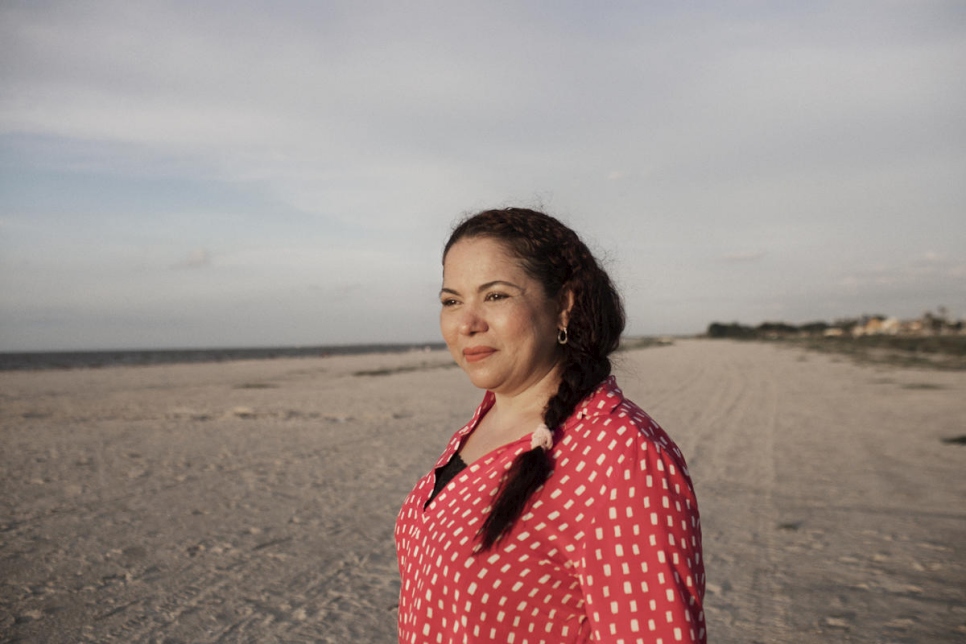
The 2020 laureate of the Nansen Refugee Award is a Colombian educator who has spent more than 20 years rescuing sexually exploited and trafficked children, many of them refugees. Mayerlín Vergara Pérez, Maye, has dedicated her life to defending children. As the Caribbean Regional Coordinator for the Renacer Foundation she has devoted more than two decades to helping the Colombian non-profit reach its goal of eradicating sexual exploitation and abuse of children and adolescents. Founded 32 years ago, the organisation has assisted over 22,000 child and adolescent survivors of commercial sexual exploitation, and survivors of other types of sexual and gender-based violence.
“People like Maye represent the best of us. Her bravery and selfless pursuit to rescue and protect some of the world’s most vulnerable children is nothing short of heroic,” said Filippo Grandi, UN High Commissioner for Refugees. “She embodies the essence of this award. Her unwavering dedication has saved the lives of hundreds of refugee children and restored their hopes for a better future,” he added.
For over 20 years, Maye has gone to extraordinary lengths, often risking her own safety to rescue girls and boys who are victims of sexual exploitation and trafficking. On foot, she combs the streets of remote communities in north-east Colombia where human traffickers and smugglers operate. Maye leads a team of dedicated staff at the Renacer Foundation in close coordination with the Colombian Family Welfare Institute, a government body tasked with protecting children in the South American nation. By speaking out against the abuses she has witnessed, she has called on civil society, Colombian authorities, and the tourism sector – which is fertile ground for sexual exploitation and trafficking in the country – to ensure that children and adolescents are protected.
“Sexual exploitation has a huge impact on children, emotionally, psychologically, physically and socially,” said Maye. “We see girls who don’t feel that their bodies belong to them. Their bodies have been so maltreated, so abused, so exploited that they feel alienated from those bodies, as if they don’t belong to them.”
In 2009, Maye’s relentless activism and advocacy helped usher in two landmark pieces of legislation. Law 1329 established a mandatory minimum sentence of at least 14 years in prison for those convicted of aiding and abetting the sexual exploitation of children and adolescents. While Law 1336 targeted the owners of establishments that allow the sexual exploitation of children on their premises.
Since 2015, the deteriorating situation in Venezuela has forced millions to flee. An estimated 1.7 million have sought shelter in neighbouring Colombia. Desperate to find safety and a better life, Venezuelans have resorted to any means possible to flee the country, with many falling prey to human trafficking networks, criminal gangs, and illegal armed groups that are often active along borders. Women and girls are often forced into sexual exploitation by smugglers to pay for their passage.
According to data provided by Colombian authorities, between 2015 to 2019, the number of victims of human trafficking there increased by 23 per cent. The rise is partly linked to the influx of Venezuelan refugees and migrants into the country.
Data from the Colombian government shows that in just the first four months of 2020, authorities had already identified a 20-per cent rise in trafficking involving foreign nationals over the previous year. In over half of cases, sexual exploitation was the ultimate goal of the trafficking.



 Hans Thoolen on Human Rights Defenders and their awards