Posts Tagged ‘Global Alliance of National Human Rights Institutions (GANHRI)’

UNDP sees national human rights institutions (NHRIs) as vital defenders

July 6, 2025
Group of diverse professionals posing together at a conference table in a meeting room.
Annual meeting of the Tripartite Partnership to Support National Human Rights Institutions UNDP

In the face of democratic backsliding, shrinking civic space and complex global crises, national human rights institutions (NHRIs) stand as vital defenders on the frontlines of human rights protection. On 18-19 June, UNDP, UN Human Rights Office (OHCHR), the Global Alliance of National Human Rights Institutions (GANHRI), NHRIs and their regional and global networks, as well as international partners convened to reflect on challenges NHRIs encounter in their daily work and to chart a strategic path forward.

“National human rights institutions are a cornerstone of any democratic system. When properly supported, they help prevent violations, close accountability gaps, and bring the voices of the most marginalized to the forefront,” said Dr. Ammar Dwaik, Director General, Independent Commission for Human Rights in Palestine.

The Tri-Partite Partnership (TPP) to Support NHRIs, a strategic collaboration between UNDP, OHCHR and GANHRI, has played a catalytic role in strengthening NHRIs in 15 countries. Through this partnership, NHRIs have enhanced their capacity, increased visibility and improved outreach to deliver services to marginalized or remote communities, as well as to support people amidst conflict, hostilities or post-crises. Compelling stories of institutional transformation were shared from the State of Palestine, Timor-Leste and Ukraine. 

The TPP has also empowered NHRIs to respond more effectively to urgent challenges, including the impacts of climate change and the digital divide. Innovative practices encompass the use of a real-time Human Rights Dashboard in Nigeria and the development of a digital platform to enhance public engagement in Costa Rica. “We have seen how investments in digital systems are improving institutional quality and deepening human rights impact,” said Turhan Saleh, Deputy Director, UNDP Crisis Bureau.

Discussions on environmental rights and climate justice highlighted experiences from Ecuador, Georgia and North Macedonia, demonstrating how NHRIs supported environmental defenders and helped integrate human rights into national climate responses. 

“We see a direct link between access to environmental justice and the protection of communities’ rights – especially those on the frontlines of climate impacts. Our role has been to amplify these voices and ensure that environmental policy is grounded in human rights,” said Tamar Gvaramadze, First Deputy Public Defender of Georgia.

The TPP Annual Meeting re-affirmed the UN system’s continued commitment to empowering NHRIs as independent, effective, and resilient institutions – essential for upholding human rights, democracy, peace, and sustainable development worldwide. 

see also: https://humanrightsdefenders.blog/2025/03/21/global-alliance-of-national-human-rights-institutions-annual-meeting-2025/

https://www.undp.org/press-releases/catalysts-change-rising-impact-national-human-rights-institutions

Global Alliance of National Human Rights Institutions – annual meeting 2025

March 21, 2025

Οn 12 March 2025 the United Nations High Commissioner for Human Rights Volker Türk addressed the Annual Meeting of the Global Alliance of National Human Rights Institutions

…Our partnership is especially crucial today, when the international system and the global consensus on human rights are under tremendous pressure. Across all regions, we see attempts to ignore, undermine and redefine human rights, to pit one right against another.

Women’s rights are one such example. 

The history of women’s rights has always been one of ebbs and flows. There have been incredibly important advances – universal suffrage, the right to work, property, inheritance, and economic rights – followed by setbacks. 

It has never been a straight path, but there has been progress overall. And the setbacks are temporary, because you cannot turn back the clock on gender equality and on the rights of women and girls. Even if there are those who loudly will try do so, you cannot. 

What is clear is that we cannot take anything for granted and must never be complacent.

Today, among other examples, the challenges include online and offline violence against women and girls, arbitrary limits to sexual and reproductive health and rights, resurgent toxic ideas about masculinity, especially among young men. 

Then there are the extreme cases of oppression and persecution of women such as in Afghanistan and parts of Yemen. 

Amidst all of this, against tremendous odds, and at great personal cost, women human rights defenders have remained steadfast in pushing for gender equality for women everywhere. 

More broadly, despite progress over decades, women still go unrecognized and ignored in many areas of life. 

In a world largely built by men, for men, the gender data gap persists. We need to address the invisibility of women on the data front. For example, women are still largely overlooked when it comes to science, healthcare, and the development of new technologies. According to Harvard University, 70 percent of the people impacted by chronic pain are women. And yet, 80 percent of pain studies are conducted on male mice, or on men.

For women with disabilities, women of African descent, indigenous women and other minorities, the disparities are even greater. For example, there is a 2:1 gender gap in internet access in favour of men with disabilities compared to women with disabilities.

Nearly 60 percent of women’s employment globally is in the informal economy, but the value of that work is often excluded from economic indicators. Women’s productivity and contributions are not captured or valued. And the COVID-19 pandemic made it clear that economies depend on women’s unpaid care work. 

There is a high risk that women will continue to be invisible as an overwhelmingly male generation of engineers develop AI systems and other new technologies.

Women and girls face entrenched discrimination, perpetuated by harmful power dynamics that subjugate and oppress half the world’s population.

Unless we dismantle structural inequalities piece by piece; and until we have full gender parity and equality, women’s rights will be vulnerable to fierce pushback and even manipulation.

The primary duty to promote and protect the rights of women and girls rests with States, in line with international human rights law.

But everyone in society – companies, including social media companies, civil society organisations, and national human rights institutions – has a role to play, and a stake in this issue. 

So much of the progress on women’s rights has been due to mobilisation at the national level. You are the best examples of that.

For example, painstaking advocacy by women human rights defenders led to the adoption of laws and policies on violence against women in a number of countries.

The private sector is working in collaboration with Governments to help to close the gender pay gap in a number of other countries.

These examples of success can inspire communities in other regions, inform international standards and improve the situation for women everywhere. 

As national human rights institutions, your role in promoting and protecting human rights is key. You are uniquely placed as advocates of international law and experts on the national context. 

Human rights are about facts. That is why our work to monitor and report on gender equality at the national level is crucial for legal and policy reform. You can also come up with creative new ideas on how to make women visible in data. 

Human rights are about the law. The right of women, in all their diversity, to have an equal say in all decisions that shape their societies, economies, and futures, is non-negotiable. Your advocacy for full gender parity across all policy areas, from economics to climate, from the design and roll-out of digital technologies to peace negotiations, can help make that law a lived reality on the ground. There are myriad examples within your own work of how to do that.

Within your institutions, you can lead by example by setting a high standard of gender parity and ensuring gender equality in staffing at all levels.

And human rights are about compassion – the glue that unites us in our common humanity. With our societies so divided, we need urgently open spaces for dialogue and joint action by different constituencies who may not always agree: Governments, companies, civil society, religious and faith leaders.  You are uniquely placed to build that space and bring various communities together in a public space for open debate and dialogue.

—-

The UNDP Administrator Achim Steiner participated via videolink.

https://www.ohchr.org/en/statements-and-speeches/2025/03/hc-turk-addresses-global-alliance-national-human-rights

https://www.undp.org/speeches/statement-high-level-opening-ganhri-annual-conference-2025
National Human Rights Institutions of Egypt and Bahrain fail the Paris Principles

October 30, 2023
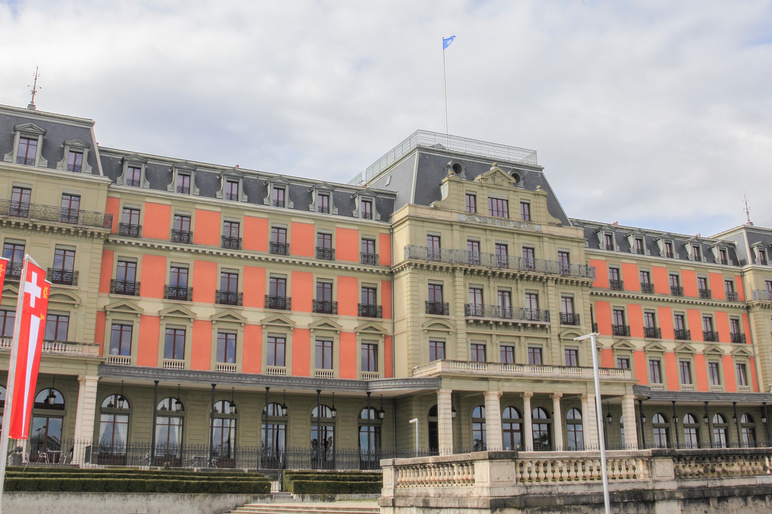
Palais Wilson shutterstock 1084789991

In a letter addressed to the Sub-Committee on Accreditation (SCA) of the Global Alliance of National Human Rights Institutions (GANHRI), civil society organisations, including the FIDH and the World Organisation Against Torture (OMCT), warn that Bahrain and Egypt do not comply with the Paris Principles, failing to respect the very pillars of these principles: pluralism, independence and effectiveness.

The undersigned civil society organisations believe that the two countries’ NHRIs have failed to comply with the Paris Principles and to implement recommendations outlined by the SCA’s previous reports in 2016 and 2018, respectively.

The Paris Principles define the minimal standards that NHRIs must abide by “in order to be considered credible and to operate effectively.” The pillars of these principles are pluralism, independence and effectiveness. NHRIs must be independent from the government, represent and cooperate with civil society, and effectively promote human rights by monitoring violations and addressing them. Based on civil society reports, the Bahraini and Egyptian NHRIs fall short of these standards.

In Bahrain, all the current members of the National Institution for Human Rights (NIHR) were appointed by King Hamad through a royal decree issued on 9 May 2021, and there is no democratic or independant mechanism through which these selections are made. The current Chairman of the NIHR, Ali al-Derazi, was reportedly implicated in abuses against migrant workers. Furthermore, the Vice-Chairperson of the NIHR, Mr. Khaled Abdulaziz Alshaer had previously called on those who criticised the Bahraini government to receive the death penalty.

In August 2022, the UN Committee on Economic, Social and Cultural Rights concluded that “[the NIHR] has not yet attained the independence required to perform its functions.” Previously in 2018, the UN Human Rights Committee had expressed similar concern and “[regretted] the lack of information on the complaints [the NIHR] has received and the investigations it has carried out in response to those complaints.”

In addition, Bahrain’s NIHR fails to address and outright denies the human rights abuses committed by the authorities, including arbitrary detention, ill-treatment and medical negligence in various detention facilities. This contradicts the UN Working Group on Arbitrary Detention’s findings regarding Abduljalil al-Singace, Abdulhadi al-Khawaja and Naji Fateel, three Bahraini human rights defenders who were arbitrarily detained, tortured, medically neglected and subjected to sham trials. [see also: https://humanrightsdefenders.blog/tag/bahrain/]

As for the Egyptian National Council for Human Rights (NCHR), it also lacks independence from the government. In 2021, new members of the NCHR were appointed for four years. The Chair, Ms. Moushira Khattab, and the Vice-President, Mr. Mahmoud Karem Mahmoud are both former Egyptian officials and diplomats. In both 2014 and 2018, Mahmoud was the coordinator of al-Sisi’s presidential campaign, which clearly demonstrates the NCHR’s close relationship with the executive.

In March 2023, the UN Human Rights Committee had echoed these concerns over the “lack of safeguards to ensure [the NCHR’s] full independence and effectiveness”, as well as over “the lack of information provided on the effective implementation of its recommendations.”

The NCHR has left hundreds of complaints unanswered and blatantly denies that certain human rights abuses are being committed. In 2020, the Council stated that findings of the UN Committee against Torture, according to which torture was “systematic” in Egypt, were a “politicized categorization” seeking to “undermine the efforts of the government”. The NCHR has also remained silent on prominent human rights issues such as the practice of enforced disappearance or the dire conditions of detention. In July 2023, the Council’s president compared a new correctional facility in Wadi al-Natroun to a “5-star hotel”. We believe that the Egyptian NCHR is far from acting as a NHRI with “A” status, which it has worryingly been granted since 2006 by the SCA. [see also: https://humanrightsdefenders.blog/tag/egypt/]

In light of the above, it is clear that the NHRIs of Bahrain and Egypt have consistently failed to comply with the Paris Principles and to implement the SCA’s recommendations.

We urge you to consider the aforementioned shortcomings of Bahrain and Egypt’s NHRIs when reviewing them during your upcoming session, and to not grant them status “A”.

Signatories:

  • Bahrain Institute for Rights and Democracy (BIRD)
  • CIVICUS
  • Democracy for the Arab World Now (DAWN)
  • Egyptian Commission for Rights and Freedoms
  • Egyptian Front for Human Rights (EFHR)
  • El Nadeem against Violence and Torture
  • Human Rights Foundation (HRF)
  • HuMENA for Human Rights and Civic Engagement
  • International Federation for Human Rights (FIDH) – within the framework of the Observatory for the Protection of Human Rights Defenders
  • International Service for Human Rights (ISHR)
  • Law and Democracy Support Foundation (LDSF)
  • MENA Rights Group
  • Rights Realization Centre (UK)
  • Salam for Democracy and Human Rights (SALAM DHR)
  • The #FreeAlKhawaja Campaign
  • The Freedom Initiative (FI)
  • World Organisation Against Torture (OMCT) – within the framework of the Observatory for the Protection of Human Rights Defenders

https://www.omct.org/en/resources/statements/bahrain-and-egypts-national-human-rights-institutions-do-not-comply-with-the-paris-principles