Posts Tagged ‘environmental defenders’

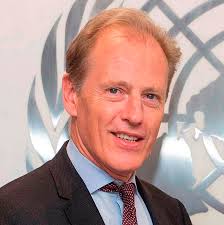
Sad end of year message by Andrew Gilmour as he leaves his UN post

December 29, 2019

His assesment of the human rights situation – as laid down in the article ofThe past decade has seen a backlash against human rights on every front, especially the rights of women and the LGBT communities. Andrew Gilmour said the regression of the past 10 years hasn’t equaled the advances that began in the late 1970s — but it is serious, widespread and regrettable. He pointed to “populist authoritarian nationalists” in North America, South America, Europe and Asia, who he said are taking aim at the most vulnerable groups of society, including Myanmar’s Rohingya Muslims, Roma, and Mexican immigrants, as well as gays and women. He cited leaders who justify torture, the arrests and killing of journalists, the brutal repressions of demonstrations and “a whole closing of civil society space.”

I never thought that we would start hearing the terms ‘concentration camps’ again,” Gilmour told The Associated Press in an exclusive interview. “And yet, in two countries of the world there’s a real question.” He didn’t name them but appeared to be referring to China’s internment camps in western Xinjiang province, where an estimated 1 million members of the country’s predominantly Muslim Uighur minority are being held; and detention centers on the United States’ southern border, where mostly Central American migrants are being held while waiting to apply for asylum. Both countries strongly deny that concentration camp-like conditions exist.

….Despite his dim view of the past decade, Gilmour — a Briton who previously worked in politics and journalism — said he didn’t want to appear “relentlessly negative.” “The progress of human rights is certainly not a linear progression, and we have seen that,” he said. “There was definite progression from the late ’70s until the early years of this century. And we’ve now seen very much the counter-tendency of the last few years.”

He pointed to the fact that in the past eight years or so, many countries have adopted laws designed to restrict the funding and activities of nongovernmental organizations, especially human rights NGOs. And he alleged that powerful U.N. member states stop human rights officials from speaking in the Security Council, while China and some other members “go to extraordinary lengths to prevent human rights defenders (from) entering the (U.N.) building even, let alone participate in the meetings.”…..

The rights of women and gays are also at stake, Gilmour said. He said nationalist authoritarian populist leaders such as Hungarian Prime Minister Viktor Orban, Russian President Vladimir Putin and Turkish President Recep Tayyip Erdogan, have made “derogatory comments” about both groups. He said the U.S. is “aggressively pushing” back against women’s reproductive rights both at home and abroad. The result, he said, is that countries fearful of losing U.S. aid are cutting back their work on women’s rights. Gilmour also pointed out a report issued in September that cited 48 countries for punishing human rights defenders who have cooperated with the U.N. [See: https://humanrightsdefenders.blog/2019/12/10/andrew-gilmour-in-the-financial-times-about-reprisals/]

I feel that we really need to do more — everybody … to defend those courageous defenders,” he said. Gilmour said the U.N. should also stand up when it comes to major violations of international law and major violations of human rights, but “I have found it extremely difficult to do so in all circumstances.

..Gilmour said that after his departure from the U.N, he will take a fellowship at Oxford’s All Souls College, where he will focus on the importance of uniting human rights and environmental rights groups. “The human rights impact of climate change — it’s going to be so monumental,” he said.

What gives me hope as we start a new decade is that there will be a surge in youth activism that will help people to get courage, and to stand up for what they believe in,” he said.

https://apnews.com/1d7e80128857308743224aaaf28cd5f8

Special fund for rural defenders in South Africa

December 25, 2019
People standing in a circle in a settlement
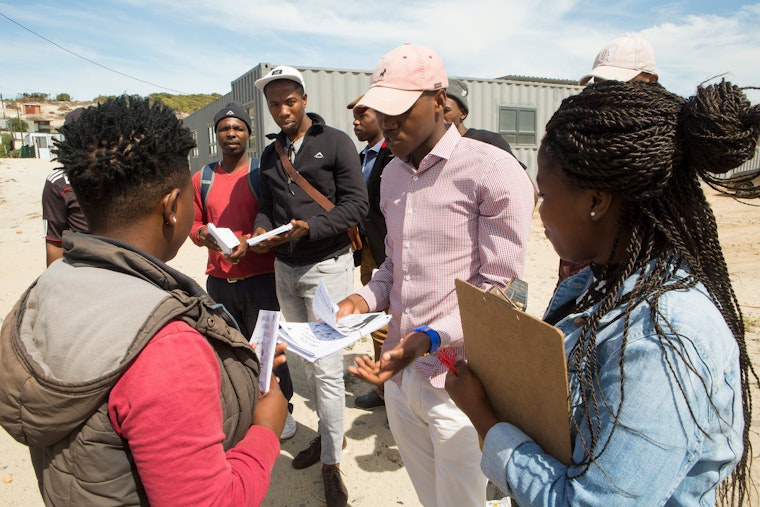
A group of activists meets before a march for land rights, in Cape Town, South Africa, on March 7, 2018.© Melanie Stetson Freeman/The Christian Science Monitor/Getty

Sharan Srinivas (program officer with the Open Society Human Rights Initiative) wrote on 16 December 2019 about Protecting Civil Society in South Africa. …Before he was gunned down in front of his son, Sikhosiphi “Bazooka” Rhadebe—a leading environmental and housing advocate in Xolobeni, South Africa—telephoned others who had spoken out against mining interests along South Africa’s Wild Coast. He was checking on like-minded activists’ safety and warning them that a “hit list” had been developed targeting human rights defenders in the area who stood up against mining interests. Two hours later, gunmen posing as police officers shot him at his home.

No one has been held accountable in the killing of Rhadebe, which advocates now see as the first data point in a disturbing new trend. Increasingly, those that stand up for environmental, housing, and land rights in South Africa face bitter—and often violent—attacks. To counter this trend, the Open Society Foundations announced recently the creation of a new fund, hosted at the Southern Africa Human Rights Defenders Network, intended to provide support to activists. The fund will provide support services to activists depending on their needs and will include the provision of legal representation; emergency relocation for activists and their families; and physical, psychological, and medical support.

South Africa is rightly commended for its vibrant civil society, robust institutions and progressive constitution, which enshrines the fundamental rights of expression and assembly. But joint research conducted by Human Rights Watch, Earth Justice, GroundWork, and the Center for Environmental Rights reveals that communities who are exercising these fundamental rights have faced vicious reprisals.

  • There is an ongoing pattern of police misconduct during peaceful protests.
  • Local municipalities often impose extralegal restrictions on protest in mining affected communities.
  • An environment of fear has been created among community activists.

Though activists based in South Africa’s major cities are well connected to the international infrastructure built to protect human rights defenders, many attacks against community-based activists located in rural and isolated parts of the country have gone unreported and unnoticed. The fund hopes to serve as a vehicle of solidarity, and to strengthen the resilience of frontline community activists. Sharan Srinivas is a .

CAFOD starts “messages to the brave” campaign

December 3, 2019

Send a message to the brave this Christmas, says CAFOD

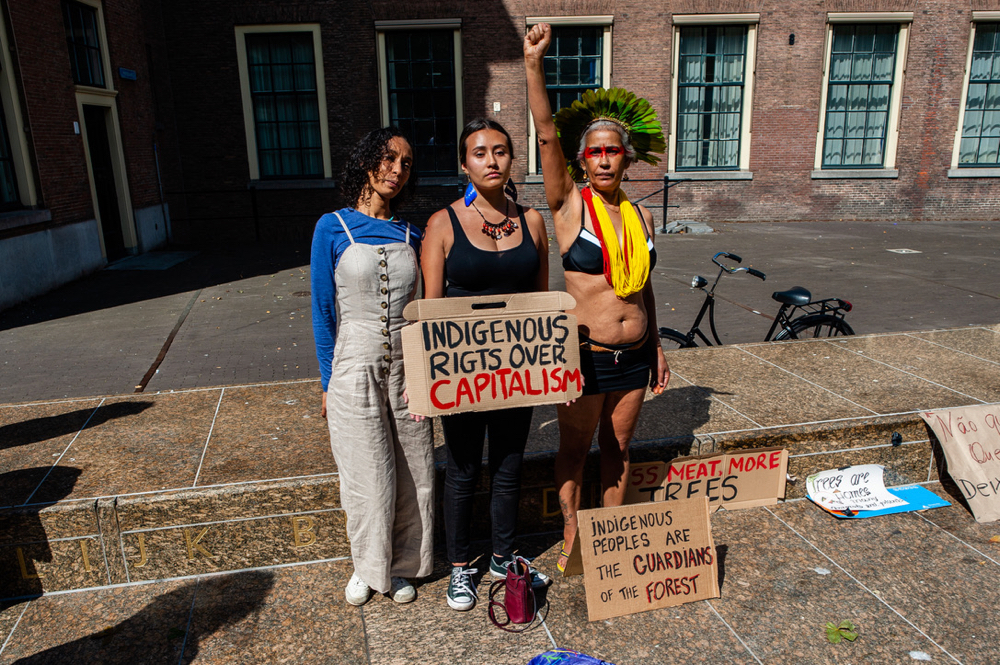
Three Brazilian women protest in the Netherlands against Brazil’s rainforest destruction Photo: Ana Fernandez / SOPA Images/Sipa USA

Samantha Aidoo – Campaigns Engagement Manager at CAFOD – explains the Messages to the Brave campaign:

Indigenous governor Cristina Bautista from Northern Cauca, Colombia, was passionate about defending the rights of the Nasa people and protecting their land and territory. But her courage and determination came at great personal cost. On 29 October, the 42-year-old and four unarmed indigenous guards who were with her were killed in a brutal attack near their Tacueyó reserve. Five other people were injured. The organisation which Cristina and her colleagues were part of, ACIN – the coordinating council for 22 indigenous reserves in the area which is supported by CAFOD – is no stranger to tragedy.

Just a few weeks earlier, Glabedy Gómez who worked alongside ACIN, her daughter, Karina, and four other people were ambushed and killed on their way back from a political event. Karina, 32, strongly believed that debate and political participation were important paths for building peace in Colombia and had been campaigning to stand in a local election. It is people like Cristina and her colleagues – known as human rights defenders – who are responding most acutely to what Pope Francis referred to in his 2015 encyclical Laudato Si’ as “the cry of the earth and the cry of the poor”.

Across the world, indigenous communities are trying to stop big businesses from fencing off their land, tearing down forests and polluting rivers in the pursuit of mining, logging or large-scale agribusiness. But community members who dare to speak out and organise others to do the same may be harassed, threatened or even killed. To anyone here who has been following the climate strikes, or perhaps even taken part in one, it may seem unfathomable that people speaking out for the environment, peace and human rights could pay with their lives, but that is exactly what is happening. [see e.g. https://humanrightsdefenders.blog/2019/01/09/global-witness-report-2018-on-environmental-defenders-bad-but-2017-was-worse/]

..

Their courage is helping to keep greenhouse gases in check and preserve key values like peace and human rights, but these communities are often left defending “our common home” on their own. In many countries, corruption, a lack of political will, or simply the fact that they live in a remote place means that communities who speak out often have no legal protection and no recourse for justice. That’s why this Advent, CAFOD is inviting people across England and Wales to send Christmas cards to those facing threats and attacks around the world in Brazil, Colombia, Uganda or the Occupied Palestinian Territory.

The Messages to the Brave campaign highlights the tireless work of men and women like Jose Batista Afonso from Brazil. Born in the countryside to rural worker parents, Jose grew up deeply connected to the land. He hadn’t planned to be a lawyer, but this changed after he saw rural leaders around him being routinely assassinated. Despite receiving death threats, for more than 20 years Batista has worked for the Pastoral Land Commission, defending the rights of landless communities in the Brazilian Amazon with support from CAFOD.

.. a simple card will show them that they aren’t alone in their fight to protect “our common home”, they have a community of people in the UK who are praying and standing with them. Perhaps members of the Fuerza Mujeres Wayuu women’s movement in Colombia, who have received more than six threats already this year, put it best when they say that together, we can “weave little by little for the future, a world more just than the one we had to live in”.

https://www.thetablet.co.uk/blogs/1/1331/send-a-message-to-the-brave-this-christmas-says-cafod

COP25: climate defenders also needed to be shielded

November 28, 2019

Tomorrow, 29 November, 2019, young people will gather at locations around the world for a Fridays for Future Global Climate Strike. On 2 December, United Nations delegates, world leaders, business executives, and activists will meet at the 25th Conference of the United Nations Framework Convention on Climate Change (COP25) in Madrid to discuss ways to protect the environment. Participants in these events should also discuss ways to protect the protectors: the individuals and groups targeted around the world for their efforts on behalf of the planet.

Six HRDs from Latin America on PBI’s European tour

November 18, 2019
Whilst the European Union continues to express concern for the increased impact of climate change on the planet, those defending their territories and the environment continue to be attacked for their activism across the world. This alarming trend is present in Latin America where the women defenders of land, territory and the environment are particularly vulnerable. [see e.g. https://humanrightsdefenders.blog/2019/08/06/environmental-human-rights-defenders-more-deadly-than-being-a-soldier-in-a-war-zone/] With this in mind, PBI will be accompanying five women and one man from Mexico, Guatemala, Honduras and Colombia to different parts of Europe in order to exchange experiences and perspectives about protection and self-protection from a holistic perspective. These defenders will share information about their own situation of risk, as well as the cases they are working on.