While understandably most attention goes to the real war in Ukraine, we should keep an eye on the worsening situation in Russia itself. See also my earlier post: https://humanrightsdefenders.blog/2022/03/05/ngos-express-great-worries-about-human-rights-situation-in-russia-at-un-human-rights-council/
Michael Mainville for AFP on 31 March 2022 is writing about this very intelligently:
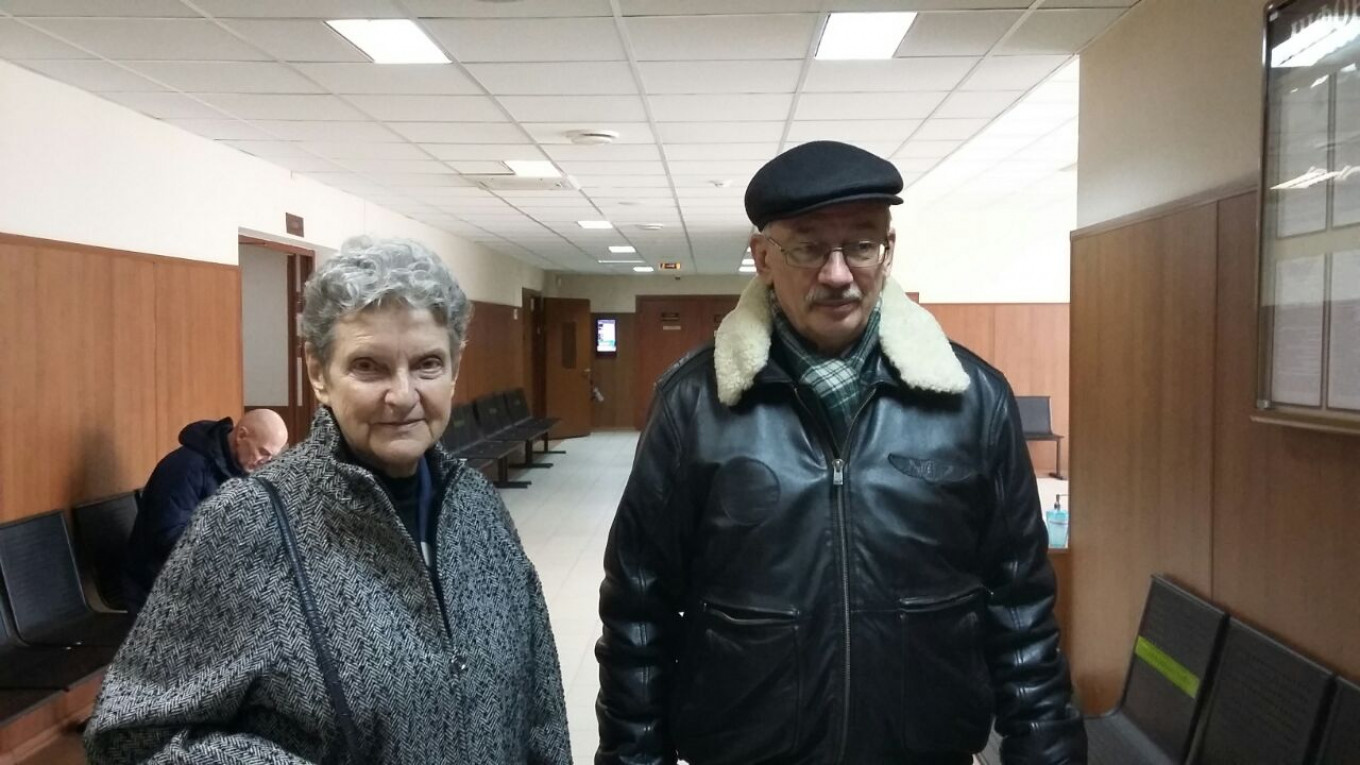
For many years, veteran Russian human rights defender Oleg Orlov thought his country’s darkest days were behind it. Not anymore. “I don’t think I have ever seen a darker period,” says Orlov, 68, who began a lifetime of activism in the early 1980s handing out leaflets against the Soviet war in Afghanistan.
“What is happening now cannot be compared with anything that happened before in Russia, maybe anywhere in the world… when a country that left totalitarianism behind went back.”
For Orlov and other activists of his generation, the conflict in Ukraine has marked the definite end of a hopeful time that started with Soviet leader Mikhail Gorbachev’s reforms in the 1980s. Nearly 40 years later, Russian troops are again fighting and dying abroad, Kremlin opponents are in jail, independent media have been shut down and thousands of Russians have decided to flee the country.
“The hopes we had did not come true, there have been terrible disappointments,” says Svetlana Gannushkina, 80, one of Russia’s most prominent post-Soviet rights activists. “Today we have a country that can no longer be called authoritarian, this is already a totalitarian regime.“
Orlov and Gannushkina are two of the last few critical voices still at work in Russia, and in interviews with AFP in Moscow this week both said they had no plans to quit or to leave. Orlov was in the offices of Memorial, which was shut down last year after decades as Russia’s most prominent rights group, where bookcases sat empty, desks had been cleared and packing boxes were piled on the floor. [see: https://humanrightsdefenders.blog/2021/12/29/russias-supreme-court-orders-closure-emblematic-memorial/]
“I don’t see myself outside Russia. I… have always wanted to live and die in this country,” says Orlov.
A biologist by training, Orlov joined Memorial in the late 1980s when the group was set up to document Soviet-era crimes. He went on to record rights abuses in a series of post-Soviet conflicts, especially in Russia’s two wars in Chechnya in the 1990s. In 1995 he was part of a group who swapped themselves for hostages taken by Chechen fighters and were eventually released, and in 2007 he was abducted, beaten and threatened with execution by a group of masked gunmen in Ingushetia next to Chechnya. After serving two years in the mid-2000s on Russia’s presidential human rights council, Orlov has since been active in opposing President Vladimir Putin. He was arrested at a March 6 protest against the military action in Ukraine, and returned home one day this week to find his front door painted over with the letter “Z” — a symbol used to show support for Russia in the conflict — and a sign reading “collaborator.”
The harsh new political climate and impact of severe sanctions have prompted thousands of Russians to leave in recent weeks, including many of the country’s young, opposition-minded liberals. Gannushkina has seen it at her Civic Assistance Committee, the group she founded in 1990 to help refugees and migrants in an often-hostile environment. “Unfortunately, our wonderful young people, who followed their hearts to our organization, are leaving,” she says…These young people, who we had so much hope for, feel in danger and helpless, so they leave. And we are left here with this insanity...”
The former mathematics professor set up the Civic Assistance Committee to help the thousands displaced by conflicts as the Soviet Union fell apart in 1991. From its modest Moscow offices, it provides legal assistance and help with finding jobs and housing, as well as campaigning for the rights of marginalized groups. Gannushkina also worked with Memorial and like Orlov served on the presidential human rights council before resigning in 2012. A letter of thanks for her service signed by Putin still hangs on her office wall. She remains very active, taking the time to meet individually with people seeking help. [see: https://www.trueheroesfilms.org/thedigest/laureates/215E5731-7786-434A-9C20-923168E65F44]
“No, I don’t think about leaving,” Gannushkina says, though she admits she is glad her children and grandchildren live abroad. I am happy they are not here, because it gives me the chance to say what I think, to everyone and everywhere.”
“We had a chance to create a normal federation, which would be governed in the way other federations are governed in democratic regimes. We missed that chance,” she says. All she can do now, Gannushkina says, is “hope that time will pass and we will get another chance. “But most likely I won’t be here to see it.”

Also on 31 March 2022 The Washington Post had an editorial: A generation of independent Russian journalists meets its grim end:
In his lecture accepting the Nobel Peace Prize on Dec. 10, the editor of the Russian investigative newspaper Novaya Gazeta, Dmitry Muratov, declared that “journalism in Russia is going through a dark valley.” He said more than 100 journalists, media outlets, human rights defenders and nongovernmental organizations have been branded “foreign agents,” a label equivalent to “enemies of the people.” Many journalists lost their jobs and fled the country. [see: https://www.trueheroesfilms.org/thedigest/laureates/bdbb2312-8b7a-4e44-bb4c-1864474daec7]
Now Novaya Gazeta itself has suspended publication, threatened by the government for failing to label a group as a “foreign agent” and because of an onerous new law that makes it a crime with penalties up to 15 years in prison to “discredit” the armed forces — including use of the words “war,” “invasion” or “attack” to describe President Vladimir Putin’s onslaught against Ukraine. A day after the invasion, Novaya Gazeta expressed outrage with a front-page three-word banner headline against a black background: “Russia. Bombs. Ukraine.” The paper continued to report, including from a correspondent in Ukraine, until it could no longer. The decision to suspend was portrayed by Mr. Muratov as temporary, but the future for all independent media in Russia appears grim.
This is a tombstone moment for a generation of independent journalists. In the final years of Soviet glasnost and in the unbridled and exuberant first years of Russia’s democracy, they threw off the straitjacket of censors and state-dominated media outlets to create newspapers, magazines, radio stations, television broadcasts and digital and social media that drew large and information-hungry audiences. To be sure, the audiences often were liberal, elite and urban, but at the very least, Russians benefited from information sources outside state control. Even in the authoritarian years of Mr. Putin’s rise, some were permitted to function. Novaya Gazeta distinguished itself with hard-hitting investigations, as Mr. Muratov noted in his lecture, fearlessly exposing money-laundering and the exploitation of Siberian forests, among other topics. Six of the paper’s reporters have been killed over the years.
But now it seems that Russia is moving from authoritarianism to totalitarianism, where the state can no longer tolerate any independent outlets. Echo Moskvy, a bastion of open discussion on radio and online, has been silenced and closed. TV Dozhd, founded in 2010, has suspended operations, and some of its journalists have fled. The popular news website Znak.com has also closed. A similar trend has swept independent media in Russia’s regions.
Mr. Putin completely missed the ferment and exhilaration of the late-1980s glasnost years — he was serving in the KGB in East Germany — and in his two decades in power, he has shown little patience for free speech. Lately, dozens of people have been arrested for expressing anti-war sentiments. Vera Bashmakova, the editor of a popular science magazine, was detained for several hours when she showed up at preschool to pick up her daughter with a “No to war!” sign in her car window. She was charged with “discrediting the army.” This is indeed a “dark valley” for Russia, and it is growing darker by the day.

 Hans Thoolen on Human Rights Defenders and their awards