On 16 November 2018, UNESCO Director-General Audrey Azoulay will award the 2018 edition of the UNESCO-Madanjeet Singh Prize for the Promotion of Tolerance and Non-violence to filmmaker Manon Barbeau (Canada) and the NGO The Coexist Initiative (Kenya). An international jury recommended the two laureates in recognition of their work in human rights, promotion of tolerance and inclusion.
Manon Barbeau, an innovative social entrepreneur and filmmaker, is awarded for her defense of human rights and tolerance through the art of cinema and a wide range of activities that she develops through Wapikoni Mobile Studios, amplifying the voices of indigenous people. Wapikoni hosts educational workshops and film screenings to raise awareness and educate the wider public about indigenous cultures, languages and identities. It also provides mentorship and capacity building in audiovisual creation to indigenous youth, allowing them to master digital tools by directing short films and musical works.
The Coexist Initiative is awarded the Prize for its promotion of gender equality, social justice and human rights, with particular focus on women and girls. The Coexist Initiative is a non-profit organization working to end violence against women, particularly through an approach that tackles harmful cultural practices and negative stereotypes based on gender. It moreover advocates for the rights and empowerment of women and girls by better involving men, boys and community leaders in the work of the association.
The nominees for the 2018 Sakharov Prize for Freedom of Thoughthave been announced on 27 September (Nominations can be made by political groups and groups of at least 40 MEPs – remarkable is the more active role played by right-wing groups in the EP, see the last two nominees):
Oleg Sentsov, a Ukrainian film director, convicted to 20 years in prison for “plotting terrorist acts” against the Russian “de facto” rule in Crimea. Amnesty International has described the court process as “an unfair trial before a military court”. He has become a symbol for the approximately 70 Ukrainian citizens illegally arrested and convicted to long prison sentences by the Russian occupation forces in the Crimean peninsula. He has been on hunger strike since May 2018. Nominated by EPP.
NGOs protecting human rights and saving migrant lives across the Mediterranean Sea. Since 2015, NGOs from across the EU have launched search and rescue operations in the Mediterranean to try and save the lives of refugees struggling to reach EU shores. The NGOs are: Boat Refugee Foundation, Jugend Rettet, Lifeline Rescue Boat, Médecins Sans Frontières International, MOAS, Proactiva Open Arms, PROEM-AID, Save the Children, Sea Eye, Sea Watch, and SOS Mediterranée. Nominated by S&D and the Greens/EFA.
Seyran Ateş, a German lawyer of Turkish origin, fighting against political and religious extremism and the oppression of women. She was behind the establishment of the Ibn Rushd Goethe Mosque in Berlin, where men and women can pray together and has received numerous death threats and has to have round the clock protection. She was nominated by ECR, Hans-Olaf Henkel and 40 other MEPs for her “commitment to the protection of human rights and her devotion to a modern and open Islam”.
Caesaris the code name of a former Syrian military photographer who smuggled more than 55,000 pictures out of Syria exposing the war atrocities. Their authenticity is confirmed by the Human Rights Watch. Caesar’s photographs will play a vital role in building criminal and civil cases against those responsible for the crimes documented. Nominated by ALDE.
Nasser Zefzafiis the leader of Hirak, a mass protest movement in the Rif region, Morocco, fighting corruption, oppression and abuse of power. He was arrested in May 2017 and sentenced to 20 years in prison for “conspiracy against the security of the state”. On August 2018, King Mohammed VI pardoned 188 Hirak activists, but Zefzafi was not among them. At the end of August he went on hunger strike to denounce his conditions of detention. Nominated by GUE, Kati Piri, Judith Sargentini, Marie-Christine Vergiat and 39 other MEPs for his fight “against oppression and abuse of power”.
Dewayne Johnson is a former groundskeeper from the US who has just won a landmark case against Monsanto. He was the first person to take Monsanto to trial over allegations that the chemicals sold by the company under the herbicide brand Roundup cause cancer. At the end of the process Dewayne had just months to live, yet he took the stand and described his pain and suffering. Nominated by EFDD as an inspiration “for those afraid to go to court and defend their rights”.
AfriForum is an NGO that aims to protect the rights of minorities in South Africa, with a specific focus on the rights of Afrikaners. It focuses on raising national and international awareness about farm attacks, murders and the expropriation of farm land without compensation, which threatens property rights, food supply and food security. Nominated by ENF.
Mary Wagner is a Canadian activist who has been arrested on multiple occasions and accused of “disturbing the business” of an abortion clinic in Toronto. She remained in prison for not complying with a probation order to stay away from abortion clinics. She was nominated by Marek Jurek and 41 other MEPs for her work “safeguarding the rights of those who cannot speak for themselves”.
Polish lawyer Adam Bodnar – Defender of minority rights and judicial independence in Poland (Photo credit: Kluczek/RPO.GOV.PL )
The Rafto Prize 2018 is awarded to the Polish lawyer Adam Bodnar and the institution he leads, the Office of the Commissioner for Human Rights, for the important stance taken in the face of current political developments in Poland. A key function of the Ombudsman, or the Commissioner for Human Rights, is to ensure that the public authorities secure and respect the human rights of all members of Polish society. As lawyer and Ombudsman, Adam Bodnar (41) has highlighted the crucial role played by independent Ombudsman institutions in safeguarding human rights in Poland – and other countries – where such actors and institutions increasingly have come under attack.
Since Law and Justice (PiS) won the Polish election in October 2015, the party has used its majority in the National Parliament to adopt legislation that reduces the independence of the courts and centralizes state powers. New laws grant the government control of state media and place severe limits on freedom of information and political lobbying. The rights of vulnerable groups have been repeatedly ignored. “The award is not just an award to my work and the institution, but mostly a support from your community given to the Polish civil society, academia, judges and lawyers fighting for rule of law, juridical independence, pluralism and protection of minorities in Poland,” said Adam Bodnar.
The Rafto Prize for 2018 to Adam Bodnar and the Ombudsman for Human Rights highlights the rolling back of democracy and human rights protections in Poland. The conflict over the Polish Constitutional Tribunal and the Supreme Court are important internationally because they are symbolic of an alarming tendency where the independence of courts increasingly is under political pressure. It is crucial that the international community, the EU, Norway and other European countries take a clear stance against human rights violations and attacks on the rule of law and minority rights that take place in our own region. Adam Bodnar, being the civil servant, cannot accept the prize money awarded along with the Rafto Prize. The Rafto Foundation will identify and donate the prize money to civil society working for human rights in Poland.
“The Laureates’ trailblazing work for accountability, democracy and the regeneration of degraded land gives tremendous hope and deserves the world’s highest attention. At a time of alarming environmental decline and failing political leadership, they show the way forward into a very different future,” comments Ole von Uexkull, Executive Director of the Right Livelihood Award Foundation. For more on the award see: http://trueheroesfilms.org/thedigest/awards/right-livelihood-award
The Award presentation will take place on 23 November at the Vasa Museum in Stockholm, followed by public events and high-level meetings in Geneva, Zurich and Berlin.
The Laureates of this year’s Right Livelihood Award, widely known as the ‘Alternative Nobel Prize’, will be announced on Monday, 24 September. The announcement will take place in Stockholm at 09:00 (CEST) at the International Press Centre at the Ministry for Foreign Affairs, Fredsgatan 6, and streamed live via rightlivelihoodaward.org.
United Nations Secretary-General António Guterres, following approval by the General Assembly, has appointed Michelle Bachelet of Chile the next United Nations High Commissioner for Human Rights. [Ms. Bachelet ended her second four-year term as President of Chile in March 2018, having already held the position between 2006 and 2010. The first woman elected to Chile’s highest office, after her first term, she joined the United Nations as the first Executive Director of the newly established United Nations Entity for Gender Equality and the Empowerment of Women (UN-Women). A long-time human rights champion and ground-breaking leader, Ms. Bachelet is a paediatrician who began her Government career as an adviser in the Ministry of Health, rising quickly to become the first woman to lead Chile’s Health Ministry in 2000 and its Defence Ministry in 2002. Ms. Bachelet became involved in Chilean human rights activism in the early 1970s. She and her parents were political prisoners, and her father, a general in the air force, died in prison. After their release, Ms. Bachelet and her mother spent several years in exile. She returned to Chile in 1979.] Her human rights background as well as her political cloud and experience give reason to hope that the Office of the High Commissioner will continue to be at the forefront in spite of the countervailing currents at the moment.
Recognition of the fearless outgoing High Commissioner has continued to pour in:
The 2018 Human Rights Tulip has been awarded to the United Nations High Commissioner for Human Rights Zeid Ra’ad Al Hussein. Dutch Foreign minister Stef Blok will present him with the prize on 3 September in The Hague. For more information on the Human Rights Tulip see: http://trueheroesfilms.org/thedigest/awards/tulip-award. ‘The Netherlands greatly values the way in which he has fulfilled his mandate as High Commissioner,’ Mr Blok said. ‘He addressed human rights violations wherever they occurred. This critical and independent attitude is what is needed in a world where human rights are in jeopardy in many places.’
On Monday 20 August the U.N. High Commissioner for Human Rights Zeid Ra’ad al-Hussein said in a wide-ranging interview days before his four-year term ends that U.S. President Donald Trump bears “a heavy responsibility” for how the media is portrayed and that his remarks could have a knock-on effect that could hurt journalists in other countries.” [U.S. newspapers across the country ran editorials last Thursday defending freedom of the press in response to President Donald Trump calling some media organizations enemies of the American people.] “The President should be aware that a heavy responsibility lies on his shoulders when it comes to the way in which the media is being portrayed,” Zeid said.
In his last major interview with UN News on 15 August, the UN human rights chief says that the “real pressure on this job comes from the victims and those who suffer and expect a great deal from us.” “Governments are more than capable of defending themselves. It’s not my job to defend them. I have to defend civil society, vulnerable groups, the marginalized, the oppressed. Those are the people that we, in our office, need to represent,” he adds, noting that “oppression is making a comeback”.
When asked about whether his view of the UN and what it can achieve has diminished during his time spent speaking out loudly in defence of the abused and defenceless over the past four years, he says: “It’s very difficult to tolerate abuse of the UN when I keep thinking of the heroic things that people do in the field, whether the humanitarian actors or humanitarian personnel, my human rights people, the people who are monitoring or observing. And I take my hat off to them. I mean, they are the UN that I will cherish and remember.”
For some of the posts about him see https://humanrightsdefenders.blog/tag/zeid-raad-al-hussein/ and especially:
Former United Nations Secretary-General Kofi Annandied on Saturday 18 August 2018 at the age of 80. “Kofi Annan was a global statesman and a deeply committed internationalist who fought throughout his life for a fairer and more peaceful world. During his distinguished career and leadership of the United Nations, he was an ardent champion of peace, sustainable development, human rights and the rule of law,” the Kofi Annan Foundation and Annan family said in a statement. His wife Nane and their children Ama, Kojo and Nina were by his side during his last days.
Born on April 8, 1938, in Ghana, Annan took his first job with the U.N. in 1962,and became its seventh secretary-general serving between 1997 and 2006.
It has been pointed out by many media that he was awarded the Nobel Peace Prize (jointly with the United Nations) in 2001 but few mention the other 9 human rights awards that he received before, such as
The current U.N. secretary-general, António Guterres, called Annan “a guiding force for good. … In many ways, Kofi Annan was the United Nations. He rose through the ranks to lead the organization into the new millennium with matchless dignity and determination,” he said in a statement.
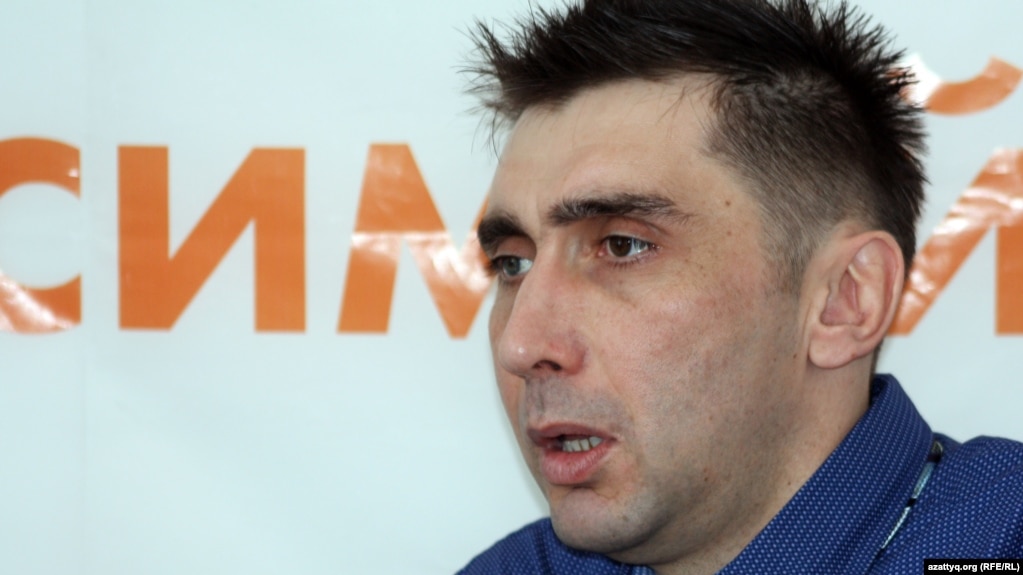
Radio Free Europe on 1 August 2018 carried the good news that the prominent Kazakh Rights Defender will new granted parole after 6 years In prison. A lawyer for Vadim Kuramshin, Muratbek Irge, told RFE/RL that a court in the northeastern city of Oskemen agreed on August 1 to parole Kuramshin. He will be released in 15 days ifthe ruling is not appealed and overturned, Irge said. Kuramshin has become known for his efforts to raise awareness of violations of inmates’ rights in Kazakh penitentiaries, including the one where he served his term. He was sentenced to 12 years in prison in 2012 on an extortion conviction. He denies wrongdoing. His supporters say were politically motivated.
In December 2013, while behind bars, Kuramshin was awarded the Ludovic-Trarieux international human rights prize.[see: http://trueheroesfilms.org/thedigest/awards/ludovic-trarieux-international-human-rights-prize]
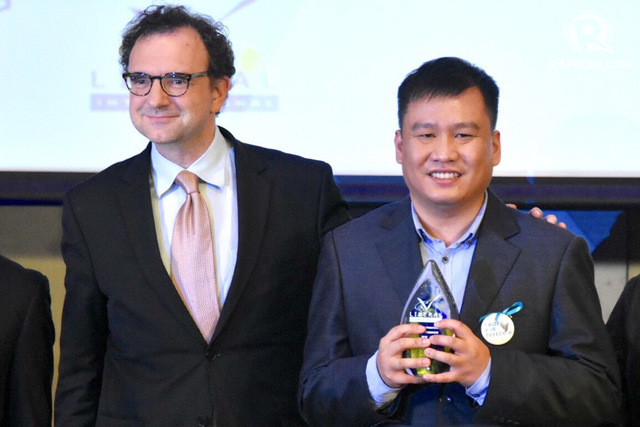
On Saturday, 28 July 2018 Liberal International has given its ‘Prize for Freedom’ (as announced a year ago) to detained Senator Leila de Lima. Her son Israel and other members of her family receive the award on her behalf. “Human rights are for all, or they are for nothing. The world is indeed watching, and Leila de Lima’s unjust detention will not be forgotten…. Senator Leila de Lima, you have received this prize for speaking truth to power,” Liberal International (LI) president Juli Minoves said during ceremonies held at the Novotel hotel in Quezon City on Saturday night. Minoves said this is the first time in almost a decade that the Prize for Freedom is being awarded outside of Europe. Fo more on this award and some 20 others with the word ‘freedom” in their name, see: http://trueheroesfilms.org/thedigest/awards/prize-for-freedom-liberal-intl
On Saturday, De Lima’s brother read her speech on her behalf: “I am extremely and unconditionally blessed, so much so that there is no room in my heart for regrets or second thoughts. No room for could haves, would haves, or should haves. I am where I am because I did the right thing.” Later in her speech, De Lima said that while dictators, oppressors, and abusers come and go, “we, the defenders of the people, can never rest.”
In May Amnesty International (AI) Philippines, had recognized the detained Senator as the “Most Distinguished Human Rights Defender” on its first-ever Ignite Awards for Human Rights. Time Magazine listed her as one of its 100 Most Influential People and Foreign Policy. Fortune Magazine in April 2017 ranked her as the 39th out of 50 of the World’s Greatest Leaders.
The International AIDS Society (IAS), amfAR and The Elizabeth Taylor AIDS Foundation have announced that the Elizabeth Taylor Human Rights Award 2018 goes to a Kenyan lawyer, Allan Achesa Maleche, for his role in advancing human rights in the field of HIV and AIDS. Maleche received the award at the 22nd International AIDS Conference (AIDS 2018) in Amsterdam, the Netherlands. For more information on this award: http://trueheroesfilms.org/thedigest/awards/elizabeth-taylor-human-rights-award
“Allan Maleche knows that the law is a powerful tool to protect human rights,” IAS President Linda-Gail Bekker said. “As a tireless crusader for the rights of people living with and affected by HIV and TB, Allan has achieved legal victories that have not only protected individuals. They have also led to smarter, more effective policies that reject stigma and discrimination and advance more humane and effective approaches to ending the twin epidemics of HIV and TB.”
“This award recognizes how critical rights-based approaches are to the HIV and TB responses. It is a wonderful honour that will inspire me and my colleagues in our continued work to protect the human rights of everyone affected by these epidemics,” the laureate said. He becomes the third winner of the award. The first winners of the award were Iranian physicians Arash and Kamiar Alaei in 2012, then Ugandan Physician and gay rights activist Paul Semugoma in 2014.



 Hans Thoolen on Human Rights Defenders and their awards