Posts Tagged ‘digest of human rights awards and laureates’

2021 Laureates of the Right Livelihood Award

October 4, 2021

The 2021 Laureates of the Right Livelihood Award were announced in Stockholm on Wednesday, 29 September at Kulturhuset, Stockholm. For more in this award and its laureates, see: https://www.trueheroesfilms.org/thedigest/awards/97238E26-A05A-4A7C-8A98-0D267FDDAD59

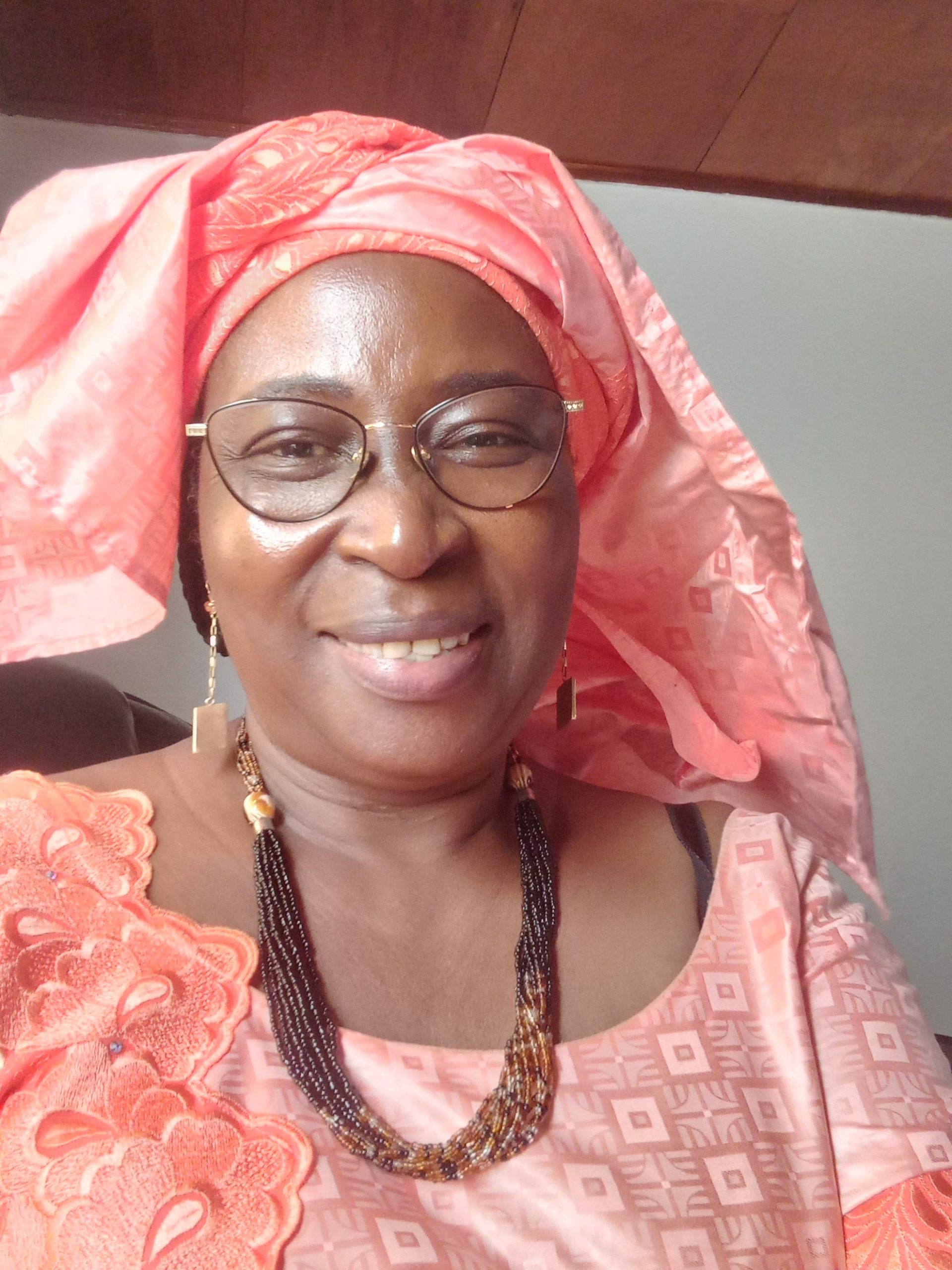
Marthe Wandou, Cameroon

“For building a model of community-based child protection in the face of terrorist insurgency and gender-based violence in the Lake Chad region of Cameroon.”

Read more

Vladimir Slivyak, Russia

“For his defence of the environment and for helping to ignite grassroots opposition to the coal and nuclear industries in Russia.”

Read more

Freda Huson of the Wet’suwet’en people, Canada

“For her fearless dedication to reclaiming her people’s culture and defending their land against disastrous pipeline projects.”

Read more

Legal Initiative for Forest and Environment, India

“For their innovative legal work empowering communities to protect their resources in the pursuit of environmental democracy in India.”

Read more

For last year’s winners, see: https://humanrightsdefenders.blog/2020/10/01/four-well-known-human-rights-defenders-are-the-2020-right-livelihood-laureates/

https://rightlivelihood.org/2021-announcement/

Jeel Albena Association in Yemen wins 2021 Nansen Award

September 30, 2021
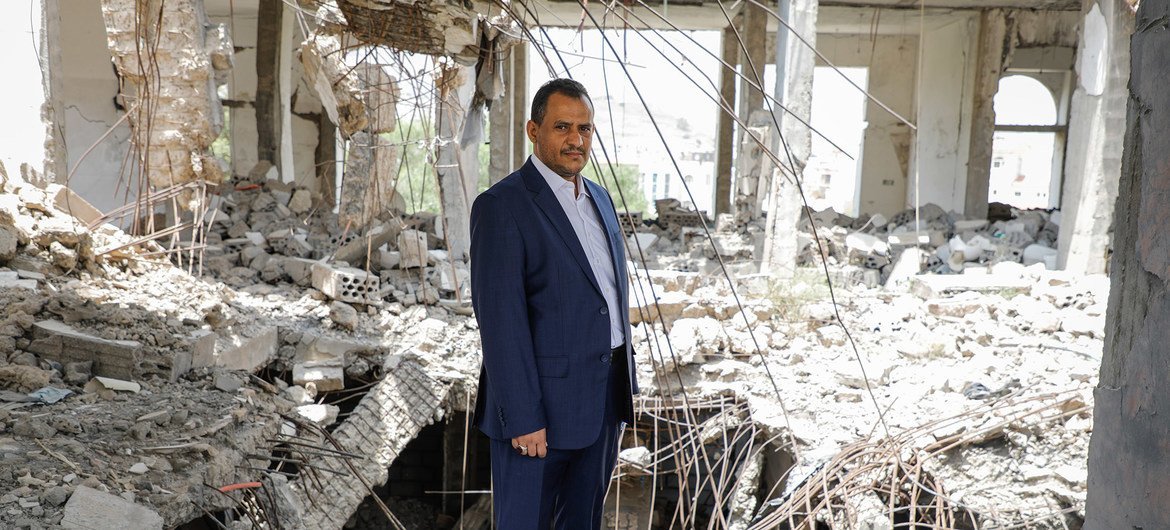
Ameen Hussain Jubran, head and founder of the Yemeni non-governmental organization Jeel Albena.

© UNHCR/Ahmed HaleemAmeen Hussain Jubran, head and founder of the Yemeni non-governmental organization Jeel Albena. 29 September 2021

The Jeel Albena Association for Humanitarian Development, a Yemeni humanitarian organization that has supported tens of thousands of people caught up in the country’s conflict, is the winner of the 2021 UNHCR Nansen Refugee Award. 

UN High Commissioner for Refugees, Filippo Grandi, announced the laureate this Wednesday 29 September 2021. Every year, the prize recognizes a person or group, that goes above and beyond the call of duty, to help displaced or stateless people. For more on this award for refugee workers: https://www.trueheroesfilms.org/thedigest/awards/CC584D13-474F-4BB3-A585-B448A42BB673

In a statement, Mr. Grandi said that “Jeel Albena does this in an extraordinary way helping people on all sides of Yemen’s conflict.” 

“Its staff and volunteers have stayed put, working quietly on the ground throughout the conflict, in the face of the harshest adversity, at a time when many others have left,” he said.  

Frontline work 

Their work, often near the frontlines, has included constructing 18,000 emergency shelters for internally displaced people and their host communities. Their work has also allowed thousands to make a living, and been a vehicle to restore basic human dignity. 

Mr. Grandi noted that Jeel Albena’s motto is “By Yemenis, for Yemenis” and that it “exemplifies its spirit of local community action.” 

“Always, they seek solutions together with the communities where they are active,” he explained. 

Established in June 2017, the association started with only fifteen staff and now has more than 150 employees, over 40 per cent of them, recruited from within displaced communities.  . 

The organization’s founder, Ameen Jubran, will collect the award on behalf of the organization. 

Mr. Jubran first started working with displaced people while he was at university and he has never stopped. He was nearly killed in the conflict and, like many of his team, have experienced displacement first-hand.  

“But he did not give up. In fact, he says the experience of being forced to flee his home only increased his determination, in the true spirit of Nansen,” Mr. Grandi recalled.  For the High Commissioner, the award “puts a much-needed spotlight on Yemen, a country where the suffering faced by civilians does not receive the attention it deserves.”  “It is my profound hope this award draws international attention to Yemen and that Jeel Albena’s extraordinary work will inspire more action for the people there who have suffered,” concluded the High Commissioner.

For last year, see: https://humanrightsdefenders.blog/2020/10/02/nansen-refugee-award-2020-to-maye-vergara-perez-of-colombia/

https://news.un.org/en/story/2021/09/1101582

Afghan lawyer Freshta Karimi wins Ludovic-Trarieux Human Rights Prize

September 30, 2021

Freshta Karimi, 38, the founder of the Da Qanoon Ghushtonky (DQG) organisation, one of the largest suppliers of legal aid in Afghanistan, won the Ludovic-Trarieux International Human Rights Prize 2021, awarded by jurists to their peers.

Her organisation works in particular on upholding the rights of woman and children in Afghanistan and she has regularly represented it abroad in recent years.

Since the Taliban seized power last month however, she has kept a lower profile, lawyer Bertrand Favreau, the founder of the prize and chairman of its jury, told AFP.

“For at least five years, she has received threats from the Taliban in all the cities where she has tried to open an office to inform women of their rights,” he said.

That had not stopped her continuing her outreach work however, travelling to even the most remote villages, he added. “Today she is one of the most threatened lawyers in the world.”

Last year, the prize was awarded to two Turkish lawyers, sisters Barkin and Ebru Timtik. Ebru had died the previous month after a 238-day hunger strike to protest her imprisonment on terror-related accusations. Barkin is serving a lengthy sentence on similar charges. see also: https://humanrightsdefenders.blog/2020/09/26/timtik-sisters-in-turkey-share-2020-ludovic-trarieux-prize/

The Ludovic Trarieux Award is an annual prize which recognises lawyers of any nationality who have sought to defend human rights, often at great risk to themselves. The award was named after Trarieux, who in 1898 founded France’s Human Rights League (LDH). For more on this and other awards for jurists, see: https://www.trueheroesfilms.org/thedigest/awards/7C413DBA-E6F6-425A-AF9E-E49AE17D7921.

https://www.infomigrants.net/en/post/35372/afghan-womens-rights-campaigner-wins-top-human-rights-prize

Belarus’s Kalesnikava Awarded Vaclav Havel Human Rights Prize

September 29, 2021

On 27 September 2021 RFE/RL’s Belarus Service reported that jailed Belarusian opposition figure Maryya Kalesnikava has won the Vaclav Havel Human Rights Prize awarded annually by the Parliamentary Assembly of the Council of Europe (PACE) to honor “outstanding” civil society action in the defense of human rights amid an ongoing crackdown in Belarus on pro-democracy activists and groups by authoritarian ruler Alyaksandr Lukashenka. See also: https://www.trueheroesfilms.org/thedigest/laureates/beff3c8d-0e20-4e88-9efb-cdfcb4c26f40


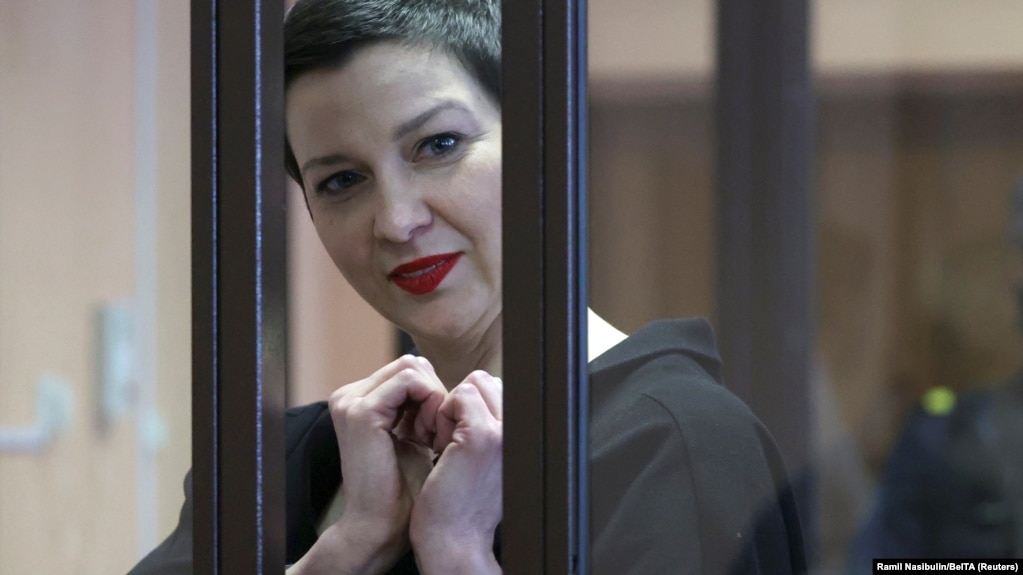
Maryya Kalesnikava forms a heart shape to supporters from inside a defendants' cage at her trial in Minsk on September 6.
Maryya Kalesnikava forms a heart shape to supporters from inside a defendants’ cage at her trial in Minsk on September 6.

The prize was presented by PACE President Rik Daems to Maryya’s sister, Tatsyana Khomich, at a special ceremony on September 27, the opening day of the autumn plenary session of the PACE in Strasbourg. For more on this award, see: https://www.trueheroesfilms.org/thedigest/awards/7A8B4A4A-0521-AA58-2BF0-DD1B71A25C8D

“In standing up against a regime which has chosen force and brutality against peaceful and legitimate protest, Ms. Kalesnikava showed that she is ready to risk her own safety for a cause greater than herself — she has shown true courage,” Daems said.

Accepting the prize on her sister’s behalf, Khomich said: “This award is a sign of solidarity of the entire democratic world with the people of Belarus. It is also a sign to us, Belarusians, that the international community supports us, and that we are on the right track.”

Kalesnikava and another opposition figure, Maksim Znak, were sentenced to prison terms of 11 and 10 years respectively on September 6, after being found guilty on charges with conspiracy to seize power, calls for action to damage national security, and calls for actions damaging national security by trying to create an extremist group. Both pleaded not guilty, rejecting the charges.

Kalesnikava, 39, was a coordinator of the election campaign of an excluded presidential aspirant, former Belgazprombank head Viktar Babaryka. After Babaryka was arrested weeks before the August 2020 presidential election, Kalesnikava joined forces with another presidential candidate, Svyatlana Tsikhanouskaya, whom the majority of Belarusians have called the winner in the election.

After joining Tsikhanouskaya’s support group, Kalesnikava became a member of the opposition Coordination Council and turned into a prominent leader of protests demanding the resignation of Lukashenka, who was officially announced the winner of the election demonstrators say was rigged and which the West has refused to acknowledge.

Kalesnikava was snatched from the streets of Minsk in September 2020 by masked men along with two staffers. The three were driven early the next day to the border, where authorities told them to cross into Ukraine.

Security officers reportedly failed to deport Kalesnikava because she ripped her passport into small pieces after they arrived in the no man’s land between Belarus and Ukraine. Her two associates entered Ukraine, but with no valid passport, Kalesnikava remained in the country and was subsequently detained.

See also: https://humanrightsdefenders.blog/2021/09/07/nominees-for-vaclav-havel-human-rights-prize-2021-announced/

In the meantime the Belarusian Justice Ministry has filed a lawsuit to dissolve the Belarusian Helsinki Committee, one of the country’s oldest independent human rights groups, Human Rights Watch said today. On September 30, 2021, the Belarus Supreme Court is scheduled to hold a hearing on the lawsuit. The move is part of wider effort by Belarusian authorities to silence all independent or critical voices in the country.

In a September 22 letter, five international human rights organizations, including Human Rights Watch, urged the Justice Ministry to withdraw its lawsuit, calling it “inappropriate [and] inconsistent with the Belarusian government’s obligations to respect and protect the legitimate work of human rights defenders.” They also said the lawsuit “violates a number of fundamental rights, including those of freedom of expression and association and due process.”

https://www.rferl.org/a/belarus-kalesnikava-havel-prize/31480306.html

https://www.euronews.com/2021/09/28/us-europe-rights-belarus

https://www.hrw.org/news/2021/09/29/belarus-authorities-target-top-human-rights-group

.

Human Rights Data Analysis Group winner of the 2021 RAFTO prize

September 29, 2021

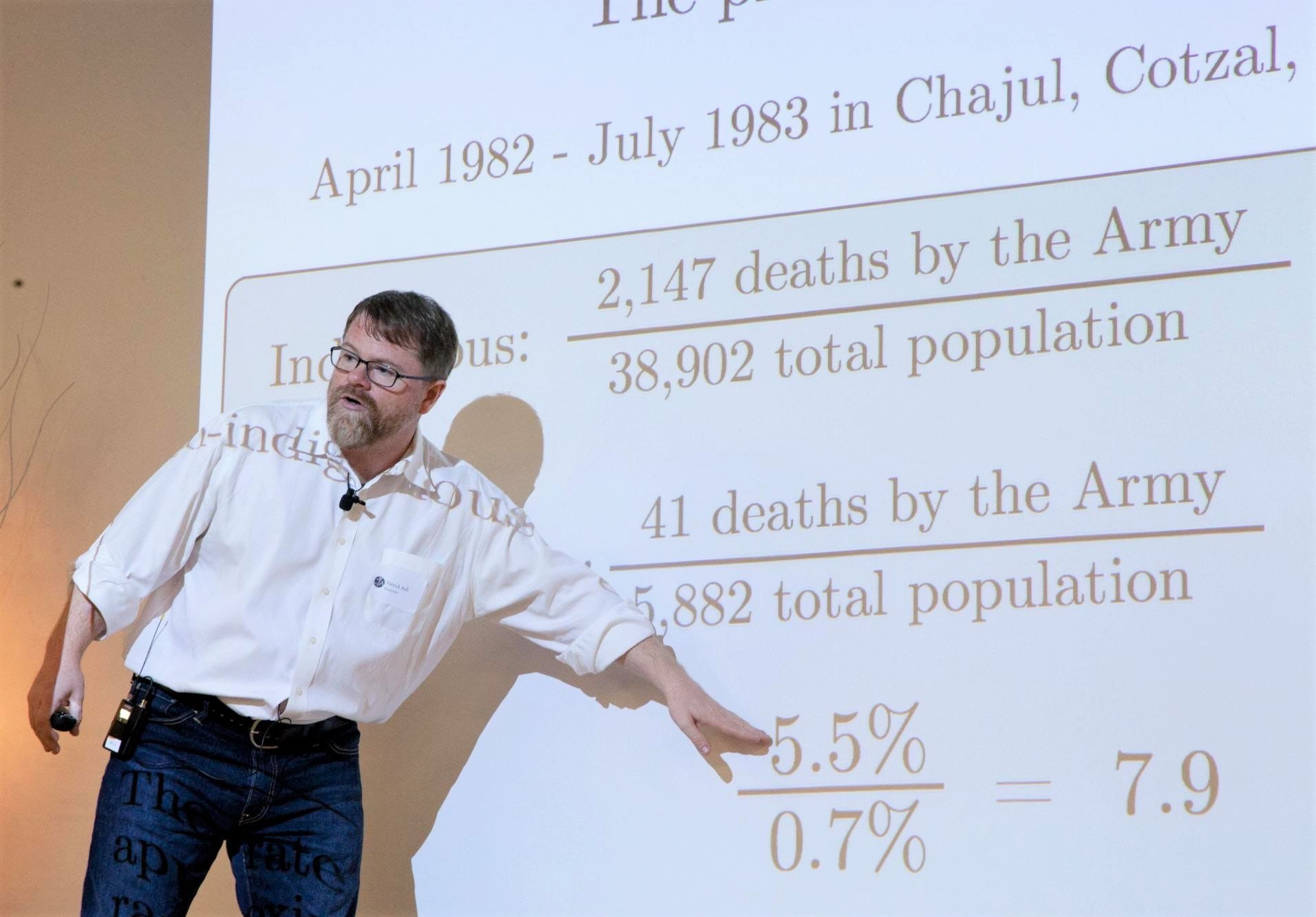
The 36th Rafto Prize 2021 is awarded to the Human Rights Data Analysis Group (HRDAG) for their work in uncovering large-scale human rights violations. By using statistics and data science, HRDAG document human rights violations that might otherwise go undetected. Their approach has enabled courts to bring perpetrators to justice and given closure to affected victims and their families. For more on th4 RAFTO award and its laureates, see: https://www.trueheroesfilms.org/thedigest/awards/A5043D5E-68F5-43DF-B84D-C9EF21976B18

Statisticians for Human Rights: HRDAG seek to uphold credible information as a foundation of human rights advocacy and justice and by doing so, they represent a new generation of human rights defenders that advances the enforcement of human rights globally.

HRDAG promotes accountability for human rights abuse. Evidence is crucial in demanding accountability and justice. Systematic documentation of human rights violations exposes the scope of transgressions. This is central to putting an end to impunity for perpetrators, and vital for the protection and empowerment of the courageous human rights activists at the frontline.

HRDAG’s rigorous methods and analyses also ensure that every death is counted, and a minimum standard of human dignity is respected. The HRDAG team consists of a small group of dedicated experts in computer science, software development, mathematical and applied statistics, and demography. In their work, HRDAG partner with human rights defenders, experts, and organizations worldwide.

Holding perpetrators to account

Based on the idea that “truth leads to accountability”, HRDAG provides thorough documentation of torture, forced disappearances, kidnappings, war crimes and extrajudicial killings. Perpetrators of human rights abuses often do everything they can to hide their crimes from the public, while victims and their families seek answers and justice.

For example, in collaboration with Amnesty International, HRDAG has documented that 25 % of the deaths in Syrian prisons were unreported. Their researchers have been expert witnesses in the trial of General José Efraín Ríos Montt in Guatemala, who was convicted as the chief perpetrator of genocide against the Maya Ixil indigenous people. They have provided evidence of unusually high death tolls among political prisoners under the rule of former President Hissène Habré in Chad, as well as evidence of ethnic cleansing carried out by Serbian forces and former President Slobodan Milošević in Kosovo.

HRDAG has recently launched a project on underreporting police violence in the United States, where their analysis show that one third of all victims murdered by strangers, are killed by the police.

A new approach

The novelty of HRDAG’s approach lies in their efforts to invent and extend scientific methods from other fields, such as mathematical statistics, machine learning, software engineering, and computer science. They apply these methods to the area of human rights to detect patterns of violence and provide statistical estimates traditional approaches have not been able to deliver. They bring the power of quantitative analysis to the pursuit of justice and accountability. In doing so, they establish scientifically defensible historical records of human rights crimes.

Credible information is key

In an era of misinformation and polarization, credible information is more crucial than ever. The Rafto Prize 2021 aims to highlight the importance of HRDAG and other human right defenders’ work in seeking and upholding the truth as a foundation of human rights advocacy and justice.

The Rafto Prize 2021 is a recognition of HRDAG’s pioneering approach and dedicated commitment to detecting and deterring human rights violators by providing reliable scientific documentation.

The prize sends a firm message to human rights violators, both state and non-state perpetrators, that violations will not go unnoticed.

Award Statement 2021 (ENG)

https://www.rafto.no/news/the-rafto-prize-2021-to-hrdag

German Africa Prize 2021 goes to Ethiopian lawyer Daniel Bekele

September 28, 2021

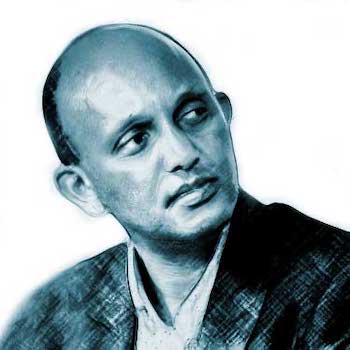
Ethiopian lawyer Daniel Bekele is the winner of the 2021 German Africa Prize. The human rights defender is being honored for his unceasing commitment to monitoring and speaking out against injustice.

Daniel Bekele, currently Chief Commissioner of the Ethiopian Human Rights Commission (EHRC), will receive the German Africa Award for his fight for democracy and human rights. See also: https://humanrightsdefenders.blog/2019/07/08/human-rights-defender-daniel-bekele-now-commissioner-of-the-ethiopian-human-rights-commission/

For more on this prize and its laureates see: https://www.trueheroesfilms.org/thedigest/awards/7bdd4070-5958-11e9-90d9-57c8733f3136

I am delighted that the independent jury has selected an outstanding human rights defender,” said Uschi Eid, President of the German Africa Foundation, which presents the prize.

“[Daniel Bekele] deserves this prize for his lifelong advocacy of human rights. I sincerely hope that the award will encourage [him] and his colleagues at the Ethiopian Human Rights Commission to be fearless and impartial advocates for human rights in Ethiopia,” she added. 

Daniel told DW he was “truly excited and humbled to be the first Ethiopian to receive this prestigious German award.”

I know it will go a long way to encourage and inspire my colleagues at the EHRC, as well as human rights defenders in my country Ethiopia and Africa, who work for the promotion and protection of human rights in increasingly challenging environments,” he said.

As a human rights defender, Daniel Bekele has also fought for women’s rights

Daniel Bekele began his dedication to human rights early in his career.

He started representing non-government organizations as a 23-year-old lawyer, quickly becoming a much sought-after expert on democracy and human rights.

In 2004, Daniel became the Head of Policy Research and Advocacy for Ethiopia at the international charity ActionAid. At the same time, he was also highly involved in the Global Call to Action Against Poverty, a network of thousands of organizations promoting an end to poverty.

As a civil society representative, Daniel assumed a leading role in monitoring Ethiopia’s 2005 parliamentary elections, marked by flawed counting and repeated incidents of post-election violence.

A critic of the election process, Daniel was attacked and injured by armed men in October 2005. He was subsequently arrested, imprisoned, and convicted on charges of trying to “overthrow the government and the constitution.”

He remained in jail from November 2005 until March 2008.

Daniel Bekele’s determination to stand up for political rights, especially those of disadvantaged groups, remains undiminished by his prison sentence.

“The human rights defender believes that economic and social recovery fails to lead to sustainable development without the enforcement of human and political rights,” Eid from the German Africa Foundation said.

“As such, [Daniel Bekele] doesn’t shy away from criticizing donor countries in the North for their cooperation with authoritarian regimes.”

Ethiopia has started a democratic opening under Prime Minister Ahmed

In the wake of Ethiopia’s democratic opening under Prime Minister Abiy Ahmed, who came to power in 2018, the country’s parliament elected Daniel to lead the Ethiopian Human Rights Commission in 2019.

Daniel has not only transformed the commission, but has also successfully advocated for its greater independence, with parliament passing an amendment in 2020 strengthening the commission’s operational and financial autonomy.

The German Africa Foundation acknowledges, however, that Ethiopia’s political crisis and the civil war in the country’s northern Tigray province have cast a shadow over Bekele’s work at the Human Rights Commission. Watch video 01:52

The EHRC is currently conducting an investigation, together with the UN High Commissioner for Human Rights, into human rights violations committed by all sides in the Tigray conflict.

See also: https://humanrightsdefenders.blog/2019/04/07/german-africa-prize-goes-to-kenyan-ushahidi-it-pioneer/

https://www.dw.com/en/german-africa-prize-2021-goes-to-ethiopian-rights-activist/a-59189323

Two lawyers from Belarus share Lawyers for Lawyers Award 2021

September 10, 2021

Belarusian lawyers Maksim Znak and Liudmila Kazak will receive the Lawyers for Lawyers Award 2021. The Award will be presented at a ceremony co-hosted by Lawyers for Lawyers and the Amsterdam Bar Association in the Rode Hoed in Amsterdam on 18 November 2021. For more on this award and its laureates, see: https://www.trueheroesfilms.org/thedigest/awards/B40861B3-0BE3-4CAF-A417-BC4F976E9CB0

By awarding Maksim Znak and Liudmila Kazak the Lawyers for Lawyers Award, the jury wants to highlight the important work of both lawyers who bravely represented Belarusian human rights defenders and opposition leaders and are paying a high price for their work. With this Award, the jury also wants to raise awareness of other Belarusian lawyers who have been subjected to pressure, harassment and intimidation in connection to their professional activities especially in the aftermath of the 2020 presidential elections”.

Maksim Znak and Liudmila Kazak laureates Lawyers for Lawyers Award 2021

Maksim Znak                                                                                     

Maksim Znak represented Viktor Babaryko, a potential candidate in the presidential elections who was not allowed to formally register. He also provided legal assistance to Svetlana Tikhanovskaya, a former candidate for the presidency who is now in exile, and Maria Kolesnikova, Coordination Council co-leader. On 9 September 2020, Mr. Znak was arrested for allegedly having committed the offence of “calls to actions seeking to undermine national security” in violation of Article 361(3) of the Criminal Code of Belarus. In February 2021, additional charges were added, including “conspiracy to seize state power” and “organising extremism”. On 6 September 2021, Mr. Znak was sentenced to 10 years in prison during a closed-door-trial. His sentencing is another indication of the challenging working environment in which Belarusian lawyers must operate.

Liudmila Kazak

Liudmila Kazak is a human rights lawyer who has defended political prisoners, human rights defenders, and journalists, including the opposition leader Maria Kolesnikova. On 24 September 2020, she was detained. The next day, the court held Kazak administratively liable for disobeying police officers based on testimony given by anonymous masked witnesses who appeared via Skype and claimed to be the arresting officers. She was sentenced to a fine under article 23.4 of the Belarusian Administrative Code and released on 26 September 2020. On 11 February 2021, she was notified of a pending disciplinary proceeding against her before the Qualification Commission for legal practice in the Republic of Belarus. On 19 February 2021, the Qualification Commission disbarred Ms. Kazak. Ms. Kazak appealed the decision, but, on 15 April 2021, a district court upheld Ms. Kazak’s disbarment. On 17 June 2021, an appellate court upheld the district court decision.

For 2019 award, see: https://humanrightsdefenders.blog/2019/05/21/lawyers-for-lawyers-award-to-turkish-human-rights-defender-selcuk-kozagacli-on-23-may/

Nominees for Václav Havel Human Rights Prize 2021 announced

September 7, 2021

The selection panel of the Václav Havel Human Rights Prize, which rewards outstanding civil society action in the defence of human rights in Europe and beyond, has announced the shortlist for the 2021 Prize. For more on this award and its laureates, see: https://www.trueheroesfilms.org/thedigest/awards/7A8B4A4A-0521-AA58-2BF0-DD1B71A25C8D

Meeting today in Prague, the panel – made up of independent figures from the world of human rights and chaired by Rik Daems, President of the Parliamentary Assembly of the Council of Europe (PACE) – decided to shortlist the following three nominees, in alphabetical order:

Maria Kalesnikava (Belarus)
The nominee is one of the opposition leaders in Belarus and a member of the Coordination Council. She was the head of the campaign headquarters of former presidential nominee Viktar Barbaryka. She is one of the three female symbols of the Belarusian opposition and its people’s struggle for civil and political liberties and fundamental rights. The nominee was abducted in Minsk in September 2020 and has been detained since then. She was charged with undermining national security. She tore her passport at the border to prevent being removed from Belarus. The nominee is at serious risk for her safety and life. [see: https://www.trueheroesfilms.org/thedigest/laureates/beff3c8d-0e20-4e88-9efb-cdfcb4c26f40]

Reporters Sans Frontières
The nominee is a leading INGO that safeguards the freedom of expression and information. Since 1985, RSF has provided emergency support to thousands of journalists at risk around the world and obtained the release of several detained journalists. RSF systematically takes steps to ensure investigation and legal proceedings against those responsible of the murder of journalists and supports democracy by rolling back disinformation. [see: https://http://www.trueheroesfilms.org/thedigest/laureates/B4EE0687-54AB-9CB3-AD6E-EA1A03C7D73B]

Germain Rukuki (Burundi)
The nominee is a human rights defender who has been campaigning in the human rights field for years (in particular, against torture and the death penalty). Since 2015, human rights defenders and organisations in Burundi have been facing a shrinking space and have been targeted by the authorities. In this context, the nominee was sentenced in 2018 to 32 years in prison in what the international community considered to be a pretext to silence his voice and criminalise his human rights work. Subsequently, a Court of Appeal reduced his sentence to 1 year in 2021 and he was released. See: https://humanrightsdefenders.blog/2021/07/03/germain-rukuki-burundi-human-rights-defender-out-of-jail/

I would like to thank all those who put forward nominations for the 2021 Prize,” said PACE President Rik Daems. “Fundamental rights and freedoms must be defended and preserved with strength and vigilance. They can never be taken for granted and it takes a lot of courage and determination to uphold them. The three selected candidates’ commitment to the values which were dear to Vaclav Havel and which Council of Europe stands for deserves our appreciation and recognition.

https://pace.coe.int/en/pages/havelprize

European Court of Human Rights calls probe into murder of Natalia Estemirova ineffective

September 1, 2021

Tanya Lokshina of Human Rights Watch wrote on 31 August 2021 “Justice for Murder of Chechen Rights Defender Remains Elusive”

Today, the European Court of Human Rights ruled on the case of Natalia Estemirova, Chechen human rights defender murdered in July 2009. It found that Russia had violated their obligations to protect her right to life by “fail[ing] to investigate effectively [her] abduction and killing.” [see: https://www.trueheroesfilms.org/thedigest/laureates/BA7B3FCE-AFE7-4B72-9156-EA257B3BC205]

Natalia – Natasha to me and many others – was a colleague and very close friend. I last saw her 36 hours before the murder, while staying at her place in Grozny, as I always did when in Chechnya. We’d spent a week interviewing people whose homes police had torched because of their alleged involvement with militants, and whose relatives had been rounded up, disappeared, or killed by security officials.

We said goodbye just past midnight on July 14. When I woke up later that morning, Natasha had already left for an early meeting, so I went to the airport without getting to see her again. The next day, armed men pushed her into a car as she was running to catch a bus to the city center. They drove her into neighboring Ingushetia and shot her near the forest.

In 2011, having lost hope for an effective investigation by Russian authorities, Natasha’s family filed a complaint with the European Court, alleging a violation of her right to life because Russian authorities failed to protect human rights defenders in Chechnya, Chechnya’s leadership repeatedly threatened Natasha, and her abduction was apparently carried out by security officials.

Ten years later, the court ruled today that Russia had failed to investigate but also held that there wasn’t sufficient evidence to conclude that state agents had murdered Natasha.

[see also: https://humanrightsdefenders.blog/2019/07/15/ngos-remember-10th-anniversary-of-natalia-estemirovas-murder/]

The ECHR noted that Russian authorities promptly opened a probe into Estemirova’s killing and identified a suspect, but emphasized that Moscow’s failure to provide full materials of the case made the court “unable to conclude that the investigation had been carried out thoroughly.” It noted some contradictions in the expert evidence led it to doubt that the investigation had been effective.

The victim’s sister, Svetlana Estemirova, alleged in her appeal that state agents were behind the killing but the Strasbourg-based court ruled that the evidence didn’t support the claim.

The court required Russia to pay 20,000 euros ($23,600) to Estemirova’s sister and urged Russian authorities to track down and punish the perpetrators of her murder.

I had very high hopes and it would be an understatement to say that I’m disappointed,” Natasha’s daughter Lana, who was 15 when she lost her mother, told me today.

The lack of sufficient evidence the court cited is a direct result of Russia’s brazen determination to protect the perpetrators of this outrageous murder. Natasha was killed for fearlessly exposing abuses by Chechen authorities. An effective investigation would leave no doubt about official involvement in her murder.

https://spectrumlocalnews.com/nc/charlotte/ap-top-news/2021/08/31/europe-court-russian-probe-into-activist-murder-ineffective

https://www.eng.kavkaz-uzel.eu/articles/56609/

https://www.hrw.org/news/2021/08/31/justice-murder-chechen-rights-defender-remains-elusive

Reed Brody about the death of Hissene Habre

September 1, 2021

A bit of a special post: On 28 August 2021, Reed Brody, [see also https://humanrightsdefenders.blog/2017/02/21/the-dictator-hunter-works-from-home/] wrote on Facebook a post about the death of the former dictator of Chad Hissene Habre. Reed’s deep involvement in his case makes his observations worth a read:

A lot of people have asked me how I felt about the death in Senegal of the former dictator of Chad Hissene Habre, on whose prosecution I spent 17 years. https://www.nytimes.com/…/africa/hissene-habre-dead.html For me, especially in later years, the effort was much more about using the case to promote transformation and giving the victims a means to claim their dignity than about the person of Hissène Habré.At Habré’s trial, Kaltouma Deffalah, one of the survivors of sexual slavery, testified defiantly that she felt “strong, very courageous because I am before the man who was strong before in Chad, who …doesn’t even speak now, I am really happy to be here today, facing him, to express my pain, I am truly proud.” It was a sentiment expressed, in one way or another, by many of the survivors who testified.Since Habré was sentenced to life in prison in 2016, his victims have been campaigning to get reparations, as awarded by courts in Chad and Senegal. In fact, on the morning of his death, I was having a phone conference with the victims’ Chadian lawyer Jacqueline Moudeina [ see: https://www.trueheroesfilms.org/thedigest/laureates/179E3C5C-9175-1B42-99C9-1004DDBC850E]and other lawyers on how to kick-start the stalled procedures, particularly at the African Union ( background here – https://www.hrw.org/…/hissene-habres-victims-continue…) That said, it is a strange feeling that he’s dead. I used to imagine that Habré and I were sitting across a chessboard in a strategic battle, trying to anticipate the other’s moves. Back in 2004, I asked the French journalist Christian Millet, who maintained friendly contact with Habré, what he thought the former dictator’s strategy was against us. And Millet responded: “Il vous attend dans sa grotte.” He is waiting for you in his cave, a reference to his days as a rebel fighter in the rocky desert of northern Chad. Habré was playing this chess game with the black pieces, waiting for us to over-extend. That is how as president of Chad, with French and American help, he defeated Libya’s Moemmar Qaddafi whose troops had occupied part of his country.In Senegal, we were in Habré’s cave, where he had used the millions he looted from the Chadian treasury to build himself a network of protection that included politicians, religious figures and journalists . But in the end, the tenacity and perseverance of his victims, the evidence of his massive crimes ( thousands of killings, systematic torture, sexual slavery ) , and the courage of some Senegalese leaders such as then-justice minister Aminata Toure, overcame Habré’s home-field advantage, and he was powerless to prevent his conviction in an exemplary and transparent trial.In his one written declaration to the investigating judges, Habré said that I was “an enemy… who has never hidden his aggressive and outrageous hostility, a specialist in forgery and lies.” How do I feel now? I’m grateful that Habré lived long enough to face justice and the accusatory gaze of his victims.”