The Conference of International NGOs (CINGO) held its General Assembly on 7-9 April and adopted a series of texts. Among these, a Recommendation on the shrinking civic space and actual political developments calls on the Council of Europe and its member states to take determined measures to counter the effects of the democracy backsliding on civil society, including:
to ensure that the New Democratic Pact is about people’s participation and the expansion of civic space
to mainstream the protection of civic space in all the CoE processes and to ensure an easy access for civil society actors to bringing complaints and seeking support
to prepare a legal instrument on national measures to create incentives for financial and other support to civil society organisations and human rights defenders
to set up a mechanism to receive and follow-up on complaints regarding civil society and human rights defenders received from the Conference of INGOs, including a process to deal with urgent requests for action to ensure protection of persons and organisations concerned, and to halt worrisome national legal developments
to react vigorously to civic space infringements in member states.
The Conference further issued the following statements:
for the immediate liberation of the Mayor of Istanbul, and a return to the prevalence of human rights and rule of law in Türkiye (proposed by the European Young Bar Association)
on the announced EU anti-poverty strategy (proposed by the Committee for the European Social Charter and its monitoring mechanisms);
a statement under the title “Internal security and border management in the context of migration: Respect for human rights is essential”.
CINGO also decided to establish a new Committee for the International Volunteer Year 2026, which will also mark the 50th anniversary of the establishment of CINGO.
The documents adopted and the abridged report of the session are all published as soon as they become available on the webpage of the Spring session.
Here a few highlights for this year from UN and NGOs sources:
While commemorating the 76th anniversary of the Universal Declaration of Human Rights, the United Nations Secretary-General Antonio Guterres said that “human rights are under assault”. “Whether economic, social, civic, cultural or political, when one right is undermined, all rights are undermined,” Guterres said in a post on X. “Let’s protect, defend and uphold all human rights for all people,” he added. In a video message, The UN secretary-general said “we must stand up for all rights — always.”
..As we mark Human Rights Day 2024, we are reminded that human rights are not abstract ideals. They are vital tools for addressing these pressing challenges and advancing dignity and justice for all.
… the United Nations Development Programme (UNDP) works to support human rights solutions that strengthen accountability, protect communities and foster peace, recovery, and stability. This includes partnering with National Human Rights Institutions, which often represent the frontline defenders of human rights. … Local initiatives also remain key. That includes women in Somalia who are being supported to lead peace efforts including assisting those facing violence, discrimination, and injustice. “I have resolved numerous local disputes…I feel motivated when I see I have been able to change people’s lives positively,” says Fatuma who led a local Peace Working Group.
As the accelerating climate emergency threatens the ability of current and future generations to enjoy their right to a clean, healthy, and sustainable environment, UNDP is focusing on access to justice, working with the United Nations Environment Programme (UNEP) and OHCHR to help communities claim their rights. …The private sector also has a pivotal role to play. UNDP supports the implementation of the UN Guiding Principles on Business and Human Rights including to advance sustainable practices that protect the environment. Indeed, technology offers both risks and opportunities to advance human rights. The Global Digital Compact aims to create an inclusive, open, safe, and secure digital space that respects, protects and promotes human rights. Tech-enabled UNDP tools like iVerify and eMonitor+ deployed in over 25 countries to monitor and address false narratives and hate speech show the potential. It is now crucial to adopt a rights-based approach to technologies like A.I., addressing ethical challenges, protecting data, and tackling biases to mitigate risks today and unlock immense benefits for the generations to come. [https://humanrightsdefenders.blog/2024/09/27/united-nations-adopts-ground-breaking-pact-for-the-future-to-transform-global-governance/]
——
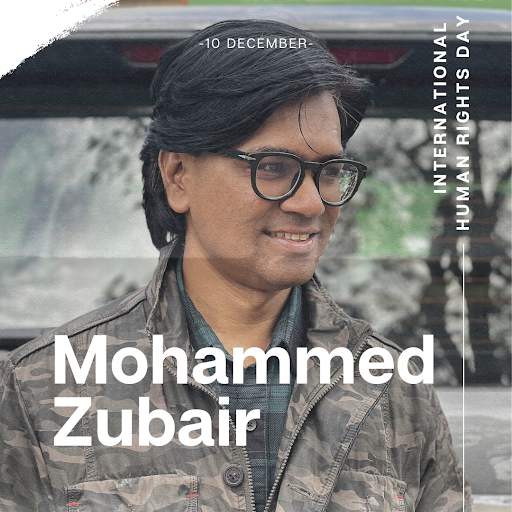
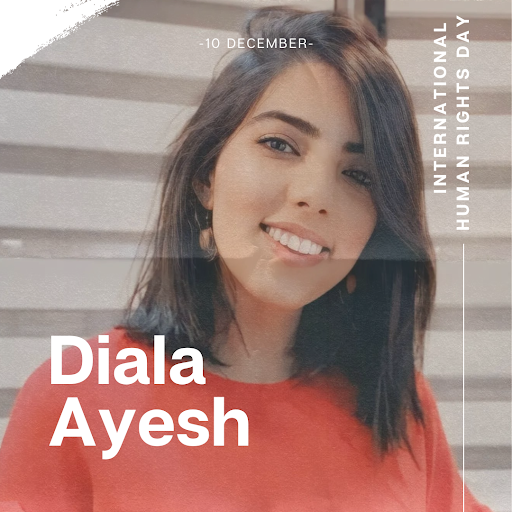
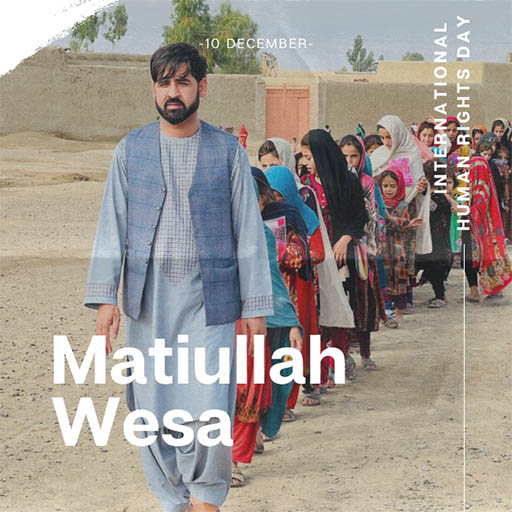
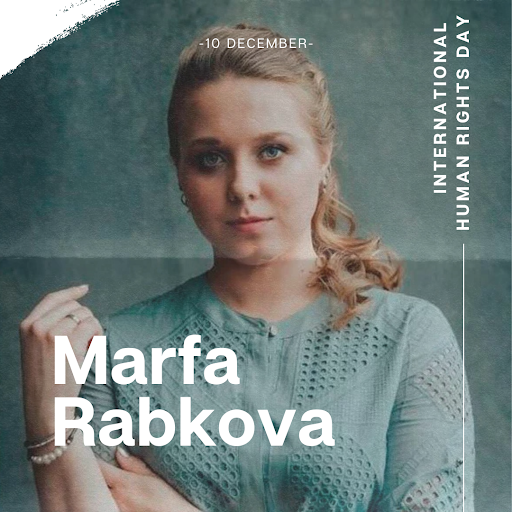
The NGO Index on Censorship spotlights four people standing up for human rights around the world:
Despite the declaration, all around the world human rights are being challenged, degraded and attacked. That is why this year, on Human Rights Day, we pay tribute to five human rights defenders who have worked tirelessly to defend people’s rights and have been persecuted as a result.
Jemimah Steinfeld, CEO at Index on Censorship said: “In this increasingly polarised and authoritarian world these people stand out as beacons of hope and light. It’s depressing to think that over 75 years since the Declaration, we still need a day like this but that should not detract from the bravery and fortitude of these people. May their example show us all how we can all better fight injustice.”
Marfa Rabkova (Belarus) Marfa Rabkova is a human rights defender who has been behind bars since 17 September 2020. She has long been targeted by the Belarusian authorities as a result of her civic activism. Marfa became head of the volunteer service at the Human Rights Centre Viasna in 2019. During the 2020 presidential election, she joined the “Human Rights Defenders for Free Elections” campaign, which registered over 1,500 election observers. When peaceful protests began to take place after the election, she helped document evidence of torture and violence against demonstrators. Marfa was indicted on a long list of charges, including inciting social hostility to the government and leading a criminal organisation. She was sentenced to 14 years and 9 months in prison in September 2022, after nearly two years of pre-trial detention. Index on Censorship calls for her immediate and unconditional release. See also: https://humanrightsdefenders.blog/2021/03/22/belarus-end-reprisals-against-human-rights-defenders/
Dublin Arts and Human Rights Festival showcases dozens of events from 11-20 October
The Dublin Arts and Human Rights Festival, Ireland’s only annual festival celebrating the intersection of the arts and human rights, is back for a sixth year, with events taking place in the capital, around Ireland and online from 11-20 October.
Under the slogan, “In Solidarity: An International Celebration of Arts and Human Rights,” Front Line Defenders and Smashing Times International Centre for the Arts and Equality – alongside a range of partners – will bring an exciting and innovative line-up of events that promote equality, human rights and diversity through the arts.
“We are delighted to be back for a sixth year of the Dublin Arts and Human Rights Festival, with another strong lineup of innovative and thought-provoking events that use the arts to shine a light on a range of human rights issues,” said Laura O’Leary, International Events and Promotions Coordinator at Front Line Defenders, and the festival’s human rights curator.
“The festival highlights the extraordinary work of human rights defenders in Ireland and around the world, who courageously work to promote human rights and justice for all.”
Supported by the Arts Council of Ireland, this year’s festival takes place over 10 days and includes events in Dublin, Wicklow, Kildare, Kerry, Cork, Leitrim, Roscommon and Galway, with artists and speakers in attendance from multiple countries. With an exciting blend of events happening in person and online, the festival reaches audiences locally, nationally, and internationally
Front Line Defenders hosts and co-sponsors a range of events during the festival, including (click the links for full event and booking details):
Memorial Monologues – The Path of Memory (1-2pm on 18, 19 and 20 October). This play by Mary Moynihan is adapted from the words of four brave and inspirational human rights defenders from around the world who were murdered because of their peaceful work defending the rights of others. Created as a promenade, ‘walk-in-the-park’ show with theatre, poetry and music, the performance features four of the stories of human rights defenders who are commemorated at the Memorial to Human Rights Defenders in the Iveagh Gardens.
Open Mic Night (7-10:30pm on 17 October). A night of poetry and music related to themes of solidarity, human rights and social justice. We will have special guests featuring curated poetry and music for the night, which will be announced closer to the event and the floor is also open for anyone who would like to sign up to perform.
Guardians of the Land: The Colombia Migrant Film Festival Launch (7-9pm on 16 October). Join us for the launch of the Colombia Migrant Film Festival, where we will be screening a two short documentaries. This year, we welcome the film festival in its Environmental and Migrant Justice edition, an edition that recognises the importance of speaking with urgency about the direct relationship between environmental impacts and migration. This is the year in which migrants, exiles, refugees and artists, positioning themselves from a perspective of the Global South, reaffirm their connection with the territory and recognise that to remember the armed conflict in Colombia is to remember nature itself: victim, scenario and instrument for war.
“Where should they go?” Migrants and Refugee rights Panel Discussion (4-5pm on 20 October). This is a shared discussion on Migrants and Refugees rights, organised by Front Line Defenders with guest speakers including Haneen Boshosha, a woman human rights defender from Libya; Ieva Raubiško, a woman human rights defender from Latvia and Lorena Zambrano, a woman human rights defender from Chile. During this panel, speakers look at the challenges migrants and refugees face around the world but also what their strategies are to build responses and alternatives.
Lorenzo Tondo in Palermo reported in the Guardian of 22 February 2024 that people and groups who assist asylum seekers are reporting a disturbing trend of escalating intimidation, with aid workers facing direct threats including being held at gunpoint and having their phone communications monitored by government authorities, according to a report from the Council of Europe’s commissioner for human rights.
“Organisations and people assisting refugees, asylum seekers, and migrants have been subjected to beatings, had their vehicles or equipment destroyed, or have been targeted by vandalism of their property, and even by arson or bomb attacks,” she wrote.
Mijatović said she had observed in certain member states how authorities had engaged with human rights defenders in an aggressive or intimidating manner. During the humanitarian crisis at the Poland-Belarus border, thousands of refugees from the Middle East were offered a route by the Lukashenko regime to try to reach the EU from Belarus, highlighting the restrictions by Poland on access to the border zone for people and organisations providing humanitarian assistance and legal aid.
The commissioner noted how “the emergence of an approach in which migration issues are increasingly addressed by member states from a security perspective” had led to the building of fences and deployment of military personnel, equipment and surveillance in border areas that has also affected NGOs.
“These physical obstacles deny asylum seekers the chance to seek protection and the right to a fair and efficient asylum procedure [and] this approach has also created an extremely difficult environment for human rights defenders,” she wrote.
“Those who assist refugees, asylum seekers, and migrants may be seen by states as an obstacle to the implementation of asylum and migration policies focused on deterrence and security, and therefore are faced with hostility. The rolling back of human rights, which is often part of states’ policies in this area, also leads to measures explicitly or implicitly targeting those helping.”
NGO rescue boats have also faced violence, including the use of firearms, from non-European countries with which Council of Europe member states cooperate on external migration control. NGO workers on some of these vessels have documented how often the Libyan coastguard has fired gunshots and endangered crew members and people in distress in the central Mediterranean. [see e.g. https://humanrightsdefenders.blog/2019/12/18/international-migrants-day-the-story-of-the-ocean-viking/]
Mijatović also noted the growing use of surveillance technologies. “During discussions for the preparation of this document concerns were raised that, in some member states, pervasive surveillance activities created mounting challenges for human rights defenders, including lawyers and journalists,” she wrote.
“Governments, in the name of national security concerns, often employ advanced surveillance tools to intercept communications and monitor online activities, including human rights defenders’ social media.”
In 2022, the Greek journalists Thanasis Koukakis and Stavros Malichudis were allegedly targeted for investigating sensitive topics such as financial crime cases and migration. The Italian justice minister in 2021 dispatched inspectors to Sicily after revelations that prosecutors had intercepted hundreds of telephone conversations involving no fewer than 15 journalists and covering migration issues and aid workers in the central Mediterranean.
Mijatović wrote: “Invasive surveillance practices, whether through physical surveillance, phone and internet tapping or by using spyware not only infringes on the personal security and privacy of individual human rights defenders, but also threaten the confidentiality between human rights defenders and the refugees, asylum seekers and migrants they assist, which is often crucial to working effectively.”
She added that people helping refugees, asylum seekers and migrants often experience extremely high levels of online hate and even death threats. Human rights defenders who are themselves refugees or from an ethnic minority background may also receive racist abuse, online and offline.
Helena Dalli – the European Union Commissioner for Equality – and Dunja Mijatović – the Council of Europe Commissioner for Human Rights – published a joint opinion piece “Stop the rain on human rights” in Euractive at the occasion of International Human Rights Day 2020 on 10 December:
The current pandemic crisis serves as a magnifying glass of all existing inequalities in Europe – racism, gender and sexual discrimination, treatment of migrants: there is still a long way to go to ensure full and real equality in Europe,
Regrettably, for all the progress of the past seven decades, there is still a long way to go to ensure full and real equality in Europe. Our societies breed divisive levels of inequality, fear and polarisation. Structural discrimination keeps millions of Europeans on the margins of our societies, especially in employment, health, education, housing, and the criminal justice system.
The current pandemic crisis serves as a magnifying glass of all existing inequalities in Europe and exacerbates them. Those who were poor before it became poorer; those who were disadvantaged faced even greater disadvantages. Inequalities affecting women, LGBTIQ people and ethnic minorities illustrate this problem well….
Restrictions to freedom of assembly and association, obstacles to legal gender recognition and lack of adequate protection at public events are evident failures of state authorities to uphold their commitments and legal human rights obligations to ensure equality for LGBTIQ people.
The situation is not much better for people from ethnic minority and immigrant backgrounds. If you are of African descent you are more likely than white people to face discrimination in the job market, in education and housing, and to be stopped by the police without reasonable suspicion.
Hate incidents also continue to scar the lives of Jews, Muslims and Roma, who are among the preferred scapegoats of those who still stigmatise some groups of people on the grounds of their ethnic origin or religion.
The unkept promise of equality betrays a long political, philosophical and judicial tradition which places equality at the centre of European democracies. Both the European Court of Justice and the European Court of Human Rights have upheld the principle of equality and non-discrimination since the 1970s.
Yet, more and more governments and parliaments seem to pay little attention to their legal obligations, and to the destabilising consequences that keeping millions of Europeans as second-class citizens is having on our societies. Hard won progress’ longevity is not a given. We must protect and reinforce it every day.
The many challenges that our societies will have to face require that Europe strengthens the place equality occupies in our societies, starting by giving a more central focus to the principle of equality and non-discrimination in relations to all human rights, be they civil, political, economic social or cultural.
We must do better for the rights of the single mother living in poverty and for the disabled child prevented from attending a mainstream school. We must protect the rights of women and girls who have been sexually harassed, of young graduates who face discrimination in the labour market because of how their name sounds.
We also must remain vigilant in the face of worrying attempts to roll back progress towards equality for women and LGBTIQ people.
There is no easy fix, but already taking the decision to address these long-standing problems together is a good start. We firmly believe that the founding principles and values of the Universal Declaration are as relevant today as they were when they emerged from bloodshed, tyranny and war. They require that governments become stronger defenders of human rights.
We are helping them do so by addressing effectively the pervasive discriminations against women in Europe. Ratifying and implementing the Council of Europe Convention on preventing and combating violence against women and domestic violence is key to advance gender equality. This Convention has been ratified by 34 European countries, and signed by the EU.
However, the EU is not yet in a position to ratify because unanimity between member states has not been reached. We will join forces to make clear that the Convention protects from violence and nothing else; contrary to the misconceptions, fallacious and uninformed claims that have circulated and sown doubts.
Likewise, we are committed to fight racism and bring about an anti-racist culture. To this end, we believe that one of the priorities is to help member states stamp out ethnic profiling and end impunity for police misconduct.
We will also strengthen our work to counter discrimination against LGBTIQ people. We will continue to raise the visibility of LGBTIQ people in our dialogue with member states, support activists and use all means at our disposal to defend the right of LGBTIQ people to equality.
For this to happen, however, our voices alone will not suffice. There is the need for a renewed commitment by national authorities to uphold the founding values and legal obligations set out by the European Union and the Council of Europe. And here we get to the heart of the problem.
At best, many politicians in our member states remain indifferent about discrimination. At worst, they instigate violence and hostility. Politicians must be champions of equality, not obstacles to it. International organisations and the human rights community too have their bit to do.
We must become more inclusive in the way we defend human rights. We deliver a public service in the interest of society, but we do not own that service. We talk about, for and sometimes with people who have suffered human rights violations.
But we rarely empower them to speak for themselves. They should take part in decision-making processes as much as possible. We should learn to listen more and they must have the space to tell their stories and shape the policies and laws that concern them.
When states adopted the Universal Declaration on Human Rights on 10 December 1948, they pledged themselves to achieve equality. Giving practical effect to that vision is still possible – but only if we choose to strengthen freedoms, promote participation and empower all people.
On30 September 2020 the Commissioner for Human Rights of the Council of Europe in Strasbourg issued the following statement:
“Yesterday’s judgment against Yuri Dmitriev, a Russian historian and human rights defender, sentenced to 13 years’ imprisonment in a high-security prison having been acquitted earlier on the same charges, raises serious doubts as to the credibility of his prosecution”, says today Dunja Mijatović, Council of Europe Commissioner for Human Rights. [see: https://humanrightsdefenders.blog/2020/07/24/gulag-historian-yury-dmitriyev-returns-to-prison/]
“Mr Dmitriev is widely known in Russia and beyond for his research and his work focusing on the commemoration of victims of past political repression. The harsh verdict delivered by the Karelian Supreme Court in the absence of the legal counsel chosen by Mr Dmitriev cannot be deemed to have complied with fair trial guarantees and is a further illustration of a broader pattern of judicial harassment against human rights defenders, journalists and other independent or critical voices, which has been growing in the Russian Federation in recent years.
Once again I urge the Russian authorities to reverse this alarming trend of targeting Russian civil society. As a matter of urgency the criminal prosecution of a number of human rights defenders, journalists and civil society activists, including those of Abdulmumin Gadzhiyev, Yulia Tsvetkova, Anastasia Shevchenko [see https://humanrightsdefenders.blog/2019/01/22/in-russia-first-criminal-case-under-undesirable-organizations-law/%5Dand Semyen Simonov for engaging in legitimate civil society activities, must stop. As a Council of Europe member state, Russia should also adopt structural measures at the political, legislative and practical level which genuinely create a safe and enabling environment for the work of human rights defenders, as required by European human rights standards. Instead of intimidating and harassing civil society, the Russian authorities at all levels should effectively co-operate with them and publicly acknowledge their essential role and invaluable contribution to society’s democratic development.”
“.. it is saddening to note that most of the challenges identified 25 years ago are still present in Europe today. In some areas progress has stalled due to persistent structural obstacles and an increasing backlash, combined with the lack of a sufficient and robust state response.
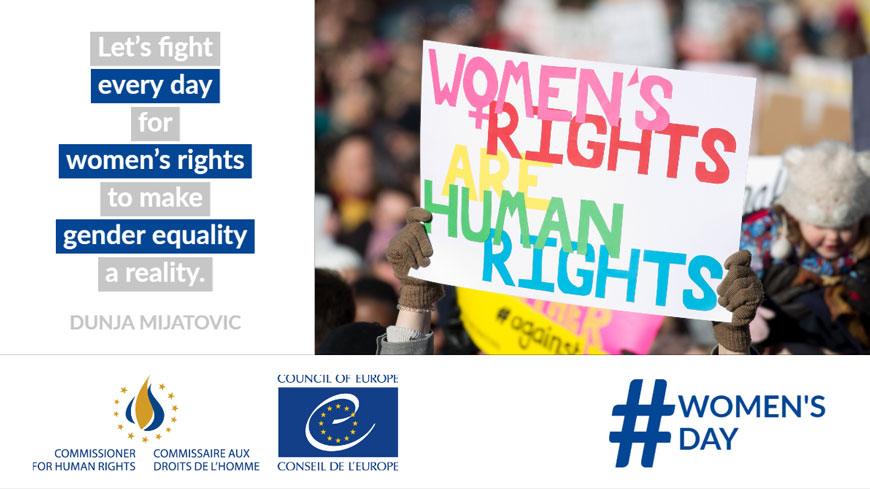
Violence against women as a serious human rights violation remains a bitter reality for too many women in all Council of Europe member states. Notwithstanding the recent movements against sexual violence, huge challenges still lie along the path towards obtaining justice for women victims who have the courage to speak out. They may even face disbelief and stigmatisation by the very people who should be providing them with assistance and protection. With the rising popularity of social media platforms, sexist hate speech has acquired a worrying dimension, providing a new breeding ground for violence against women. Furthermore, the backlash against women’s rights, upheld by ultra-conservative movements, is particularly disturbing as it endangers the progress towards gender equality that has been achieved so far. This has a particularly negative impact on girls’ and women’s autonomous and informed decision-making about their bodies, health and sexuality and hinders their access to affordable, safe and good-quality reproductive health services. We have to remain vigilant to prevent any such rolling back of women’s rights. Special attention should also be given to the protection and promotion of the rights of girls and women who may experience multiple and intersectional forms of discrimination, such as women living in poverty, rural women, migrant women, Roma women, women with disabilities and LBTI women.
This dark picture is, however, brightened by the image of thousands of women of all ages and backgrounds who, regardless of the attacks, the threats and the harassment they may face, stand up against violence and for the full realisation of gender equality. Vigilance against stagnation and retrogression in women’s rights is ensured by their mobilisation as they peacefully demonstrate throughout Europe. I firmly stand by them and salute their courage and determination. In this respect, I reiterate the essential role played in the upholding of women’s rights by women human rights defenders, who are often at the core of such mobilisation. Not only do they provide assistance and shelter to victims of gender-based violence and combat discrimination against women, they also constantly monitor the situation, while holding authorities accountable for fulfilling their human rights obligations.
However, the fight for the realisation of women’s rights also relies on each of us. I invite society as a whole, from youth to the elderly, women and men, all acting together, to speak up against violence and discrimination. We all have a key role to play as agents of change.
Whilst I perceive society’s mobilisation as vital, we should not forget that citizens’ initiatives cannot in themselves remedy the continuous lack of a strong and official response by state authorities to the challenges currently affecting the full enjoyment of women’s rights. Council of Europe member states have the primary obligation to effectively uphold women’s rights. Against this background, I urge member states to support this civic mobilisation by taking concrete action. To this end they should: firstly, ensure the ratification and full and effective implementation of the Council of Europe Convention on preventing and combating violence against women and domestic violence (Istanbul Convention); secondly, promote gender equality and combat sexism in all spheres of life; and thirdly, provide an enabling environment for all women human rights defenders by removing all obstacles to their work. We should all strongly advocate for the full realisation of women’s rights and rise to the challenge of making a world where gender equality is a reality. Fighting for women’s rights is fighting for everybody’s human rights and benefits society as a whole.”
“The government should step up its efforts to fight the hate speech prevailing today in Bulgaria in particular against Roma, LGBTI people and other minority groups” said the Council of Europe Commissioner for Human Rights, Dunja Mijatović, on 2 December 2019 after a 5-day visit to the country.
Hate speech and hostility against Roma persist, with little if any response from the authorities to counter this long-standing phenomenon. “The lack of reaction to some very serious instances of hate speech by some high-level politicians, which systematically go unsanctioned, is worrying.” The Commissioner deplored the situation of Roma who had to leave their homes earlier this year following anti-Roma rallies in several villages, including in Voyvodinovo where around 200 individuals left in fear. “Such disastrous events illustrate the highly detrimental impact that hate speech can have on the lives of people and communities. I call on the authorities to urgently address the situation of the persons affected,” she added.
“There is a need for a political and cultural shift as regards the treatment and image of minority groups in Bulgaria. Recognising racist motivation as an aggravating circumstance for all offences and implementing the judgments of the European Court of Human Rights, including those on forced evictions and the registration of associations of persons identifying as a minority are among the immediate steps which the government should take.” In addition, the Commissioner is concerned about the demonstrations organised by extremist groups and calls on the authorities to strongly and publicly condemn such manifestations.
…….The Commissioner visited the only crisis shelter for women victims of domestic violence currently operating in Sofia. “As a matter of urgency, the authorities should increase the number of shelters and other social services available to victims of domestic violence.” The Commissioner is also concerned by the climate of increased hostility against human rights defenders, in particular women’s and LGBTI rights activists.
Moreover, Commissioner Mijatović is alarmed by the continuous deterioration of media freedom in Bulgaria. Non-transparent media ownership, threats and harassment of journalists, and the use of defamation suits are chronic problems. In addition, political influence over media outlets severely undermines the credibility of the press. “This must stop. Citizens need a free, investigative and independent press in order to be able to participate more actively in the democratic fabric of society. Journalists should be free to play their crucial role without interference.”
Council of Europe Commissioner for human rights, Dunja Mijatović, gave a speech at the world’s leading summit on human rights in the digital age, RightsCon 2019, in Tunis, on 11 June 2019:
…A recent article of the New York Times from the city of Kashgar showed the extent to which the Chinese authorities are using facial recognition and snooping technologies to keep a tight control of the Muslim community. If you think that this does not concern you because it is happening far away, you would be terribly wrong. The Chinese experiment bears a great significance for all of us. It shows to what extent the cozy relations between technology companies and state security agencies can harm us. This has become particularly acute as part of states response to terrorist threats and attacks. States around the world have increased their surveillance arsenal, not always to the benefit of our safety. On the contrary, in several occasions they used it to silence criticism, restrict free assembly, snoop into our private life, or control individuals or minorities.
An illustration of this comes from human rights defenders. If in the past human rights defenders have been ahead of states in using technological progress to expose human rights abuses, now they are facing a backlash. As we speak, states and non-state actors are intercepting their communications, intrude their personal data, trace their digital footprint. States are using technologies to learn about human rights defenders’ plans or upcoming campaigns; to find or fabricate information that can help intimidate, incriminate or destroy their reputation; or to learn about their networks and sources.
This concerns us all. At stake here is the society we want to live in and bequeath to the next generations. Technology should maximise our freedoms and rights – and keep those in power accountable.
To get there we need to strengthen the connections among us and crowdsource human rights protection, promotion and engagement. An important step in that direction would be to provide more support, funding and digital literacy training to human rights defenders. It is also crucial that the private sector and state authorities uphold human rights standards in the designing and implementation of all technological tools.
Living in an increasingly digital world does not mean living artificial lives with artificial liberties. Our rights must be real, all the time.
We all must resist the current backlash and persist in demanding more human rights protection, more transparency and more accountability in the digital world.
While the report covers a variety of the most pressing human rights issues in the Council of Europe member states, the Commissioner highlights migration, women’s rights, human rights of persons with disability, the protection of human rights defenders and the safety of journalists as the most recurrent topics of her work.
“Migration is among the most pressing human rights issues on my agenda”, she says. “National authorities should improve the treatment of immigrants, asylum seekers and refugees, and put human rights and the principle of responsibility sharing at the centre of their migration and asylum policies”.




 Hans Thoolen on Human Rights Defenders and their awards