Posts Tagged ‘climate’

Open Global Rights on creating pathways for environmental defenders in the trickiest places

October 26, 2024

Grassroots environmental defenders are building a variety of strategic, community-based approaches to environmental justice. Global actors can do more to support their work write Rebecca Iwerks & Ye Yinth & Otto Saki on 14 October 2024 in Open Global Rights.

Fighting for land, environmental, and climate justice is risky. Global Witness annually reminds us of the staggering number of people who are killed for defending their land—over 2,100 since 2012. And lethality is only the tip of the iceberg, one of a multitude of violent tactics that people face when they speak up for their community. [see also: https://humanrightsdefenders.blog/2024/09/18/global-witness-2023-2024-annual-report-violent-erasure-of-land-and-environmental-defenders/]

The last few years have seen encouraging steps to respond through global and regional policy. National governments have started to make specific commitments to protect environmental rights defenders, deeming it necessary to address the climate crisis. The Escazu agreement in Latin America has explicit requirements for the state protection of environmental rights defenders. [NOTE: On 16 October 2024 civil society in the Americas has issued an urgent call to accelerate the implementation of the Plan of Action on Human Rights Defenders, of the Escazú Agreement, adopted five months ago].Just this month, the UNFCCC Supervisory Body for Article 6.4 and the UN Secretary General’s Panel on Critical Energy Transition Minerals showed how global bodies can incorporate the protection of environmental rights defenders directly into climate policy. More broadly, hundreds of organizations have pooled their efforts to end retaliation against environmental defenders through the ALLIED network.

What do we do while we wait for momentum to build and for policy to translate into practice? We can draw hope from thoughtful, strategic examples of grassroots legal empowerment. Throughout the world, legal empowerment advocates—people helping individuals and groups know, use, and shape the law with the support of community paralegals—are assisting communities in registering their land, stopping corporate pollution of their water, and negotiating fair land use deals even in the most difficult places. 

Last year, we examined the experiences of environmental defenders who were able to continue their work in repressed environments, using tenets of legal empowerment to find pathways to justice in ways that reduce their risk. Here’s what we saw:

  1. Building community power.
  2. Changing paths to remedy.
  3. Building relationships with allies. …..
  4. Knowing, using, and shaping the law to respond to security concerns.

How do we super-charge support for this subtle, effective protection alternative? 

While grassroots justice advocates are continuing to seek remedies in tricky places, global actors can do more to support them. The primary shift that can support this type of innovative risk response is to provide flexible, unrestricted funding directly to grassroots justice advocates, whether through philanthropy or from pooled private sector funds that facilitate independent legal and technical support. Flexible funding allows the practitioners to shift their plans as pathways become riskier; it also allows them to invest in security equipment that may not clearly fit into a project-driven budget. Openness to different types of reporting can allow grassroots justice advocates to make decisions about what information is safest for them to reveal without concerns about financial security.

Secondly, those who influence global frameworks, such as the UN Sustainable Development Goals and the United Nations Framework Convention on Climate Change (UNFCCC), can do more to incorporate the security of environmental rights defenders into these frameworks. For example, the security of environmental rights defenders is integral to the access to justice encompassed by Sustainable Development Goal 16, and progress on that issue should be included in all SDG 16 reporting. Within the UNFCCC, the language protecting defenders from Article 6.4 Supervisory Body and the Secretary General’s Panel on Critical Energy Transition Minerals should be mirrored throughout climate policy frameworks and resourced during their implementation. 

While the actions against environmental defenders are shocking, there are significant steps the rights community can take now to support grassroots actors moving forward.
https://www.openglobalrights.org/creating-pathways-to-land-and-environmental-justice-in-the-trickiest-places/

Climate Human Rights Defenders increasingly seen as eco-terrorists

October 15, 2023

Damien Gayle, Matthew Taylor and Ajit Niranjan in the Guardian of 12 October 2023 published the result of their research in Europe into using repressive measures to silence climate activists[see: https://humanrightsdefenders.blog/2023/10/04/human-rights-platform-at-the-gulbenkian-foundation-hears-michel-forst-worries-about-treatment-of-climate-defenders/]

In Germany, France, Italy, Sweden, the Netherlands and the UK, authorities have responded to climate protests with mass arrests, the passing of draconian new laws, the imposing of severe sentences for non-violent protests and the labelling of activists as hooligans, saboteurs or eco-terrorists. The crackdowns have come in spite of calls by senior human rights advocates and environmental campaigners to allow civic space for the right to non-violent protest, after a summer of record-breaking heat in southern Europe that is attributed to the effects of climate breakdown.

The UK has led the way in the crackdown, experts say, with judges recently refusing an appeal against multi-year sentences for climate activists who blocked a motorway bridge in east London. The three-year jail terms for Marcus Decker and Morgan Trowland earlier this year are thought to be the longest handed out by a British judge for non-violent protest.

Michel Forst, the UN rapporteur on environmental defenders since June last year [not really, for his correct title is the “Special Rapporteur on Environmental Defenders under the Aarhus Convention, Mr. Michel Forst” [see: https://humanrightsdefenders.blog/2022/07/22/aarhus-convention-on-environmental-information-gets-especially-experienced-rapporteur/], described the situation in the UK as “terrifying”. He added that other countries were “looking at the UK examples with a view to passing similar laws in their own countries, which will have a devastating effect for Europe”.

“Since my appointment I have been travelling to many countries in Europe and there is a clear trend,” Forst told the Guardian. “We can see an increasing number of cases by which these climate activists are brought to court more and more often and more and more severe laws being passed to facilitate these attacks on defenders.”

He added: “I’m sure that there is European cooperation among the police forces against these kinds of activities. My concern is that when [governments] are calling these people eco-terrorists, or are using new forms of vilifications and defamation … it has a huge impact on how the population may perceive them and the cause for which these people are fighting. It is a huge concern for me.”

Amnesty International said it was investigating a continent-wide crackdown on protest. Catrinel Motoc, the organisation’s senior campaigner on civil space and right to protest in Europe, said: “People all around the world are bravely raising their voices to call for urgent actions on the climate crisis but many face dire consequences for their peaceful activism.

“Peaceful protesters are left with no choice but to stage public protests and non-violent direct actions because European countries are not doing enough to tackle the climate crisis.

“There’s alarming evidence of criminalisation, harassment, stigmatisation and negative rhetoric towards environmental defenders.”

In June, Dunja Mijatović, the Council of Europe’s commissioner for human rights, also called for an end to crackdowns on environmental activists. Last December, Volker Türk, the UN’s high commissioner for human rights, appealed to governments to protect the “civic space” for young environmental activists, and “not crack down in a way that we have seen in many parts of the world”.

There was widespread outrage this summer when France’s interior minister, Gérald Darmanin, used one of the state’s most-powerful tools to order the banning of one of the country’s leading environmental protest groups. Les Soulévements de la Terre, a collective of local environmental campaigns, had staged a series of protests, with tactics including sabotage, that ended with violent confrontations with police, and Darmanin denouncing the activists as “far left” and “ecoterrorists”.

In the Netherlands, one of a series of roadblock protests on the A12 highway in The Hague in May was dispersed by police using water cannon, with more than 1,500 arrested. Seven climate activists were convicted of sedition – a charge that had never before been levelled against climate protesters – in relation to online posts calling for people to join an earlier demonstration.

In Sweden, about two dozen members of the Återställ Våtmarker [Restore Wetlands] group were convicted of sabotage for blocking highways in the capital, Stockholm. Others were held on remand for up to four weeks for taking part in protests.

In Germany in May, police staged nationwide raids against the Letzte Generation (Last Generation) group, whose supporters had glued themselves to roads on a near-weekly basis for months, as well as targeting art galleries and other cultural spaces. On a police directive, the homepage of the group was shut down and possessions belonging to members were seized.

At the most recent count, supplied by the activists, police had made more than 4,000 arrests of supporters of Last Generation taking part in road blocks in Berlin alone.

Authorities in Italy have used anti-organised crime laws to crack down on protests, where the Ultima Generazione (also Last Generation) group has staged road blocks since last year. The Digos police unit, which specialises in counter-terrorism, in April justified the use of anti-Mafia laws to target the group by saying its civil disobedience actions had not taken place spontaneously, but were organised, discussed and weighed up by an internal hierarchy. This came along with new, stiffer penalties for protests, with activists facing fines of up to €40,000 for actions targeting artworks and other cultural heritage.

Richard Pearshouse, director of the environment division at Human Rights Watch, said: “These restrictions on environmental protest across Europe and the UK are incredibly short-sighted. These governments haven’t grasped that we all have a huge interest in more people taking to the streets to demand better environmental protection and more climate action.

“Governments need to respect the rights to assembly and expression, and ramp up their own environmental protections and climate ambitions. That’s the only way we have a chance to get out of this climate crisis with our democratic institutions intact.”

A spokesperson for the UK Home Office said: “The right to protest is a fundamental part of our democracy but we must also protect the law-abiding majority’s right to go about their daily lives.

“The Public Order Act brings in new criminal offences and proper penalties for selfish, guerrilla protest tactics.”

The French interior ministry said local officials had the right to ban demonstrations with a serious risk of disturbing public order. “These one-off bans, of which there are very few in absolute terms, are not imposed because of the reason for the demonstration.”

The Italian interior ministry referred to a statement from the culture minister Gennaro Sangiuliano in April, who said attacks on monuments cause economic damage to the community that is is expensive to clean up. “Those who cause damage must pay personally.”

The German interior ministry declined to comment. The Bavarian interior ministry referred the Guardian to the public prosecutor’s office in Munich, which provided a statement from June in which it confirmed it had authorised the tapping of phones for six of seven Last Generation members under criminal investigation.

The Swedish interior ministry declined to comment. The Dutch ministry of justice did not respond to requests for comment.

https://www.theguardian.com/environment/2023/oct/12/human-rights-experts-warn-against-european-crackdown-on-climate-protesters

and later followed by:

https://globeecho.com/politics/climate-protesters-in-europe-face-a-massive-crackdown/

https://www.ohchr.org/en/statements-and-speeches/2023/10/environmental-rights-are-key-all-human-rights-turk-says

Human Rights Platform at the Gulbenkian Foundation hears Michel Forst worry about treatment of climate defenders

October 4, 2023

The LUSA news agency reported on 3 october that “the UN Special Rapporteur on environmental campaigners, Michel Forst” , said that climate activists are under increasing pressure in Europe, admitting that he was surprised by the violence with which several governments treat them. This is a somewhat misleading title as Michel Forst is the “Special Rapporteur on Environmental Defenders under the Aarhus Convention, Mr. Michel Forst” [see: https://humanrightsdefenders.blog/2022/07/22/aarhus-convention-on-environmental-information-gets-especially-experienced-rapporteur/]

Still, the message is what matters: “Rights defenders as a whole face a number of major challenges and risks in many countries, including in Europe, but those who are currently paying the highest price are precisely environmental activists and people trying to defend their land and the climate,” said Michel Frost in an interview with Lusa.

Forst was in Portugal today to take part in the international conference of the Human Rights Platform, taking place at the Gulbenkian Foundation in Lisbon, and confessed to Lusa that he didn’t understand the reasons behind this increase in pressure.

I don’t understand why, but the fact is that more and more politicians in more countries are comparing people who are actually peaceful demonstrators with violent terrorists,” he said, noting that he sees this “in Spain, the Netherlands, Denmark, the UK, Germany and Switzerland”.

The issue worries him a lot, he recognized, not least because different ways of attacking activists are being used in various countries.

“I toured more than 20 European Union (EU) countries to meet with activists and governments, inviting them to describe the atmosphere they face in their countries, and I can assure you that the situation is becoming very, very, very tense,” he said, pointing out that governments such as those in France or Austria classify these activists as “eco-terrorists or green Taliban”.

Michel Forst explained to Lusa that he is currently working with a group of non-governmental organizations (NGOs) “to try to better understand what is happening in Europe, with a view to guiding EU governments on how to respond to civil disobedience”.

Stressing that civil disobedience is regulated by international human rights law, the UN official said he was alarmed when he met judges from Spain, France and Germany and realized that they “didn’t understand international human rights law at all”.

Activists who engage in civil disobedience “should not be penalized”, but in reality we see that “judges and governments do not comply with international obligations”, Michel Forst pointed out.

For this reason, he explained, his aim for now is to provide documents and guidelines for states to ensure better fulfilment of their international obligations.

“Some states have been very receptive, such as Ireland and Norway, but many others have not,” he denounced, naming the example of the United Kingdom and adding that, in some cases, the police infiltrate groups in order to know what is being prepared and to be able to better control the activists.

“We now have evidence that some [environmental campaigners] have been placed under strict surveillance, with their phones being hacked and their computers being tapped,” he said.

For Michel Forst, environmental campaigners are no different from those who fight for human rights.

“It’s the same thing,” he emphasised, explaining that environmental activists are just gaining more visibility.

“They are using new forms of mobilisation that others haven’t used, like sticking their hands in the ground or handcuffing themselves to a barrier or breaking down doors to cut genetically modified maize,” he listed.

Their growing visibility leads them to face what human rights defenders were already facing, namely the fact that “civic space is shrinking in Europe,” he said, noting that this is not only his assessment, but also that of the Council of Europe and the EU Agency for Fundamental Rights.

And against this, Michel Forst expects only one thing: “A strong reaction from citizens”.

With regard to the authorities, the UN Special Rapporteur also expressed his expectations.

“We need to see the results [of the guidelines that will be issued] and then ask the most receptive.

13-year old HRD from Colombia cares for climate

July 19, 2023

Francisco Vera, is 13 years old and he has been advocating for human rights and climate justice since he was 9 years old.

The right to a clean, healthy, and sustainable environment (R2E) – further steps and historical decision in the Case of Torres Strait Islanders

November 9, 2022

Following the Human Rights Council and General Assembly resolutions recognising the right to a clean, healthy, and sustainable environment (R2E), adopted in 2021 and 2022 respectively (HRC/RES/48/13 and A/RES/76/300), people have started to consider appropriate next steps in advancing the legal recognition, implementation, and monitoring of this right. See also: https://humanrightsdefenders.blog/2021/10/11/new-right-to-healthy-environment-ngos-urge-action/

A blog post of the Universal Rights Group on 7 November 2022 reports on meeting on 18 October hosted by the Permanent Mission of Costa Rica in Geneva, UNEP, and the Universal Rights Group bringing together over 20 human rights experts from Geneva Permanent Missions in a non-attributable setting designed to promote open and forward-looking debate on appropriate next steps. The discussion was informed by an ‘options paper’ prepared by the Special Rapporteur on human rights and the environment, Dr David Boyd, detailing three possible ways to advance the R2E, which he argued can and should be carried out concurrently.

In the meantime, a more operational development was the historic decision, the United Nations (UN) Human Rights Committee found on Friday 23 September that Australia’s failure to adequately adapt to climate change violates the human rights of Torres Strait Islanders.   

Karin M Frodé, Andrea Olivares Jones and Joanna Kyriakakis reported on the case:

The Committee, which oversees the implementation of the International Covenant on Civil and Political Rights (ICCPR) received a complaint by eight Torres Strait Islanders and six of their children in 2019. The group called for the Committee to recognise that the Australian Government had violated their human rights by failing to reduce carbon emissions, and introduce measures to adapt to climate change.

The Committee’s decision makes clear that inadequate responses to climate change can result in the violation of human rights. It is a landmark victory worth celebrating as part of a broader trend in climate change litigation which has seen human rights arguments put forward to hold both states (ie, the NetherlandsPakistan and Belgium) and corporations (ie, Shell and other Carbon Majors) accountable. It is also an example of a rise in cases where Indigenous actors are central. 

The Committee’s decision: The Committee found that Australia has violated the Torres Strait Islanders’ rights to private life, home and family and their enjoyment of culture. In doing so, the Committee noted Australia’s efforts to construct a seawall, but found it to be an inadequate response to the alarming threats that had been raised by Torres Strait Islanders since the 1990s, due to its delay initiating the project ([8.12], [8.14]).

While decisions by UN bodies are not automatically binding in Australian law, they are persuasive opinions by independent experts that outline Australia’s international obligations and analyse whether they are complied with. The relationship between climate change impacts and human rights is an emerging area, so the clarity that decisions such as in the present case bring is critical. This decision is therefore important not only to the complainants but for other climate justice advocates. 

The present decision follows other climate related decisions by human rights bodies. In Teitiota, a case brought against New Zealand, the same Committee made important observations about state obligations and climate change in the context of asylum seekers and refugees, though it stopped short of finding a violation. Another complaint brought by young climate activists against five states for climate inaction before the Committee on the Rights of the Child, focused on child-centric impacts of climate change. Although dismissed for technical reasons, that decision made important findings that children fall within the jurisdiction of states where transboundary harm originates, following the approach of the Inter-American Court of Human Rights

See also: https://humanrightsdefenders.blog/2022/03/02/human-rights-high-commissioner-bachelet-urges-support-for-environmental-defenders/

https://www.ohchr.org/en/press-releases/2022/09/australia-violated-torres-strait-islanders-rights-enjoy-culture-and-family

2021 global data report from the CIVICUS Monitor

January 18, 2022

The new #PeoplePower2021 report shows where civil society conditions are improving and getting worse. A closer look at top violations & trends.

2021 global data report from the CIVICUS Monitor

  • 9 out of 10 people live in countries where civic freedoms are severely restricted 
  • Country downgrades include Poland, Singapore, Nicaragua, Jordan and South Africa
  • Detention of protesters is the top violation of civic freedoms in 2021
  • COVID-19 continues to be used as a pretext to restrict rights across the globe

The fundamental rights to freedom of expression, assembly and association continue to deteriorate year after year worldwide, according to a global report released by the CIVICUS Monitor, an online research platform that tracks fundamental freedoms in 197 countries and territories. The new report, People Power Under Attack 2021, shows that the number of people living in countries with significant restrictions on civic rights, including the freedoms of expression, association and peaceful assembly, amount to almost 89% of the population this year. See also: https://humanrightsdefenders.blog/2021/05/26/10th-edition-of-civicuss-state-of-civil-society-report-2021/

The CIVICUS Monitor data shows that year after year, there is significantly less space for people to exercise fundamental freedoms: only 3.1% of the world’s population lives in countries rated as ‘open’.

Nearly two billion people live in countries with the worst rating, ‘closed’, where the authorities are routinely allowed to imprison, injure and kill people for attempting to exercise their fundamental freedoms. China, Saudi Arabia, Turkmenistan and 21 other countries fall under this category – Nicaragua and Belarus joined their ranks this year. 

It is nearly two years since the start of the COVID-19 pandemic and the virus is having a dire impact on civic freedoms globally, one that will have lasting impact if remedial action is not taken. Our research shows the detention of protesters and the use of restrictive laws to muzzle dissent are becoming more prevalent, as governments use the pandemic to introduce or implement additional restrictions on civic freedoms. 

“Governments across the world are setting a very dangerous precedent by using the health emergency as a smokescreen to crack down on protests and enact or amend legislation that will further limit peoples’ rights. Specifically, disinformation legislation is being enacted and used to criminalise speech, a concerning practice that could become the new norm to crush dissent,” said Marianna Belalba Barreto, Civic Space Cluster Lead. 

This year, 13 countries have been downgraded and only one improved their rating.  The CIVICUS Monitor is particularly concerned about civic space restrictions in Europe, where four countries dropped a rating: Belarus, Belgium, Czech Republic, and Poland. Europe has the greatest number of ‘open’ countries, but year after year we continue to see signs of serious deterioration.

Also alarming is the deterioration of civic space conditions in Africa, where South Africa, Botswana, Mali and Mozambique all dropped ratings. In the Americas, Nicaragua joined Cuba in our worst category, ‘closed’. The Middle East and North Africa retained its status as the region with the worst civic rights record, with Jordan being downgraded to ‘repressed’. In Asia, Singapore also fell into the ‘repressed’ category, as a persistent clamp down on dissent and opposition voices continues. 

https://monitor.civicus.org/widgets/world

“What we are seeing is not a proportional reaction to a health emergency, where restrictions are meant to be extraordinary measures to deal with a crisis that is temporary. On the contrary, governments are using the pandemic as a pretext to further accelerate the crackdown on human rights that we have been documenting over the past years.” 

Although only one country – Mongolia – improved its rating in 2021, it is important to highlight the resilience of civil society. Governments have not been successful in silencing alternative voices or limiting their activism. Despite increasing restrictions, civil society has found ways to continue to speak up and claim their rights.  

Over twenty organisations collaborate on the CIVICUS Monitor, providing evidence and research that help us target countries where civic freedoms are at risk. The Monitor has posted more than 550 civic space updates in the last year, which are analysed in People Power Under Attack 2021. 

Civic freedoms in 197 countries and territories are categorised as either closed, repressed, obstructed, narrowed or open, based on a methodology that combines several data sources on the freedoms of association, peaceful assembly and expression.

As the climate crisis intensifies and the effects of the COVID-19 pandemic exacerbate social and economic inequalities, the efforts of civil society are fundamental to achieve tangible results and systematic change. However, a new report by CIVICUS shows how activists, human rights and environmental defenders face profound barriers: not only are governments and businesses failing to take urgent steps to mitigate the climate crisis; they are also actively trying to silence activists, disrupt and prevent climate actions and repress environmental, land and Indigenous rights defenders. In addition, companies play a crucial role in limiting human rights activism.

CIVICUS’ report highlights the role of companies across the world in perpetrating, contributing to, or allegedly benefiting from attacks on human rights defenders and rights groups, including: Feronia PHCFormosa Plastics GroupSOCFINNewmont Mining CompanyXiang Lin SI LtdGreat Season LtdChevron EnergySomkhele and Tendele Coal Mining, PanAust, Oxec, OCP Ecuador and Petroecuador, SG Interests, Celtejo, Mineral Commodities (Ltd) (MRC) and Mineral Sands Resources, PetroTal, Enbridge, Lydian Armenia, andthe RWE Group. The report also highlights positive developments from Chevron and the Mizuho Financial Group.

The Business and Human Rights Resource Centre (BHRRC) had already asked most of these companies to respond to the allegations included in the report, previously. Responses can be found in the companies’ dashboard. BHRRC asked RWE Group to respond to the allegations; RWE’s response is included below.

https://www.civicus.org/index.php/media-resources/reports-publications

https://www.business-humanrights.org/en/latest-news/civicus-report-highlights-role-of-companies-in-attacks-on-human-rights-defenders-amid-increasing-restrictions-on-civil-society/

Human Rights Watch advises new German Government

December 22, 2021
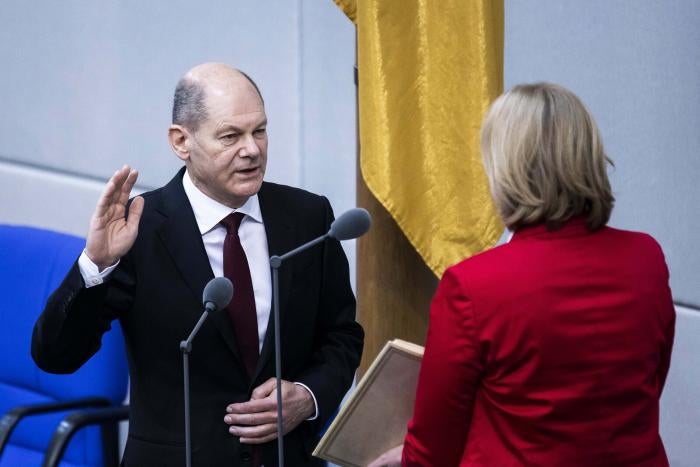
A man wearing a suit raises his right hand
Germany’s new Chancellor Olaf Scholz (left) and Baerbel Bas, President of the Bundestag, during the swearing-in of the new Federal Government in Berlin, December 8, 2021.  © 2021 Florian Gaertner/picture-alliance/dpa/AP Images

On 10 December 2021, David Fischer, HRW’s Media Coordinator, Germany published “A Human Rights Roadmap for Germany’s New Government

…The climate crisis threatens catastrophic impacts on human rights, and ambitious climate action by the government to reduce greenhouse gas emissions is critical if Germany – the European Union’s biggest greenhouse gas emitter – is to help prevent the worst of those impacts.  The new government’s coalition agreement, a non-binding roadmap for legislative action, calls for elimination of coal energy “ideally” by 2030, promises a roll-back of subsidies for fossil fuels and legislation to deal with climate change adaptation planning. These are positive steps but insufficient to reach Germany’s contribution toward the global goal in the Paris Agreement of limiting global warming to 1.5°C above pre-industrial levels.

In addition to the climate crisis, the new coalition between the Social Democrat Party (SPD), the Free Democrats (FDP) and the Greens (Die Grünen) will have to tackle challenges to the rule of law within the EU, stand up for human rights against autocrats in China and Russia, and address the many challenges arising from the pandemic.

The coalition agreement makes promising commitments to advance the rights of lesbian, gay, bisexual, and transgender (LGBT) people, including to change the law on legal gender recognition for transgender people so that it is based on self-determination. The coalition also commits to protecting human rights in supply chains in line with the UN Guiding Principles on Business and Human Rights that include the right to a remedy for victims. It proposes to increase the capacity of German courts to prosecute universal jurisdiction cases such as the trial on state-sponsored torture in Syria.

Within Europe, the new government intends to push for judgements of the European Court of Human Rights to have greater impact and “be implemented in all member states”. It supports the use of mechanisms and sanctions to enforce the rule of law in European Union member states. It also calls for shared responsibility for migrants and refugees among member states, an end to pushbacks at EU borders and for the border agency Frontex to respect human rights.

Scholz’s new government will now need to live up to expectations on human rights and prove that what the coalition dubbed “Germany’s responsibility for Europe and the World” is expressed in actions and not just words.

See also: https://www.justsecurity.org/79618/how-germanys-new-government-might-pursue-its-values-based-foreign-policy-in-europe/

https://www.hrw.org/news/2021/12/08/human-rights-roadmap-germanys-new-government

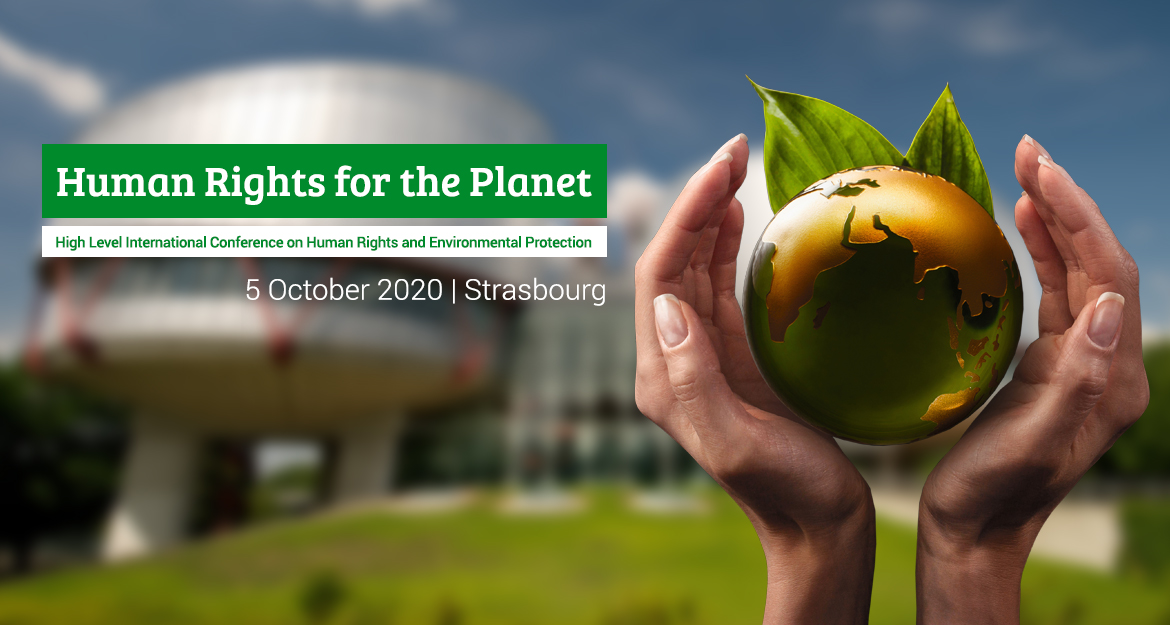
Human Rights for the Planet conference starts 5 October

October 1, 2020
Human Rights for the Planet conference

What is the future role of international human rights law in helping to tackle challenges posed by climate change and the degradation of the natural environment? On Monday 5 October 2020, the European Court of Human Rights will host a high-level conference entitled “Human Rights for the Planet”. Both in person and online, participants will look at the rapidly-developing case-law on environmental issues of the Strasbourg court and other international tribunals. Speakers will include the President of the European Court of Human Rights, Robert Spano, the Secretary General of the Council of Europe, Marija Pejčinović Burić, and the UN High Commissioner for Human Rights, Michelle Bachelet.

Contributors will include environmental lawyers, academics and NGO representatives as well as a number of current and former ECHR judges.

If you would like to take part, register via the conference website.


More information: Human rights and the environment

Women human rights defenders and climate: a treasure of references

February 5, 2020
14961626755_df9d75d853_c

On 4 February 2020 wrote in the New Security Beat an informative pieceUnsung Sheroes, Climate Action, and the Global Peace and Security Agendas“.

The December 2019 workshop on Gender, Peace and the Environment convened by the London School of Economics’ Centre for Women, Peace and Security and the University of Rosario’s Law School in Bogotá, Colombia, brought all of these interrelated perspectives together. Among other conclusions, the workshop acknowledged that indigenous women and girls are vital to more effective climate solutions, including building climate resilience in communities affected by violent conflict. However, their work is becoming increasingly fraught with danger. Criminal gangs, paramilitary groups, and private security forces from industries like mining, logging, dam construction, and agribusiness often target these indigenous environmental and human rights activists……

London School of Economic’s Keina Yoshida, one of the participants in the workshop on Gender, Peace and the Environment, reminded us of the “gender power structures, which result in violence against environmental, indigenous and women’s rights defenders such as Berta Cáceres.” Yet, as Ambassador Melanne Verveer notes in her Foreword to the Georgetown Institute for Women, Peace and Security’s report on Women and Climate Change, women are contributing to both adaptation and mitigation efforts and are creating innovative and localized solutions to build resilient communities. There is a reason for hope.

The article contains a helpful listing of relevant reports and documents on the role of women human rights defenders and climate change:

For some of my earlier posts: https://humanrightsdefenders.blog/tag/women-human-rights-defenders/


Unsung Sheroes, Climate Action, and the Global Peace and Security Agendas


Human Rights and Climate defenders should join hands says Andrew Gilmour

February 5, 2020

The Korea Herald of 4 February 2020 carries an opinion piece by Andrew Gilmour (former UN assistant secretary-general for human rights) entitled “Preventing climate change is a human rights issue”. In it he makes a strong case for human rights and climate groups to work more togehter:
…They’d seem to be natural allies. They both regard (with good reason) today’s situation as the worst in their movements’ existence. Second, they share common foes: Leading climate change deniers and environmental despoilers tend to be dismissive of human rights (Presidents Rodrigo Duterte, Donald Trump, or Jair Bolsonaro, to name but three). Third, both movements are accused of being “elitist” by their opponents, a charge neither group of activists has done enough to overcome.  But the two groups haven’t historically worked closely together.

…. In a seminal UN report last spring, Philip Alston castigated the human rights community for its failure to face up to the fact that “human rights might not survive the coming upheaval.” The idea that democratic systems failed to prevent global heating may well take hold, with a resulting urge to strengthen state powers at the cost of rights and freedoms.

To prevent this from happening, human rights advocates and environmentalists both need to broaden their mobilization campaigns by reaching out to groups who have traditionally not been allies of either movement. From Europe to the US to Australia, an alliance of populist leaders, corporate lobbyists and the Murdoch-owned press have pushed the idea that any gains for human rights or environmental protection will come at the expense of jobs. For example, the “gilets jaunes” protests in France were provoked, in part, by a fuel tax hike designed to reduce carbon emissions. (“Fin du monde, fin du mois” was one rallying cry — stop talking about the end of the world, when we’re just trying to get to the end of the month.)

Fossil fuel workers, cattle farmers and others need to know that they will still have livelihoods after serious measures have been taken to reduce global heating. Governments, NGOs and the private sector can offer such assurances through reskilling programs and subsidies for alternative land management and carbon sequestration. Without job security, too many people will remain vulnerable to wealthy climate science deniers — such as the Koch brothers — who have been able to convince them that climate change is basically a hoax against the “people” perpetrated by the “elite.”

Activists and sympathetic local officials must also work harder to win over indigenous people. In many countries, including Brazil, the Philippines and Honduras, there are examples of indigenous groups resisting renewable energy projects. Not because they are politically opposed to renewable energy, but because they have traditionally not been consulted about enterprises inflicted on them within their traditional lands and waters.

Climate and human rights activists should be reaching out to these groups to get their buy-in. Governments should be transferring ownership of forested land back to the indigenous communities who have proven time and again to be the most effective guardians of their own ecosystems. Instead, indigenous people are being attacked — literally. In 2017, an average of three indigenous, environmental or land rights defenders were killed every week worldwide.

Collaboration between human rights advocates and environmentalists will make it more likely that we come together to reduce emissions and mitigate the worst effects of climate change — and that we do so equitably. But the first step is to create far stronger bonds between the leaders and activists of each cause. Until both sides have fully recognized that neither agenda can be achieved without the other, they will continue to under-perform against their powerful opponents.

http://www.koreaherald.com/view.php?ud=20200203000932