Posts Tagged ‘Brasil’

Evaluations should allow also to find unexpected impacts of human rights work

January 15, 2016

Evaluations of human rights work should not just be results assessment, but instead, like (in line with Emma Naughton and Kevin Kelpin) as a learning process to discover un expected impacts. Muriel Asseraf in an article in Open Democracy on 22 October 2015, “Finding the unexpected impacts of human rights work“, argues just that in the context of Conectas in Brazil:

Only by understanding if advocacy strategies have been effective and why (or why not), can we understand whether it would make sense to replicate it. Last year, for the first time, Conectas and partner organizations from the Criminal Justice Network launched a large media campaign against the practice of invasive strip-searches for family members who visit their relatives in prison. The impact of the campaign was two-fold: in the state of Sao Paulo, where the campaign was launched, a law was passed to ban the practice, which in and of itself was a great victory. In addition, while not endorsing “human rights” directly, a new audience started to empathize with the situation of these women—grandmothers, mothers or daughters—who have to go through these humiliating treatments in order to visit their relatives in prison. By appealing to people’s understanding of the barbaric situation that prisoners’ relatives have to go through, as opposed to prisoners themselves, the campaign gathered unprecedented support. This impact was unexpected, and learning to identify it has helped us think about other human rights campaigns that could rally an even larger audience to our causes.

In fact, the unexpected lessons that we learn from our evaluation processes happen often. They are frequently surprising and always relevant, and they have informed our strategies and planning processes in ways both profound and constructive.

For example, another evaluation process helped us understand that Conectas’ use of international mechanisms was largely reinforced by how the international press covered the case. Resolutions and recommendations do impact official interlocutors, but if recommendations are somehow featured in international dailies, the reaction of government officials can be much more rapid….

Over time, we have raised our team’s awareness of the need to evaluate their work. Conectas now carries out rigorous planning processes: based on our five-year strategic plan, and our three-year tactical plan, our programs and areas develop annual operational plans that are reviewed twice a year during formal evaluations. The teams themselves conduct these evaluations because, as Naughton and Kelpin have also noted, they are the best suited to understand the subtleties and complexities of a particular situation, and to identify changes or unplanned impacts that others might not see.

During these evaluations, we try to consider not only the quality of the implementation of any given action—although that is also a critical part of the process—but more importantly the feedback of important stakeholders. Participants in our bi-annual Colloquium are asked to answer an opinion survey at the end of the event, as well as six months later in order to measure the impact of the event on their lives and work. Readers and contributors to the Sur Journal are also regularly questioned about how relevant and useful they find the articles for their work.

These survey results have at times been surprising, such as the finding that despite our many efforts to disseminate the print edition of the Sur Journal, the online version has a much larger following. As a result, we decided to transform it into a primarily online journal. The Colloquium surveys have also revealed important elements about the program and format of the meeting….

…. by remaining open to unexpected results, we hope to always evolve and adapt to what is around us. And we can only hope that each organization will do the same, in order to build a more complete view of the field and create more effective interventions.

Full article at: Finding the unexpected impacts of human rights work | openDemocracy
DETERMINED: the voices of 20 women human rights defenders

December 21, 2015

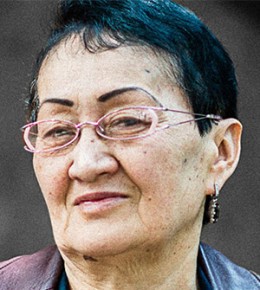
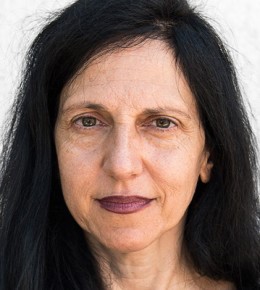
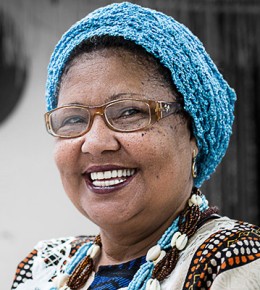
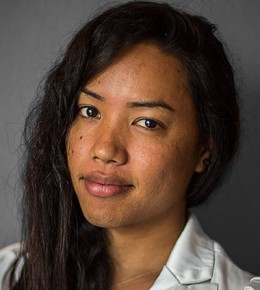
In order to match moral obligation with political declarations, the Global Fund for Women launched a new online campaign in October 2015 called Determined. Featuring the voices and stories of 20 courageous women human rights defenders from around the world, Determined raises awareness of global situations — from forced marriage and domestic violence to the denial of girls to receive education and the exclusion of women from political processes. The campaign recognizes the crucial role defenders play in effectively eliminating what continues to be the most acceptable human rights violation, the violence that prevents women from having fully realized and fully dignified lives.

On the occasion of international human rights day, Samina Ali (www.twitter.com/GroundbreakHers) in the Huffington Post of 11 December 2015 highlighted four of the 20 women human rights defenders in the campaign:

1. Nilce Naira Nascimento, Brazil
Article 23 of UDHR: Everyone, without any discrimination, has the right to equal pay for equal work.

2015-12-10-1449719648-2069767-Nilce.jpg

Nilce responds to Brazil’s strong racial divide and inequality through her work with CRIOLA, a women’s rights organization led by black women who work with other Afro-Brazilian women and girls in the poorest areas of Rio de Janeiro to empower them to combat this rampant racism and improve the living standards for the Afro-Brazilian community.

2. Swastika TamaNg, Nepal
Article 3: Everyone has the right to life, liberty and security of person.

2015-12-10-1449719720-2122292-Swastika.jpg

When Swastika came out as a transgender woman five years ago, her father disowned her and she had to leave home. With little education, she had no job prospects so she turned to being a sex worker. Through her involvement with Mitini Nepal, an LGBTQI support and advocacy group, she was able to understand her gender identity and is now working to achieve human rights for LGBTQI people in Nepal, where existing laws protecting LGBTQI’s rights are rarely enforced.

3. Asipa Musaeva, Kyrgyzstan
Article 2: Everyone is entitled to all the rights and freedoms set forth in this Declaration, without distinction of any kind, such as race, color, sex, language, religion, political or other opinion, national or social origin, property, birth or other status.

2015-12-10-1449719804-2914822-Asipa.jpg

At the young age of 17, Asipa was in an accident that severely injured her hip, leaving her permanently disabled. She found that perceptions around her disability made it difficult for her to find a job, or to be treated with dignity by those around her. She founded the Republican Independent Association of Women with Disabilities of Kyrgyzstan. In the face of tremendous obstacles, including her arrest, she and her group advocated for public spaces to be accessible for people with disabilities. The law was ultimately adopted, and today Asipa and her organization continue to advocate on behalf of people with disabilities

4. Nela Pamukovic, Croatia
Article 5: No one shall be subjected to torture or to cruel, inhuman or degrading treatment or punishment.

2015-12-10-1449719900-9095078-Nela.jpg

In 1992, Nela co-founded the Centre for Women War Victims (ROSA) during the Bosnian war, when rape was used as a weapon to terrorize communities and intimidate women. Now, more than 20 years later, women survivors of rape are still healing from the trauma and stigma of their experience. ROSA provides women with a safe space to share their stories, and their advocacy led the Croatian parliament to pass the first law in the country recognizing rape as a war crime.

see also: https://thoolen.wordpress.com/tag/women-human-rights-defenders/

Source: This Human Rights Day, Fight for Human Rights in New Ways | Samina Ali

WORLD HUMAN RIGHTS FORUM initiated by Brasil and to be continued in Morocco and Argentina

January 20, 2014
 

For those who think that large international human rights meetings tend to take place in the ‘western’, you should check out the programme and website of the WORLD HUMAN RIGHTS FORUM which was held in Brasilia from 10 – 13 December 2013: http://www.fmdh.sdh.gov.br/index.php/en/program [representatives from 74 countries, more than 500 different activities and over 9.000 participants].

One such activity was the seminar “Comparative experiences for the protection of human rights defenders at the international level” chaired by Luciana García, director of the Department of Defence of Human Rights, from the Brazilian Human Rights Secretariat. Luis Enrique Eguren, President of Protection International, shared the table (picture above) with experts from other organisations, such as: Andrea Rocca of Front Line Defenders, Laura Tresca of Article 19, and Michelle Morais de sa Silva, General Coordinator for Accompaniment in Projects of International Cooperation.

The WFHR is an initiative of the Human Rights Secretariat of the Presidency of the Brazilian Republic, whose main objective is to promote a space for the public debate on Human Rights in which the progress and challenges are addressed with respect for the differences and social participation, with the aims of reducing inequalities and fighting against human rights violations…The Minister Maria do Rosário, from the Human Rights Secretariat of the Presidency of the Republic of Brazil: “We organise this forum in Brazil because we think governments must always be opened to dialogue with civil society, precisely because this strengthens democracy …..We learn with Mandela that it is ourselves who must be the actors for the promotion of peace”.

At the closing ceremony of the World Human Rights Forum it was announced which countries will host the next events: Morocco in 2014 and Argentina in 2015.

via PI INVITED TO PARTICIPATE IN THE WORLD HUMAN RIGHTS FORUM CELEBRATED IN BRASILIA | | Protection InternationalProtection International.

Brazil: NGO community comes out to support HRD Alexandre Anderson de Souza

January 29, 2013

On 28 January 2013, a number of Brazilian civil society organisations and social movements addressed an open letter to the Coordinator of the National Programme for the Protection of Human Rights Defenders (NPPHRD) and the Presidency regarding the security situation for human rights defender Alexandre Anderson de Souza.

Alexandre Anderson de Souza is head of the Associação dos Homens do Mar – AHOMAR (Association of Seamen), an organisation set up to defend the rights of the fisherfolk working in Rio de Janeiro, and particularly those affected by the construction of a gas pipeline for Petrobras. AHOMAR argues that there are reports of environmental permit irregularities in the construction of the pipeline and it will have a negative impact on local flora and fauna as well as on the livelihood of those who fish in those waters in the Guanabara Bay.

Alexandre Anderson de Souza has suffered a number of threats to his life and has been under the NPPHRD since 2009, but the federal government has delegated the responsibility to authorities in the state of Rio de Janeiro, where he and his family live. However, the human rights defender and a number of Brazilian civil society organisations and social movements that support him, have been repeatedly expressing their discontent with the protection offered by the state programme and the conditions in which Alexandre Anderson de Souza, his wife Ms Daize Menezes and their children have been forced to live. As the situation has worsened the human rights defender and his family have had to relocate to different hotels in the city of Rio de Janeiro but the locations were highly insecure. The buildings did not have 24-hour reception personnel and the rooms they were accommodated in had no telephone. The protection programme has been unable to ensure Alexandre and his family’s return to their residence in Magé, and as a result the human rights defender remains unable to resume his work at AHOMAR. Four members of AHOMAR have been killed to date.

Another point of discontent with the state protection programme has been the unsatisfactory level of legal support provided to the human rights defender by the non-governmental organisation (NGO) Projeto Legal (Legal Project). Projeto Legal has signed an agreement with the government of the state of Rio de Janeiro, in the context of the state protection programme, to provide legal support and advice to the human rights defenders included in the programme. After repeated complaints about the NGO’s inaction in several instances, Alexandre Anderson de Souza received information from a reliable source that one of Projeto Legal’s main funders is Petrobras, the same oil company whose actions the human rights defender and his organisation AHOMAR have been trying to hold accountable for environmental damages. The information was confirmed on the websites of both Petrobras and the NGO, but neither they, nor the government of the state of Rio de Janeiro, have clarified the terms of the agreement, raising doubts over the impartiality of the organisation and a conflict of interests.

The open letter signed by several civil society organisation addressed the main concerns of Alexandre Anderson de Souza and other NGOs working with human rights defenders in the country. While welcoming the formal establishment of the state of Rio de Janeiro’s protection programme for human rights defenders through the Decree 44.038 signed on 18 January 2013, the letter asks for Alexandre and his wife Daize, as well as other human rights defenders who are currently under the protection of the state, to have their security ensured by the National Protection Programme until the state protection programme is fully operating and able to fully ensure the safety of human rights defenders in the territory of the state of Rio de Janeiro.

Front Line Defenders is gravely concerned following reports of the vulnerable security situation of human rights defender Alexandre Anderson de Souza and his family, and of other human rights defenders under the protection of the state of Rio de Janeiro. Frontline NEWlogos-1 condensed version - cropped

http://racismoambiental.net.br/2013/01/carta-aberta-ao-coordenador-nacional-do-programa-de-protecao-aos-defensores-de-direitos-humanos-sr-igo-martini/#more-85964