Amnesty International UK runs a successful series of (national) media awards. Amnesty’s Media Awards, which have been running annually since 1992, celebrate excellence in human rights journalism and applaud the courage and determination of journalists who often put their lives on the line to report on vital human rights issues. Kate Allen, Director of Amnesty International UK, said at the 3 April 2019 ceremony: “Media work is vitally important for Amnesty and everything we do. This evening we’ve seen some brilliant journalism that has had enormous human rights impact…Without a free press, it’s extremely difficult to expose wrong-doing and hold leaders to account. But even here in the UK we’re seeing it being threatened – especially with the sinister arrest of Trevor Birney and Barry McCaffrey in Northern Ireland last year…That’s why our awards are about congratulating the achievements of the media and championing its role in creating a fairer, more open world.” The awards, hosted by Channel 4 News presenter Cathy Newman, held a moment of silence for the approximately 90 journalists imprisoned last year for doing their jobs. Canada and the USA are undertaking similar events.
The winners of the 2019 AI UK Media Awards include:
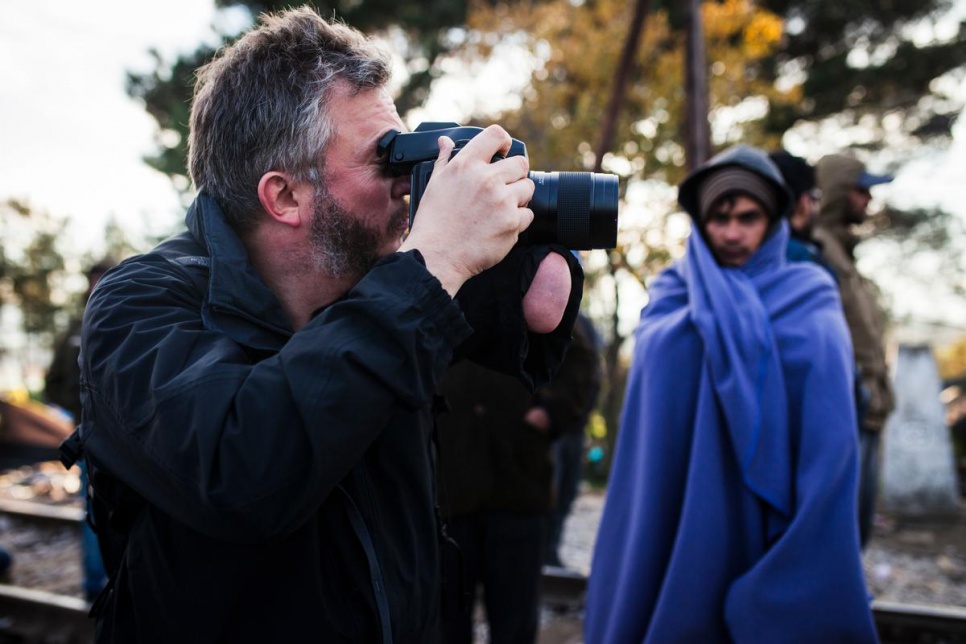
Humanitarian photographer Giles Duley won a Media Award for his powerful series depicting the plight and resilience of Congolese female refugees in Angola. His photo essay, “We Are Here Because We Are Strong”, was commissioned by UNHCR and published in Humanity magazine. The subjects of his project were forced to flee the Kasai region of Democratic Republic of the Congo after violence erupted in March 2017, triggering massive displacement.
The full Media Awards 2019 shortlist can be found here.
Jessikka Aro was to receive a “Women of Courage” prize. Then officials read her Twitter feed.
Jessikka Aro, a Finnish investigative journalist, has faced down death threats and harassment over her work exposing Russia’s propaganda machine long before the 2016 U.S. presidential elections. In January, the U.S. State Department took notice, telling Aro she would be honored with the prestigious International Women of Courage Award, to be presented in Washington by Secretary of State Mike Pompeo. Weeks later, the State Department rescinded the award offer. A State Department spokesperson said it was due to a “regrettable error,” but Aro and U.S. officials familiar with the internal deliberations tell a different story. They say the department revoked her award after U.S. officials went through Aro’s social media posts and found she had also frequently criticized President Donald Trump.
“It created a shitstorm of getting her unceremoniously kicked off the list,” said one U.S. diplomatic source familiar with the internal deliberations. “I think it was absolutely the wrong decision on so many levels,” the source said. The decision “had nothing to do with her work.”
The State Department spokesperson said in an email that Aro was “incorrectly notified” that she had been chosen for the award and that it was a mistake that resulted from “a lack of coordination in communications with candidates and our embassies.” “We regret this error. We admire Ms. Aro’s achievements as a journalist, which were the basis of U.S. Embassy Helsinki’s nomination,” the spokesperson said.
Aro received a formal invitation to the award ceremony not from the embassy but from the State Department’s Office of the Chief of Protocol on Feb. 12.
There is no indication that the decision to revoke the award came from the secretary of state or the White House. Officials who spoke to FP have suggested the decision came from lower-level State Department officials wary of the optics of Pompeo granting an award to an outspoken critic of the Trump administration. The department spokesperson did not respond to questions on who made the decision or why.
To U.S. officials who spoke to FP, the incident underscores how skittish some officials—career and political alike—have become over government dealings with vocal critics of a notoriously thin-skinned president. ….In the minds of some diplomats, this has created an atmosphere where lower-level officials self-censor dealings with critics of the administration abroad, even without senior officials weighing in.
Aro said the decision to cancel her award and corresponding trip to the United States caught her completely by surprise. “[When] I was informed about the withdrawal out of the blue, I felt appalled and shocked,” Aro told FP. …
Peter Nkanga, multilingual investigative journalist and former West Africa Representative of the Committee to Protect Journalists (CPJ), has been declared the laureate of the first “Jamal Khashoggi Award for Courageous Journalism” in 2019.
In a letter signed by Anas Talalqa, Human Rights Advisor at Inti Raymi Fund, the organisation congratulated Mr Nkanga for his selection for the award, noting that the “The Award honors the brave journalists who expose abuse of power and corruption, share difficult truths, discuss taboo topics, and work in hostile environments/”
“Today … dedicate this Award to all journalists and human rights defenders in #Africa. The struggle is real, but it is not over until We Win. #JusticeForJamal,” Peter Nkanga tweeted about the award.
Nigerian Peter Nkanga has been at the forefront of the campaign for the rights of journalists in Nigeria and across sub-Saharan Africa. Last year, he spearheaded the advocacy for the release of a journalist, Jones Abiri, publisher of Bayelsa State-based weekly paper, Weekly Source. He also coordinated the advocacy and protests in Nigeria on Jamal Khashoggi, the Saudi journalist who was murdered at the Saudi Arabian Consulate in Istanbul, Turkey, on October 2, 2018.
For a blog that claims to focus on awards for human rights defenders, it is good to pay some attention to awards to go to authorities and corporations that may violate the rights of human rights defenders. [see e.g. https://humanrightsdefenders.blog/2014/05/30/right-to-privacy-in-the-digital-age-of-importance-to-human-rights-defenders/]The Big Brother Awards are examples. The tradition of Big Brother Awardswas started by UK human rights organization Privacy International in 1998 and spread to a number of other countries. Here a sampling:
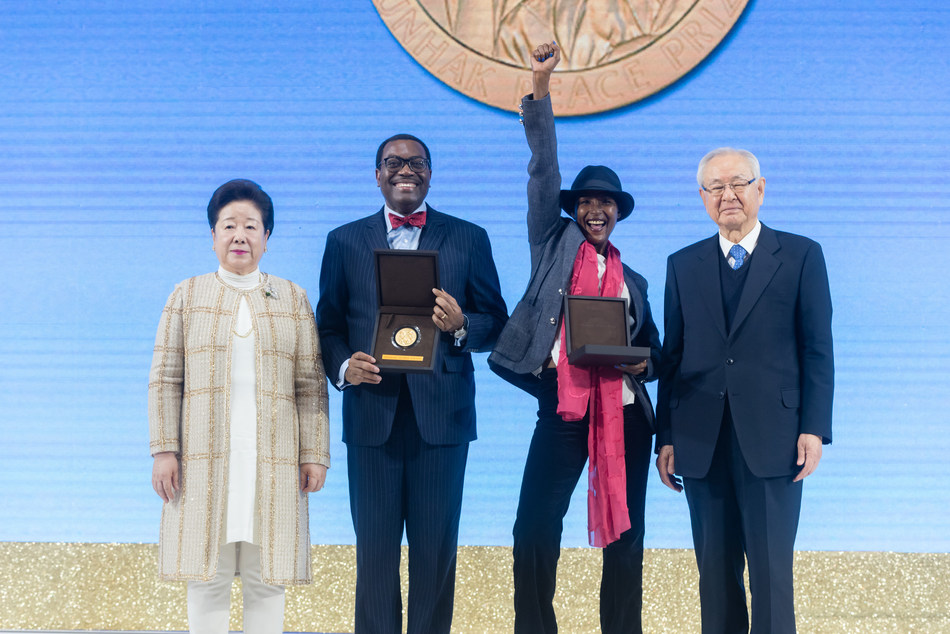
Some prizes come with serious money such as the 2019 Sunhak Peace Prize. On 9 February, 2019 PRNewswire reported that Dr. Hak Ja Han Moon, co-founder of the Korean Family Federation for World Peace and Unification (FFWPU) awarded one million dollars (USD) to this year’s Sunhak Peace Prize laureates, Waris Dirie and Akinwumi Ayodeji Adesina, as part of her philanthropic work. The biennial award honors individuals and organizations who have made significant contributions to the peace and welfare of future generations. The award ceremony took place on 9 February 2019 in Seoul, South Korea.
Dr. Hak Ja Han Moon and Dr. Il Sik Hong award the 2019 Sunhak Peace Prize to Dr. Akinwumi Ayodeji Adesina and Waris Dirie. (Seoul, South Korea. Photo credit: Graeme Carmichael)
Waris Dirie, model and human rights activist, brought the violence of Female Genital Mutilation (FGM) on the world stage by raising FGM as an international human rights issue and assisting in passing a UN resolution banning its practice. The Sunhak Committee acknowledged Waris Dirie’s achievements in advocating for the rights of millions of women and girls in Africa.
“Thank you for your recognition. Thank you for everything that comes with it, this beautiful peace prize. It’s all I dreamed [of] as a child. All I wanted was peace and to receive this, this is a great gift to me…You giving me a peace prize, it’s because I believe in peace,” stated Ms. Dirie during the press conference.
As a victim of FGM herself, having been circumcised at the tender age of five in Somalia, she quit a successful career as a supermodel and dedicated the past 25 years to making FGM a recognized worldwide human rights crisis. She served as UN Special Ambassador for the Elimination of Female Genital Mutilation from 1997 to 2003.
Her advocacy focuses on education as the fundamental key to eradicating FGM and empowering women and girls to have the knowledge they need to protect themselves. She emphasizes the fact that until women have equal respect, there cannot be lasting peace. In 2002, she founded the Desert Flower Foundation, an organization aimed at raising awareness of the dangers surrounding FGM. The Foundation raises money for schools and clinics in her native Somalia and supports the Zeitz Foundation, an organization focused on sustainable development and conservation. She also runs FGM reconstruction surgery centers in Europe. In January 2009, she started the PPR Foundation for Women’s Dignity and Rights, an organization founded along with French businessman François-Henri Pinault and his wife, Hollywood actress Salma Hayek.
The internationally Dan David Prize annually awards three prizes of US $1 million each to outstanding figures and organizations whose efforts have made outstanding humanistic, scientific and technological contributions and represent remarkable achievement in selected fields within the three dimensions of time – Past, Present and Future. This year’s fields were: Macro History, Defending Democracy, and Combatting Climate Change.
On 6 February 2019 WEBWIRE reported that the Laureates in the “Present” dimension, in the field of Defending Democracy, are: Reporters Without Borders, an international organization helping to sustain the freedom of the press across national boundaries; and Michael Ignatieff,President and Rector of the Central European University in Budapest.
Reporters Without Borders, also known under its French name Reporters sans frontières (RSF), defends freedom, independence and pluralism of journalism. It monitors government policies regarding the press and other media, and provides material, financial and psychological support for journalists and newspapers discriminated against and persecuted by the authorities. ..RSF has launched in 2018 a key initiative about Information and democracy. by creating an international commission composed by 25 prominent figures from 18 nationalities, including Nobel laureates, famous journalists facing authoritarian strongmen and specialists of new technologies. This commission adopted the “International Declaration on Information and Democracy”, which aims at establishing basic principles for the global information and communication space. 12 heads of Governments and States committed to sign a pledge on Information and Democracy based on this declaration.
RSF also launched the Journalism Trust Initiative (JTI), with the aim of promoting journalistic methods, editorial independence, media transparency, and respect for journalistic ethics by giving concrete advantages (especially technological and economic ones) to news media that adhere to standards defined collaboratively in a process of self-regulation. [see also: https://humanrightsdefenders.blog/2019/01/30/world-press-freedom-index-2018-is-out-colorful-but-disheartening/]
Michael Ignatieff has advocated for democracy around the world as a reporter, a champion of human rights, and as one of the first to warn against the rise of ethnic nationalism. In particular, he is acknowledged for his leadership as the President and Rector of the Central European University in Budapest, standing in the front lines against the campaign to stifle academic freedom, free expression and pluralism in the country.
“The liberal democratic order faces a rising tide of new authoritarianism and populism; the very values that have sustained freedom and democracy are called into question,” observed Ariel David, a member of the Dan David Prize’s board and son of the Prize founder. “Reporters Without Borders and Michael Ignatieff are being recognized for their leadership in the daily struggle to protect freedom of the press and freedom of academia. These basic liberties are pillars of democracy and it is no coincidence that the media and universities are often the primary targets of the populist and authoritarian regimes that have risen to power.” The Dan David Prize is named after the late Mr. Dan David, an international businessman and philanthropist whose vision is the driving force behind the international Dan David Prize. His aim was to reward those who have made a lasting impact on society and to help young students and entrepreneurs become the scholars and leaders of the future.
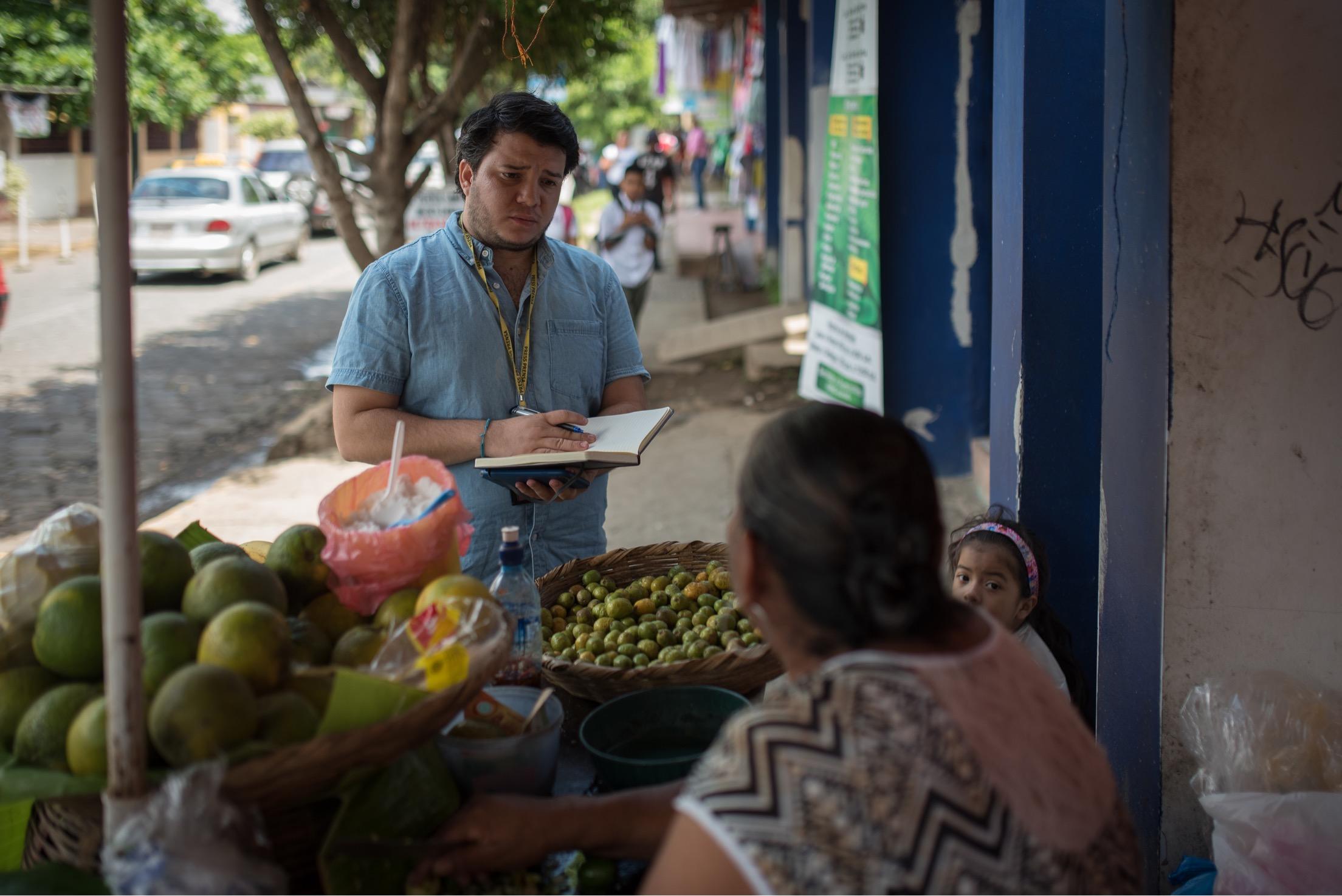
Nicaraguan journalist Wilfredo Miranda interviewing a witness to police repression in Masaya, Nicaragua, last summer. CREDIT COURTESY
Nicaragua’s human rights crisis see https://humanrightsdefenders.blog/2019/01/18/exceptional-response-by-international-ngos-to-human-rights-crisis-in-nicaragua/] has sent many journalists into exile. Among them is Wilfredo Ernesto Miranda, a young reporter for the respected Nicaraguan weekly newspaper Confidencial. Miranda came to Miami after being threatened with imprisonment for exposing the murders of protesters by pro-government forces in a May 2018 article titled “!Disparaban con Precisión – a Matar!” (“They Were Shooting Precisely – to Kill!”) “I was able to document close-range bullet wounds to the heads and throats of protesters that could only be execution-style shots,” Miranda told WLRN.
TheRey de Españaprize is one of the most prestigious journalism awards in Spain and Latin America. Miranda said he wanted to dedicate his Rey de España prize – awarded by a jury in Spain – to imprisoned Nicaraguan journalists Miguel Mora and Lucía Pineda, who face terrorism charges that human rights groups call absurd.
Behrouz Boochani in November, 2017. Picture: Jason Garman/Amnesty International
With one of the MEA 2019 final nominees being detained on Manus island in the same way [see: https://humanrightsdefenders.blog/2018/10/24/breaking-news-ennals-award-announces-its-3-finalists-for-2019/ ] it is relevant to note that another such detainee has won literary awards in Australia! Iranian-Kurdish journalist and poet Behrouz Boochaniwon the richest Australian Victorian Prize for Literature ($100,000) for his hellish first-hand account of life as a detainee on the island. His book, No Friend But The Mountains: Writing From Manus Prison, also won the $25,000 prize for nonfiction at Victorian Premier’s Literary Awards on 31 January 2019. (The eligibility criteria requiring that the authors be Australian citizens or permanent residents was overlooked to award the prize.
Mr Boochani told the Herald Sun from Manus Island, where he has been detained for more than five years, that the award was a victory for literature, resistance and humanity. But, he added: “I don’t want to celebrate this achievement while I still see many innocent people suffering around me.
No Friend But The Mountains.
“If I could be there to accept the award I would explain how this award is a morality failure for Australia,” Mr Boochani said. “It is not just a failure on the part of the Australian government but a historical and moral defeat for those parts of the society who have been silent in the face of a barbaric policy over these years…It’s a huge cause of shame for a government that did not recognise us as human beings and did not recognise our human rights. It’s a challenge against a system that has lied to the public over the past years.”.
On 1 February Keyvan Allahyari, University of Melbourne, followed up with a thoughtful piece on why “Behrouz Boochani’s literary prize cements his status as an Australian writer”
Other Australian authors have also used their voices to bring attention to the plight of asylum seekers. During her acceptance speech for her second Miles Franklin Award in August 2018, Michelle de Kretser chastised politicians for their treatment of refugees on Nauru and Manus Island. To illustrate her point, she read a list of names of asylum seekers who have died there in the past five years. It is tempting to dismiss such actions as gesture politics by an urban elite. But each individual action has served to raise awareness of the Australian government’s policy of “offshore processing” for asylum seekers, and to fuse artistic expression with political activism in a particularly forceful manner.
The author has been awarded the Anna Politkovskaya Award (for investigative journalism), the Amnesty International Award (Australian section) and Liberty Victoria’s Empty Chair Award. These humanitarian awards have confirmed Boochani’s rapidly acquired high profile in the literary field. Last night’s news topped all of that to make Boochani the first “non-Australian” author to win the Victorian Premier’s Literary Awards. The Victorian government established these awards in 1985 to honour Australian writing. The specific challenge this poses to the definition of “Australian writing” can be seen as an intervention by the literary community into the field of politics. If a non-citizen who has never set foot on mainland Australia can win, who counts as an Australian author?…
With no clear solution to the indefinite detention of asylum seekers on Manus and Nauru in sight, the paradox of Boochani’s award success can only contribute further to public debate over the tangled logic of indefinite detention. It shows how cultural practices and political activism can be reconfigured to correspond with the newly created literary currency associated with refugee writing. For now, at least, Boochani is an “Australian writer” because Australia is morally implicated in what he wrote and how he wrote it.
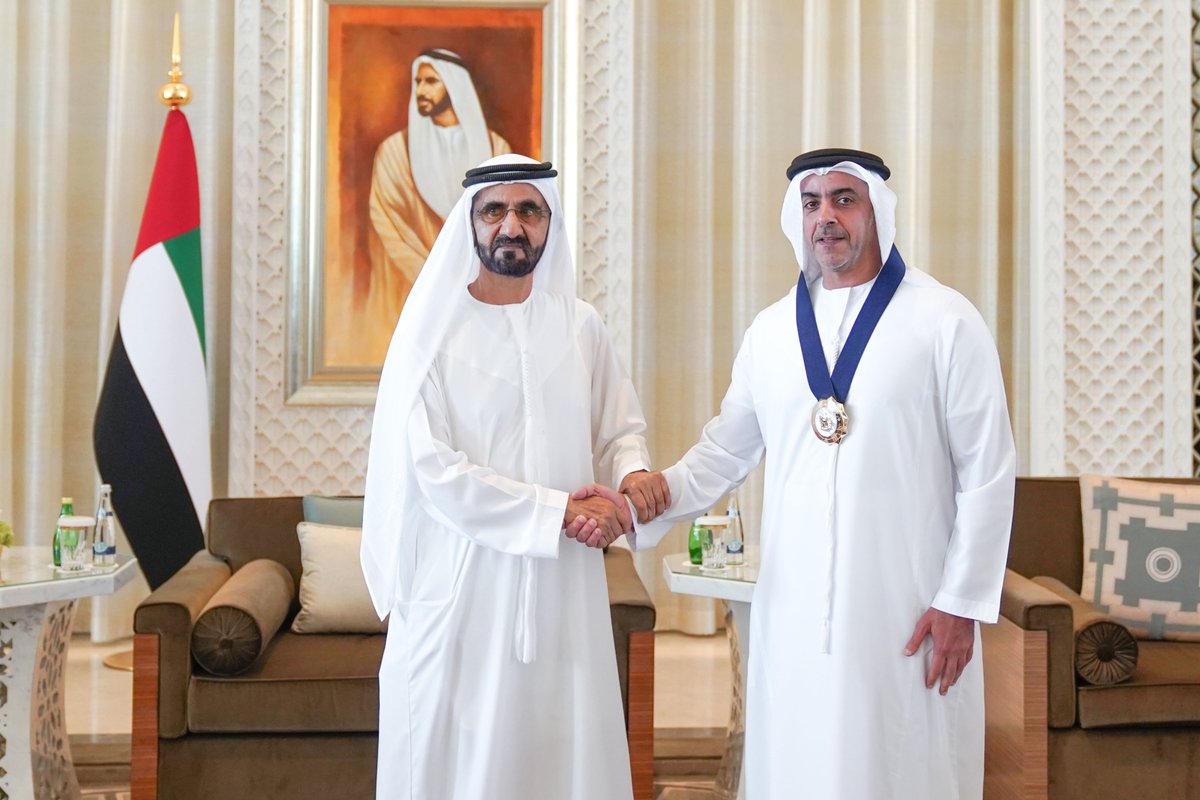
On 28 January 2019 Adam Taylor reported in the Washington Post that “the United Arab Emirates drew mockery this weekend after announcing the winners of its gender balance awards — every one of whom was a man”. For a blog with special interest in awards that is hard to resist!
At an awards ceremony Sunday, the UAE named the winners of its Gender Balance Index for the second round of 2018 in three categories: best personality supporting gender balance, best federal authority supporting gender balance and the best gender balance initiative. Sheikh Mohammed bin Rashid al-Maktoum, vice president of the United Arab Emirates and ruler of Dubai, gave out the awards, which were accepted by an all-male cast.
In a news release, Maktoum said that gender equality was in the spirit of the founding father of the Emirates: “The achievements of Emirati women today reaffirm the wise vision of the late Sheikh Zayed bin Sultan al-Nahyan, who believed in the importance of the role of women, and their right to work and become key partners in society.”
But the fact that there were zero women among the winners announced Sunday drew widespread criticism and mockery. According to the news release put out by the Dubai media office, Maktoum “recognized the efforts” of one woman — Sheikha Manal bint Mohammed bin Rashid al-Maktoum — but she did not win an award. She is the head of the UAE’s Gender Balance Council and wife of a deputy prime minister. “During the Index’s second edition, recipients of the Index’s awards happened to be entities led by men,” the UAE Gender Balance Council said in a statement after the award’s received media attention. “This is indicative of the great and extraordinary progress we have made as a nation, where men in the UAE are proactively working alongside women to champion gender balance as a national priority.”
To be fair: In previous years, the UAE’s Gender Balance Index has honored women and the UAE is the highest-ranked Persian Gulf state for gender equality and second only to Israel in the wider Middle East, according to the United Nations. The country was listed as 34th among nations in a 2017 ranking, just behind Poland.
… In its 2018 country report, Human Rights Watch noted that discrimination on the basis of sex and gender was not included in a 2015 anti-discrimination law and that current law permits domestic violence by a husband against his wife.
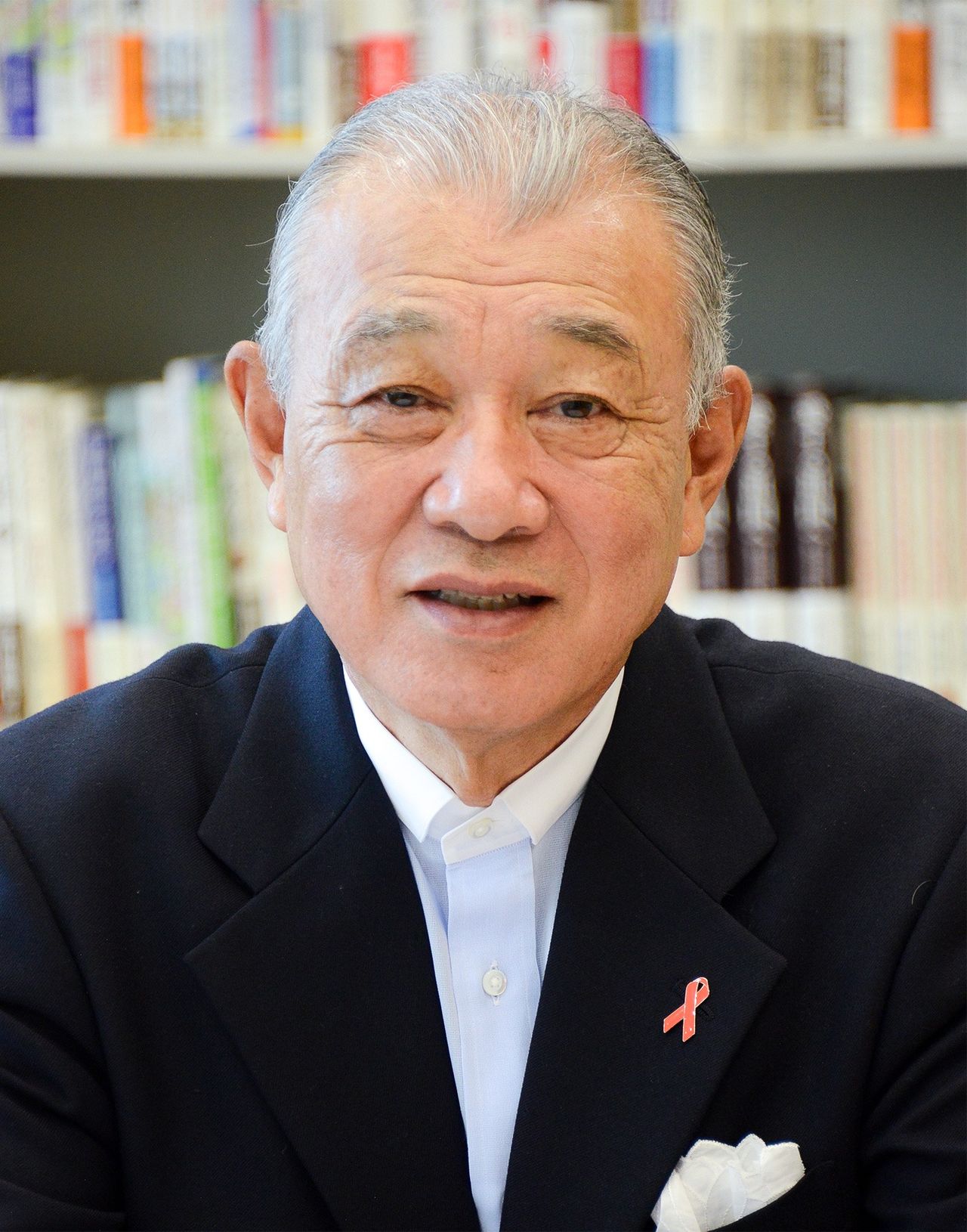
On January 16 2019, the government of India announced that the International Gandhi Peace Prize for 2018 would go to Nippon Foundation Chairman Sasakawa Yōhei, for his efforts toward eradicating Hansen’s disease (leprosy) in India and elsewhere around the world.
Nippon Foundation Chairman Sasakawa Yōhei.
Sasakawa, now 80, has worked for more than half of his life to combat Hansen’s disease and the social stigma associated with it. Serving in recent years as the World Health Organization’s Goodwill Ambassador for Leprosy Elimination, he has focused in particular on India, which has the world’s largest population of sufferers of the disease, making repeated visits to the colonies where they were historically segregated and promoting measures to restore their economic autonomy and combat prejudice against them in society.
Asked for comment, Sasakawa remarked: “It was a tremendous honor to receive word of this recognition in this, the 150th year since the birth of Mahatma Gandhi, who strove during his life to secure proper treatment for Hansen’s disease sufferers.”