Twenty-two years ago Alfred Brownell could see a problem. The government of his country, Liberia, was awarding contracts for the exploitation of natural resources without consulting local communities; forest and mineral resources were being taken away with no questions asked. “It was at a time when a very notorious company called OTC and many other companies were cutting down the forest for timber and no benefit was going back to the people,” Brownell says.
Then a law student in the capital, Monrovia, Brownell challenged President Charles Taylor and his government on the operations of OTC – the Oriental Timber Company. The company was later found to be involved in arms smuggling, Taylor is in prison for war crimes and crimes against humanity – and Alfred Brownell has just been awarded the African Goldman Environmental Prize for 2019 at a ceremony in San Francisco. see: https://humanrightsdefenders.blog/2019/05/13/winners-of-the-2019-goldman-environmental-prize/]. Brownell’s organisation, Green Advocates, has become a household name in Liberia as a champion of customary rights to land and natural resources for indigenous communities. He is helping thousands of people around the country to fight multinational companies and regain their rights.
Sowing seeds
In 2003 when the war to oust Taylor was raging in Monrovia, Brownell had just graduated with a degree in Environmental Law from Tulane Law School in New Orleans, Louisiana, the previous year. Green Advocates was still an idea and Brownell had no money – only a vision.. The Fund for Global Human Rights gave Green Advocates its first seed money in 2003 of $10,000 after Brownell returned to Liberia following the ouster of Taylor and Green Advocates began operations from a tiny office in Monrovia. “We did not have a bank account; we were not a formal organisation,” recalls Brownell.
“The Fund for Global Human Rights had a lot of confidence in me. They awarded me the grant even without a formal structure in place.” John Kabia works for The Fund for Global Human Rights as programme officer for thematic initiatives. He has worked closely with Green Advocates over the years and says that the lack of a track record meant that the Fund was taking a risk, but it was a risk worth taking. “We feel at the Fund that our very reason for being is taking those smart risks, because that is the only way you can identify and support new and emerging actors and new ideas,” he says.
He says it is convenient for international donor organisations to support groups they already know. The threshold for approving support is set very high, making it difficult for small and emerging groups like Green Advocates to gain recognition and support to advance their work. However, seed funding can provide an organisation the necessary credibility and opportunities it needs to attract support from other funders and partners. “Often times if people are given the opportunity and investment to turn their ideas into reality, you’d be amazed by what they can do. I think the example is Alfred and Green Advocates,” he says. “Seeing how Alfred and the communities have mobilised and successfully pushed for major policy and legal reform is impressive. I think that type of smart risk-taking is what many other donors and development partners should be taking on.”
But for such risks to be sustainable, Kabia noted that it is critical for seed funding not to be a one-off, short-term support. “Change doesn’t happen overnight,” he says. “Long-term and capacity-building support needs to accompany an initial seed grant in order for promising organisations to thrive and reach their full potential.”
Big concessions, big government
Back in 2003, Liberia was just emerging from conflict and Brownell knew that the country lacked expertise on land and natural resources governance.
“It was sad to see a country with a natural-resource-endowed economy [where] its lawyers were not learning anything about natural resources or environmental laws,” says Brownell. “I said we have to use the law to help our people.”
“When I graduated, we worked to set up Green Advocates to provide support to the poor, marginalised, vulnerable, who had no voice. To focus our effort on creating policies to protect people through advocacy and campaigning for regulations.”
In 2005, Brownell partnered with over a dozen other local organisations and took on the transitional government of Liberia headed by the late Charles Gyude Bryant. It was the first post-war challenge to the government of Liberia by rights groups. The government had awarded contracts to a Chinese company for the shipment of iron ore from the port of Buchanan against the wishes of the citizens. A subpoena was issued by the Supreme Court of Liberia to stop it, but the government defied the court and shipped the ore anyway.
After successfully challenging a government contract to ship iron ore from the port of Buchanan against the wishes of local people, Brownell and Green Advocates began to expand their work. Both the government and the companies that profited from concessions to exploit Liberia’s natural resources began to see them as a threat. Green Advocates was involved in massive public sensitisation about land rights across the country, and started taking on companies as huge as the US tyre and rubber multinational Firestone, the Malaysian palm oil giant Sime Darby and Golden Agri-Resources, the world’s largest oil palm conglomerate – not to mention the government of Liberia itself.
One of the biggest cases involved Firestone, Liberia’s largest and oldest rubber concession-holder. For 75 years it had dumped all its waste into the Farmington River in the community of Owens Grove. That blatantly violated Liberian laws prohibiting the discharge of waste into the water system. Green Advocates filed complaints that led Firestone to create a waste treatment facility after almost a century of operations. The organisation also partnered with other rights groups in a US lawsuit that accused Firestone of using child labour. After six years of litigation Firestone won that case, but significantly the judge ruled that companies can be sued in the US for human rights abuses outside the country. In addition, Firestone was forced to introduce reforms that addressed the root causes of child labour in its plantation. This included reducing the quotas for workers, to prevent them having to bring their children to work, and building more schools within its concession area.
Doing it for the people
By this time Brownell was at odds with Ellen Johnson Sirleaf, who had become president in 2006. As Africa’s first elected female head of state she had won admirers around the world; in 2011 she shared the Nobel Peace Prize. But her international eulogists turned a blind eye to some dubious actions at home: by 2010 her government had awarded massive amounts of land to agriculture companies through a ‘backdoor’ scheme, despite agreeing to landmark land reform.
“You’re talking about 300,000 hectares of forest land without consulting the people” says Brownell. “There was no mapping or surveying to know where the land was, who grew what on the land or what the cultural impact was on the people.”
Brownell says that Green Advocates’ first grant from the Fund for Global Human Rights, and the organisation’s ongoing support over 16 years, has given other funders confidence to provide revenue that has supported other projects. For instance, Green Advocates has also gone on to establish the Alliance for Rural Democracy and the Natural Resources Women Platform, and was key to the formation of the Mano River Union Civil Society Natural Resource Rights and Governance Platform, which now covers eight west African countries.
The fight gets real
As Brownell was fighting to help communities understand their rights to the land and push companies to reform and make policies that would benefit the local population in the concession areas, he also faced a battle of his own. A battle for personal safety.
Brownell and his staff came near death on several occasions while on their many trips in rural areas. On one occasion, in Tarjuwon, Sinoe County, people had complained that Golden Veroleum Liberia had decided to construct an oil mill on a site that was used for annual religious worship. They resisted and Green Advocates was called in to help. Brownell and his colleagues went to Sinoe to see what was happening. On their way to the area, the team came under attack from militia that Brownell believes were working for the company.
The men, dressed in company security uniforms, had set up a roadblock. They were ex-combatants armed with machetes and sticks, according to Brownell. Brownell and his colleagues resigned themselves to death – until the intervention of the town chief.
“I had given up and was just praying to God. I had no idea how we were going to get out of there because we were completely surrounded by these men,” he says.
“We knew that the attack against us in Tarjuwon was not just the company. We think the government was also very complicit in those attacks to try to eliminate us,” he says. Brownell says the Liberian government has been behind several attacks, and felt his organisation was standing in the way of its development objectives. The government did not take kindly to Green Advocates trying to enlighten people on their right to the land and natural resources.
Francis Colee is head of programmes at Green Advocates and has worked on several court cases on land rights issues brought against the Liberian government. He says the government sometimes brands the organisation as anti-development, but its focus is to ensure good investment that protects the rights of people and not alter their livelihood.
“We have argued that it is good that we have investment, but we have also argued that we need to ensure a delicate balance between the protection of human rights, the environment and the investment,” says Colee.
“In most cases, what we have seen is that the project-targeted communities end up becoming worse off than they were before the coming of the investment.”
In 2016, the government accused Brownell of refusing to help give testimony in the trial of the Dutch businessman Guus Kouwenhoven, the former head of the Oriental Timber Corporation – Brownell’s first case. The Green Advocates office in Monrovia was raided and ransacked by plain-clothes police officers. Some of the staff were arrested. The police even went to his home and arrested his uncle when Brownell himself could not be found.
“It was a ploy to get me. They use the criminal justice system to threaten people,” he says.
“They made Liberia very unsafe for me when they started threatening me and so I was forced to flee with my family to come [to the US]. President Sirleaf has directly threatened me, in my face, ‘I will charge you with sedition’.”
In a strongly worded letter to the president of Liberia, the Observatory for the Protection of Human Rights Defenders condemned the attacks on Brownell, and through the support of the Fund for Global Human Rights and other groups he fled the country with his wife and children. He now serves as an associate research professor at Northeastern University School of Law in Boston. Green Advocates’ work in Liberia continues, even with Brownell in the US, through support from a team of dedicated local activists and Green Advocates staff.
Land rights at last
Despite the challenges, Green Advocates has helped ensure Liberia passed sweeping land reform legislation in 2018. Local communities now have the exclusive right to possess and use land for different purposes, and to lease it.
But there is still a long way to go in terms of actual impact on land rights despite these reforms, says Simpson Snoh, who represents the Alliance for Rural Democracy, a Liberian non-governmental body working closely with Green Advocates. Green Advocates is in the process of taking the message to the people, and helping to translate laws into action.
“After years of securing rights for its community partners,” says Brownell, “Green Advocates is currently exploring options for translating these rights into economic opportunities to address not just the bread-and-butter issues these communities face, but a business and development model that can co-exist with nature.”
Snoh says that with funding, local organisations can move quickly to help communities that are facing serious human rights abuses from multinational companies and governments. This is because community-based groups best understand the needs of the communities more and what the issues are.
Brownell echoes Snoh’s sentiments. He believes that international funders should be able to bet their money on local organisations like Green Advocates, just as The Fund for Global Human Rights did when the organisation was still just an idea. He feels Green Advocates has been able to enlighten the people on their basic human right – the right to own land.
“The government’s perception that there was free land or open spaces where they could give concessions to companies was a complete false assumption. All these years the government had lied,” he says.
“The future of Liberia is never ever going to be with massive foreign investment through transnational corporations coming to Liberia. Liberia’s future comes from its own people.”
This article is part of an editorial partnership with the Fund for Global Human Rights.
This Liberian lawyer has withstood presidents, multinationals and militias
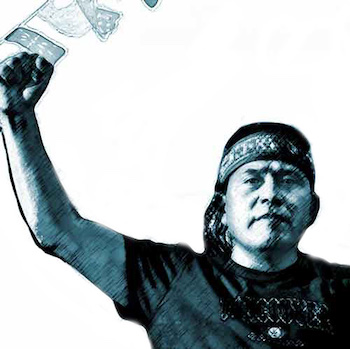
 Alfred Brownell. Image courtesy of Goldman Environmental Prize.
 Bayarjargal Agvaantseren. Image courtesy of Goldman Environmental Prize.
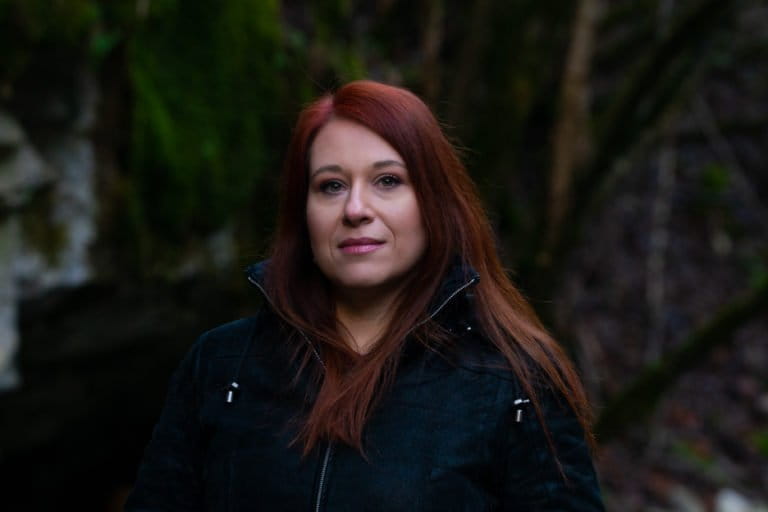 Ana Colovic Lesoska. Image courtesy of Goldman Environmental Prize.
 Jacqueline Evans. Image courtesy of Goldman Environmental Prize.
 Alberto Curamil. Image courtesy of Goldman Environmental Prize.
 Linda Garcia. Image courtesy of Goldman Environmental Prize.
 2018 Goldman Environmental Prize Winner Francia Márquez. Image courtesy Goldman Environmental Prize.
 Hans Thoolen on Human Rights Defenders and their awards