Posts Tagged ‘rights of the elderly’

Three human rights defenders on why they refuse to be silent in older age

May 21, 2024

This week (20 May 2024), as the United Nations moves towards an international convention on the rights of older persons, Amnesty International is launching a new campaign: Age Loud! We demand a world where human rights last a lifetime, and where older voices are no longer ignored. [https://www.amnesty.org/en/latest/campaigns/2024/05/three-activists-on-why-they-refuse-to-be-silent-in-older-age/]

AI asked three older activists to reflect on their experiences, the changes they are campaigning for, and how being an older person gives them unique perspective and motivation.

Cecile de Ryckel, 78, Belgium
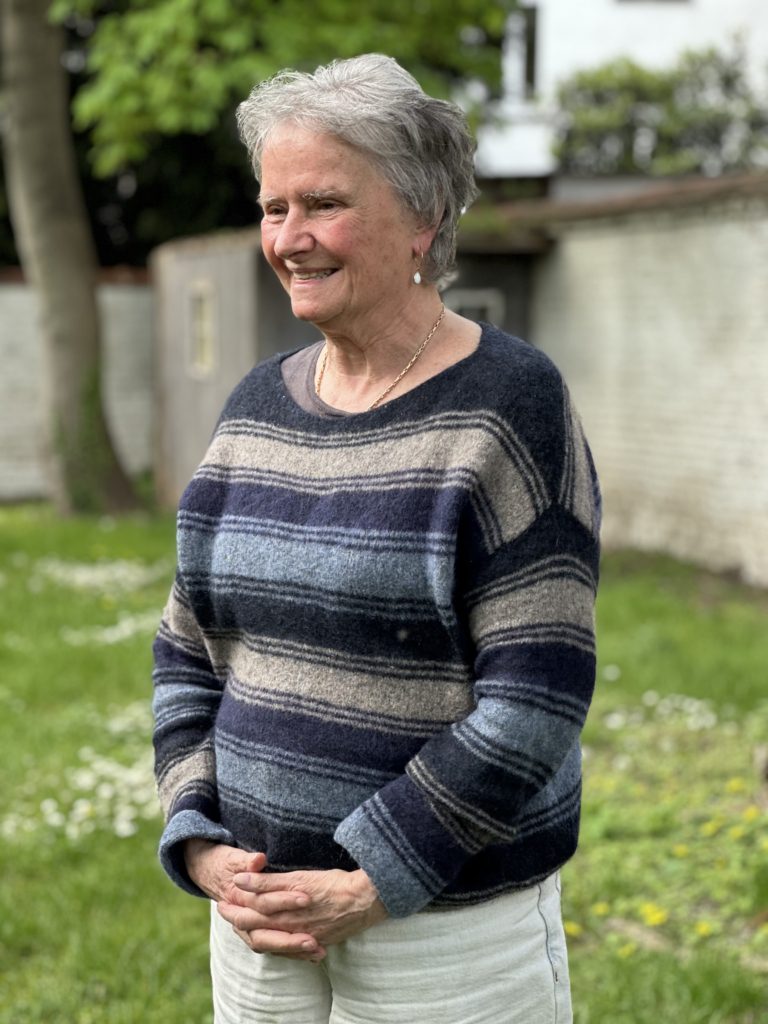
Cecile is a lifelong activist working on anti-racism and climate change.

Why did you become an activist?

After a homelessness crisis amongst migrants in Belgium in 2015, my husband and I hosted two people from Ethiopia who the authorities had left to sleep in a city park. They told us that in Ethiopia they were small-scale farmers and grew food for their families. However, it was raining less frequently, and growing food was becoming more difficult. That was when I realized that climate change was one of the most important issues in the world today, and that it would have far-reaching consequences. Soon after that I participated in a citizens assembly discussing how best to address climate change and reduce carbon emissions. We learned how to mobilize people and change behaviours. I joined an advocacy collective, Grandparents for the Climate, and started working actively on the issue.

We have a responsibility to future generations to address this challenge today. It already has wide-ranging impacts on people of all ages. I remember when I was a child that we would joke that an older person was someone who “wouldn’t make it through the winter”, but today due to rising temperatures we sadly have to ask whether some older people can “make it through the summer”.

I recently saw how a group of older women won a landmark court case that the Swiss government’s weak climate change policy had violated their rights. This will help advance the cause greatly, for people of all ages.

Amina Musa, 72, Nigeria

Amina is an activist on behalf of victims of the armed conflict in north-east Nigeria and their families, including those who have been unlawfully killed or detained.

Why did you become an activist?

I became an activist nine years ago when Boko Haram forced us to leave our homes, and we found ourselves living in camps controlled by the Nigerian government. The military made baseless accusations that our sons were associated with Boko Haram. Our sons were blindfolded and arrested and held in dehumanizing conditions. I had no choice but to start campaigning for their release. As mothers, we came together and started a movement to seek justice. We are demanding that all those detained unlawfully be released immediately and that the government investigate the gross violations we have experienced. Some of our sons have been in detention for more than 10 years. We have had enough, we want justice.

I tell other older people that they should continue with their activism and bear with the challenges, and that our activism can also inspire younger people. I know it is not easy, but these causes are important. Age should not and will not deter us from making our society free from injustice.

Juan Jacobo Hernández, 82, Mexico

Juan is an activist on social issues and LGBTQ+ liberation.

Why did you become an activist?

In the 1960s, I was part of Mexican student movements. Then Stonewall happened: I had a boyfriend at the time who lived in New York, and he told me that I had to come and see it for myself. I witnessed the first LGBTQ+ rebellion: the first time gay men, trans people, lesbians were standing up and confronting the police. Coming back to Mexico, we started the Frente de Liberación Homosexual (Gay Liberation Front). I had learned a lot about how to make protests visible and how to make our voices heard. Finally, there was a space where we could be active, where we could do something. When I started my activism, we didn’t use the term “human rights” – but that’s what it has always been about. We held large demonstrations against political repression, for the abolition of the death penalty, and to fight restrictions on social protest. Persecution by the government was very real and close to us at the time – gay men and trans women were persecuted, raided by the police, extorted and beaten up.

Whenever we were out in the street, we felt that something bad could happen. We were struggling for our lives, for our security, for our right to be in the street without being beaten up, robbed or killed.

My whole life, I have never stopped being an activist. The AIDS epidemic collapsed the first phase of gay liberation. So many activists died and [as I grew older], I recognised the need to transmit my experience, knowledge and values [to the younger generation]. Since 1981 I’ve been part of Collective Sol, where we work to build and strengthen the capacity of small, grassroots organizations that are working on the most pressing LGBTQ+ issues they see today.

My life as an activist means I can look back and say I have witnessed three great moments in LGBTQ+ liberation. The first was when we formed political organizations, coming out of the shadows and breaking the silence. The second was the HIV/AIDS epidemic, the way it created a connection between LGBTQ+ liberation and people living with HIV, irrespective of whether they were LGBTQ+. This connection was powerful and drove the movement forward.

Covid-19 spread leads to reactions and messages of solidarity

March 27, 2020

From the myriad of messages on the spread and impact of the Covid-19 virus, here a few excerpts:

On 27 March 2020, Rosa Kornfeld-Matte, UN Independent Expert on the enjoyment of all human rights by older persons said that society has a duty to exercise solidarity and better protect older persons who are bearing the lion’s share of the COVID-19 pandemic. “Reports of abandoned older persons in care homes or of dead corpses found in nursing homes are alarming. This is unacceptable,” said  “We all have the obligation to exercise solidarity and protect older persons from such harm.” Older persons .. are further threatened by COVID-19 due to their care support needs or by living in high-risk environments such as institutions, the expert said. [https://reliefweb.int/report/world/unacceptable-un-expert-urges-better-protection-older-persons-facing-highest-risk-covid]

—–

Adrien-Claude Zoller, President of the small NGO ‘Geneva for Human Rights – Global Training’ issued a statement of solidiarity ith the marginalised who will suffer most:….As a human rights organisation, Geneva for Human Rights is deeply worried about the situation of the most vulnerable, of the unemployed and homeless, of those in extreme poverty, of people with disabilities, of women already assuming so many tasks, of the elderly, of those arbitrarily detained in overcrowded prisons, of minorities, migrants, internally displaced, refugees, and indigenous peoples. It is a matter of human dignity. Human rights are at stake.
Many Governments first denied, then de-dramatized the spread of the virus, before taking measures to contain it and limit the damage for their economy. Too often in these measures, the social impact of both the health and the economic crises is neglected. We all fully support efforts to eradicate the virus. At the same time, we should not forget the commitment of the international community to eradicate extreme poverty (‘Sustainable Development Goal’, Nr.1). We have to protect the most vulnerable.
….Countrywide lockdowns imply a limitation of human rights. Indeed, complying with these emergency rules, including home confinement, is a moral imperative, a matter of solidarity to slow down the spread of the virus in our communities, and to support those on the frontline, in particular health- and social workers. However, we should recall that measures derogating from human rights obligations in ‘public emergency which threatens the life of the nation’ have to be limited ‘to the extent strictly required by the exigencies of the situation’. They have to be proportionate, limited in time, and in no way discriminatory (International Covenant on Civil and Political Rights, Article 4, United Nations, 16 December 1966). In many countries, such derogations led to special powers attributed to the Executive branch. Still, the principles of proportionality and non-discrimination have to apply. Parliamentary control and the Rule of Law remain a must, as well as transparency and access to all the information. We are dismayed that in several ‘denying’ countries (e.g. China at the beginning of the pandemic, Brazil, Egypt, Turkey) journalists, physicians, health workers and human rights defenders, are targeted for having exposed the gravity of the situation and the fate of marginalized people…………

—–

The New Humanitarian looks at the expected impact on aid:  https://www.thenewhumanitarian.org/news-feature/2020/03/26/coronavirus-international-aid

—–

The G20 seems to be aware as shown by a portion of their recent statement: “Enhancing Global CooperationWe will work swiftly and decisively with the front-line international organizations, notably the WHO, IMF, WBG, and multilateral and regional development banks to deploy a robust, coherent, coordinated, and rapid financial package and to address any gaps in their toolkit. We stand ready to strengthen the global financial safety nets. We call upon all these organizations to further step up coordination of their actions, including with the private sector, to support emerging and developing countries facing the health, economic, and social shocksof COVID-19.We are gravely concerned withthe serious risks posed to all countries, particularly developing and least developed countries, and notably in Africaand small island states, where health systems and economies may be less able to cope with thechallenge, as well as the particular risk faced by refugees and displaced persons. We consider that consolidating Africa’s health defense is a key for the resilience of global health. We will strengthen capacity building and technical assistance, especially to at-risk communities. We stand ready to mobilize development and humanitarian financing” [https://g20.org/en/media/Documents/G20_Extraordinary%20G20%20Leaders%e2%80%99%20Summit_Statement_EN%20(3).pdf]

Human Rights and the Elderly: the future

June 1, 2012

This post is not directly about human rights defenders but rather touches an area where they are not so commonly engaged. My interest in the area is of course to a large extent self-interest as the 65 benchmark is nearing but was piqued by a recent visitor from Australia, my good friends Rodney and Noni Lewis.

Rodney Lewis is a practicing lawyer engaged in resolving legal problems for the aged and the ageing in our community. He is based in Mona Vale, a suburb of Sydney. He has been a practising lawyer for over 40 years. He is the author of the legal text Elder Law in Australia (published by Lexis Nexis Sydney, in 2004). Rodney’s interest in Aged Care came through his wife Noni who is a registered nurse. His inquiries sprang from their discussions and led to his research, writing, lecturing and the preparation of the only text book on the subject. Rodney’s interest in Elder Law and the legal rights of older persons also stems from his interest and commitment to human rights. (Rodney has been active with the International Commission of Jurists, and assisted me greatly in writing the book on Human Rights in Indonesia; he also undertook trail observations missions).

Over the past several decades a massive change has taken place in a key demographic area of the planet’s human population: age. If the current trend of lowering birth rates and lowering death rates continues, by the year 2050 one out of five people will be aged 60 years or older and by 2150, one out of every three people will be aged 60 years or older. Additionally, the older-person support ratio is falling in both more and less developed regions, which could further lessen the ability of societies and governments to care for their aging populations.

These demographic trends create unique challenges for all people, particularly for the governments of nation-states around the globe. Elderly individuals are often subject to discrimination and abuse because they are perceived as easily taken advantage of. There is also a prevalent belief among many that elderly persons are worthless in today’s fast-paced, globalized and increasingly industrialized world. Obviously, with the number of elderly people on earth at any one time rising rapidly, there is an increased urgency to address the rights and roles of elderly persons in our world.

For more on this a good starting point is Human Rights Education Associates on: http://www.hrea.org/index.php?doc_id=435
From a cursory glance at the internet it seems that Canada and Australia have gone furthest in organizing elder law, e.g. http://www.elderlaw.com.au/