Posts Tagged ‘right to housing’

NGOs call on Malaysian authorities to stop intimidating human rights defenders

November 16, 2025

Malaysia: Authorities must stop intimidating human rights defenders - Civic Space

Photo credit: PSM

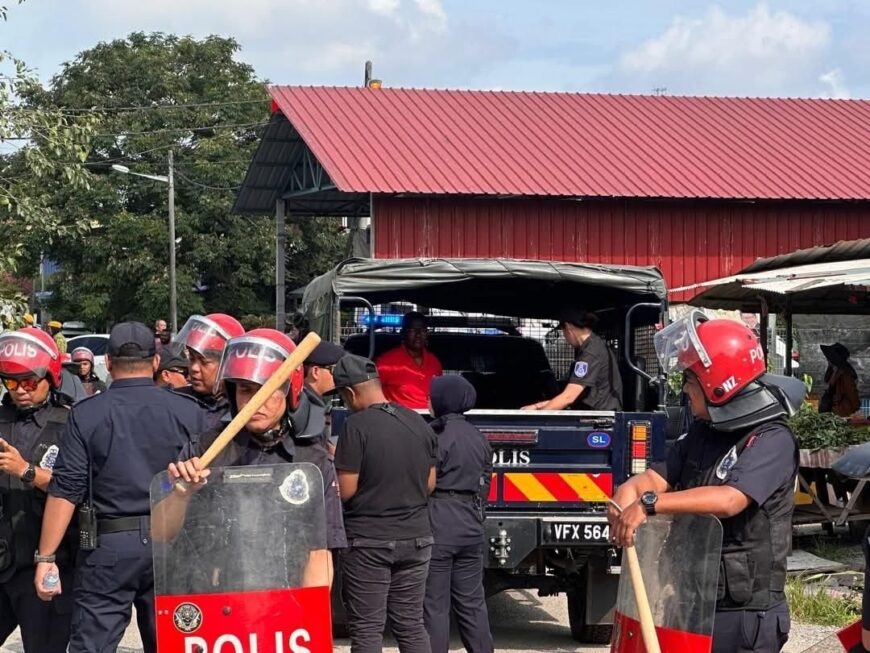
On 14 November 2025, ARTICLE 19 and the Centre for Independent Journalism (CIJ) expressed alarm about the arrests of and use of force against human rights defenders and residents who attempted to prevent the demolition of houses in Kampung Jalan Papan, which began on 11 November in the Malaysian state of Selangor. We call on the authorities to immediately release human rights defenders and end investigations into their activities. 

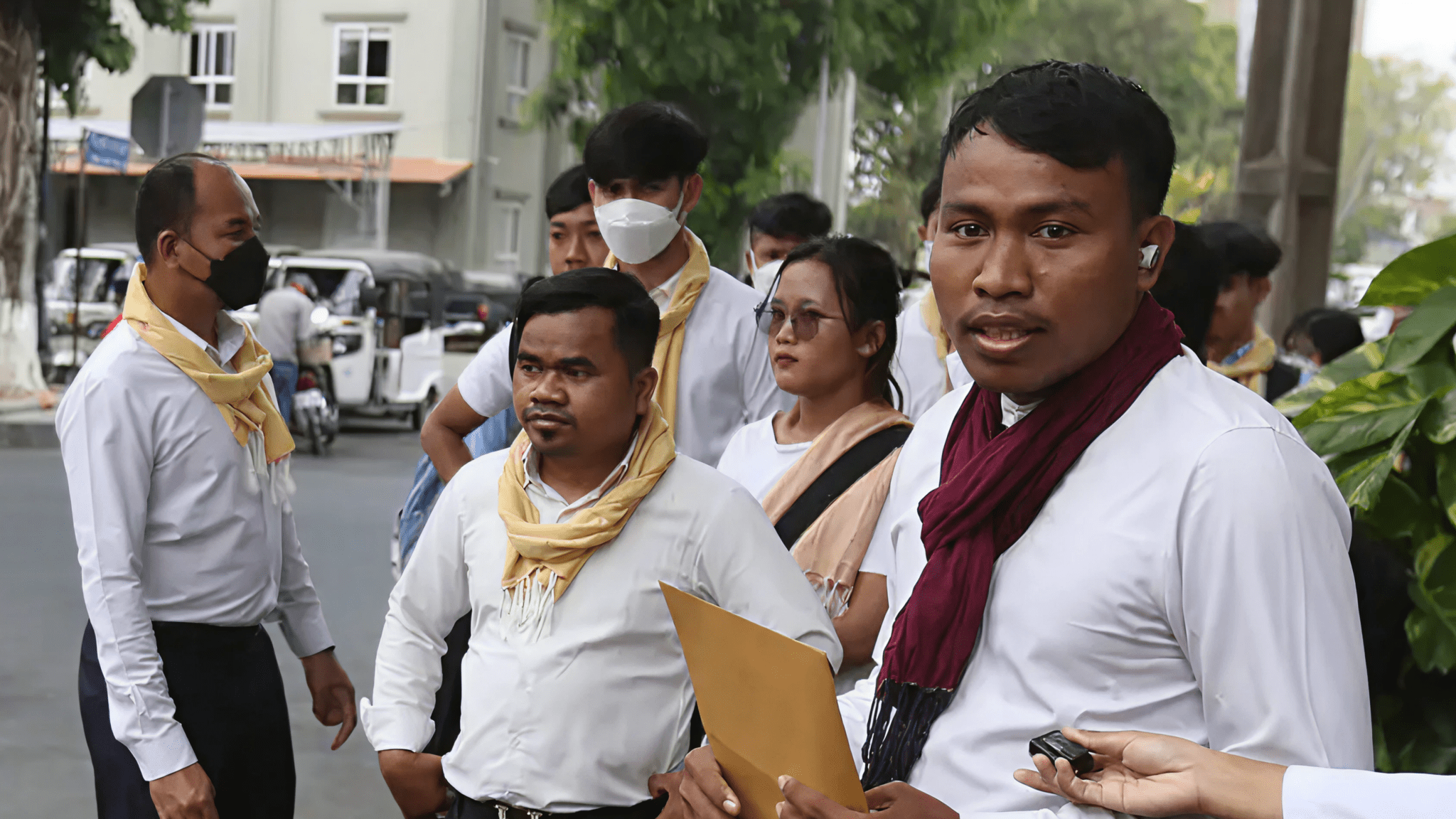
On 14 November, two  human rights defenders and seven local residents were arrested under Section 186 of Malaysia’s Penal Code for allegedly obstructing public servants from discharging their duties – a clause that carries a penalty of up to two years’ imprisonment and/or a maximum fine of RM10,000 (approximately USD 2,410). The two activists are Yee Shan from Parti Sosialis Malaysia (PSM) and Jernell Tan from the human rights organisation SUARAM. The seven local residents are Than Bee Hooi, Than Kim Kim, Lim Wee Chun, Ser Li Fang, Lim Eng Hui, Teoh Ah Guat, and Ng Ban Ping. 

This follows previous arrests earlier in the week. On 13 November, 10 people were arrested, also under Section 186 of the Penal Code: PSM Secretary-General Sivaranjani Manickam, PSM National Treasurer Soh Sook Hwa, PSM activist Aein Aneera Anuar, PSM activist Ramasamy Karupan, PSM activist Tan Ka Wei, PSM activist Hridhay Praveen, activist Wong Kueng Hui from the non-governmental organisation Mandiri, local resident Tang Bing Ai, and activist Fakrurrazzi Khairur Rijal from the advocacy group Himpunan Advokasi Rakyat Malaysia. They were  detained at the Pandamaran and Pelabuhan Klang police stations and later released on 14 November .  

On 12 November, Deputy Chairperson of PSM Arutchelvan Subramaniam, also known as Arul, activist M. Mythreyar, and M. Logesvaran, a representative for the residents affected by the demolition, were arrested under Section 186 of the Penal Code.  They were remanded one day before release on 13 November under police bail.  

‘This is a blatant attack against human rights defenders who dare speak out on behalf of local communities living in a climate where forced evictions and development pressures are being used to displace long-time residents. The arbitrary arrests of the activists highlight the risks faced by human rights defenders advocating housing rights. These actions seem intended to intimidate others and discourage efforts to stop forced evictions,’ said Nalini Elumalai, Senior Malaysia Programme Officer at ARTICLE 19. ‘Using such forms of intimidation to silence human rights defenders and the residents not only threatens their safety but also undermines the ability of communities to assert their right to adequate housing and partake in meaningful decisions that affect their lives.’

This case stems from a 1995 agreement between the Selangor government and private limited company TPPT, under which affected families were to be given homes after the state government transferred 95 acres of land to the company. More than 30 years on, the residents have yet to receive their promised homes. Residents,  known as Kampung Papan settlers, have lived in the area for decades, since 1939 – before Malaysia’s independence from the British in 1957. Despite a court ruling allowing the eviction, the Selangor government has said that demolition work should only be limited to vacant houses and business premises. Despite this promise, demolition work began on 10 November and as of 13 November, at least 15 occupied houses had been demolished. Residents of 44 out of 83 homes have obtained an interim injunction against the demolition. 

The authorities’ actions violate the United Nation’s Declaration on Human Rights Defenders and other related resolutions, including General Assembly resolution 70/161 on human rights defenders in the context of the Declaration on the Right and Responsibility of Individuals, Groups and Organs of Society to Promote and Protect Universally Recognized Human Rights and Fundamental Freedoms. Among other things, the resolution urged States to ensure the rights and safety of human rights defenders in exercising their rights to freedom of expression, peaceful assembly, and association.

https://www.article19.org/resources/malaysia-authorities-must-stop-intimidating-human-rights-defenders/

Amnesty International South Africa urges authorities to protect human rights defenders. 

March 22, 2024
South African Flag in the wind
Oleksii Liskonih / iStock

The organisation released a statement to mark [South Africa’s] Human Rights Day on Thursday 21 March 2024. It said human rights defenders, such as the Abahlali baseMjondolo activists, continue to be threatened or killed for standing up for fighting for basic services or speaking against corruption.

Three Abahlali baseMjondolo activists were killed in eKhenana, KZN and more than 20 members have been killed since the formation of the movement in 2005,” said Amnesty’s spokesperson Genevieve Quintal. [see: https://humanrightsdefenders.blog/2021/03/30/2021-per-anger-prize-to-south-african-housing-rights-defender-zikode/]

Currently, the movement’s general secretary Thapelo Mohapi is in hiding and facing threats because of his activism.

Quintal says the attacks on those fighting for basic rights are a violation of human dignity. 

“It is imperative that our government takes decisive action to ensure the protection of these individuals and enacts strong legislation to safeguard their rightsThere is an urgent need for legislative measures to safeguard the lives of human rights defenders.”

https://www.jacarandafm.com/news/news/govt-must-safeguard-human-rights-defende

2021 Per Anger Prize to South African housing rights defender Zikode

March 30, 2021

S’bu Zikode, co-founder of Abahlali baseMjondolo movement speaking at the Poverty Scholars Program: Poverty Initiative Strategic Dialogue, November 13, 2010. Image by Michael Premo,  (CC BY-NC-SA 2.0).

Nwachukwu Egbunike reported on 29 March 2021 in Global Voices that Sibusiso Innocent Zikode – an advocate for homeless people in South Africa – has won the 2021 Per Anger Prize.

For more on the Per Anger Prize and its previous laureates, see: https://www.trueheroesfilms.org/thedigest/awards/1E4D13EA-630A-4935-A4EF-674A51561F86

Zidoke was the co-founder, 16 years ago of Abahlali baseMjondolo (Zulu phrase that roughly translates as “the people of the shacks”), a South African movement that has been working to resist “illegal evictions and campaign for the right to housing for all,” especially for shack dwellers. The movement grew from a protest organised from the Kennedy Road informal settlement in the eastern city of Durban in early 2005 and expanded to Pietermaritzburg and Cape Town.

Zikode has said that “a shack without water, electricity, and sanitation is not worth calling a home,” according to a press statement from the Living History Forum. “On the contrary, it means life-threatening circumstances that are particularly harsh towards women, children, and minority groups,” says Zikode.

The housing problem and the attendant lack of sanitation have exacerbated the COVID-19 pandemic among the disadvantaged and vulnerable communities in South Africa.

South Africans are still divided along the lines of those with homes and the homeless, the shack dwellers. However, the 2004 “sequence of popular protest against local governments” across South Africa led to the emergence of Abahlali baseMjondolo (AbM), “an autonomous shack dweller’s movement,” according to Richard Pithouse, scholar in political and international studies at the Rhodes University, South Africa. AbM “emerged from this grassroots ferment and has since issued a compelling demand for organisational autonomy, grassroots urban planning and the right to the city,” says Pithouse.

In May 2005, residents of six shack settlements and local municipal flats in Durban had organized a protest of over 5,000 people demanding access to land, adequate housing, toilet facilities, and the end of forced evictions.

Nigel C. Gibson, British activist and scholar states that the protesters “presented a memorandum of 10 demands that they had drawn up through a series of meetings and community discussions.” This led AbM, in early 2006, to “organize a boycott of the local government elections scheduled for March of that year,” says Gibson.

But AbM’s fight for the vulnerable did not go down well with many.

In September 2009, the AbM movement’s original home in the Kennedy Road settlement in Durban was attacked by armed men, in full view of the police. The attackers were searching for Zikode, whom they threatened to kill.

The attacks which were reportedly carried out by “people associated with the local branch of the ANC” (African National Congress, South Africa’s ruling party), left two people dead, many injured and 30 shacks destroyed.

In the aftermath, S’bu Zikode went into hiding, and the police arrested 13 AbM members.

Human rights group, Amnesty International described the attack as “apparently politically motivated violence.”

Nonetheless, violence directed at AbM has neither deterred its leaders nor the movement. Rather, they have strengthened their resolve to continue fighting for the rights of vulnerable South African shack dwellers to live a dignified life.

https://globalvoices.org/2021/03/29/south-african-shack-settlement-activist-wins-the-2021-per-anger-prize/

https://www.iol.co.za/news/south-africa/kwazulu-natal/durban-shack-dwellers-activist-sbu-zikode-awarded-international-prize-for-human-rights-be0e48e6-c665-4746-90b9-20ae56687816

https://www.groundup.org.za/article/swedish-award-offers-some-protection-says-activist-living-in-the-shadow-of-death/

Egyptian human rights defender Ibrahim Ezz-Eldin reappears after 167 days

November 28, 2019

Egyptian researcher Ibrahim Ezz-Eldin [Twitter]

Egyptian researcher Ibrahim Ezz-Eldin [Twitter]

Ezz-Eldin is a housing rights researcher for the Egyptian Commission for Rights and Freedoms (ECRF) NGO and worked on forced evictions in Egypt. He criticised how authorities managed slums and megaprojects, saying their investment into the new administrative capital would have been better spent on improving water sanitation and housing developments. His arrest followed a visit to Egypt by the UN Special Rapporteur on the right to housing, Leilani Farha, after which human rights defenders and lawyers who met with her were summoned for interrogation, receiving threatening phone calls or were forcibly evicted from their homes. See also: https://humanrightsdefenders.blog/2018/12/07/egypt-denounced-for-reprisals-against-human-rights-defenders-who-talked-to-visiting-un-delegation/.

“Egypt has failed to adhere to the assurances provided to me that no person would be harassed, intimidated or subjected to reprisal for meeting or providing information to me or my delegation in the context of my visit,” Farha said afterwards.

Rights activist reappears in Egypt after 167 days of forcible disappearance

Egypt denounced for reprisals against human rights defenders who talked to visiting UN delegation

December 7, 2018

On 5 December 2018, the North Africa Post reports that two United Nations rights experts have denounced the Egyptian government for its reprisals against human rights defenders who dared to talk to a visiting UN delegation that was enquiring on housing in the North African country a month ago. The reprisals included housing demolitions and arbitrary arrests, against human rights defenders and others.

Special Rapporteur on the right to housing, Leilani Farha, said she had been “shocked” by Egyptian reprisals against the Egyptian human rights defenders she met during her visit. Egypt “failed to adhere” to the assurances it provided to her, that “no person would be harassed, intimidated or subjected to reprisal for meeting or providing information” to her – or others in her official delegation, a UN press release said on Tuesday.

I am shocked that after my mission a number of families from two communities I visited have suffered forced eviction contrary to international human rights law,” she was quoted as saying in the press release. According to the Special Rapporteur, several multi-storey houses have been demolished, furniture thrown into the street, and residents made homeless. Reportedly, adequate notice was not provided to victims, or any compensation, or new accommodation. Excessive force was also allegedly used by security forces against residents when they refused to leave their homes.

Among those targeted were several houses and apartments belonging to family members of community leaders with whom I met while I was on official mission,” said Ms. Farha.

Also voicing concern over the reprisals, Michel Forst, the UN Special Rapporteur on human rights defenders said that the alleged incidents represented a worrying pattern against individuals and communities directly related to Ms. Farha’s visit. [see also: https://humanrightsdefenders.blog/2018/11/06/19-missing-human-rights-defenders-in-egypt/]

Human rights defenders and lawyers working on the right to housing also reported that they have been followed and photographed by persons unknown to them, to have received anonymous and threatening phone calls, or have been summoned to report at police offices for interrogation,” he said, adding that one lawyer Ms. Farha had met, was subsequently slapped with a travel ban. In early November, the two human rights experts raised their concerns and sought clarification regarding the alleged forced evictions and reprisals with the Egyptian Government. They have not yet received an official reply, the UN press release said.

For some of my earlier posts on reprisals: https://humanrightsdefenders.blog/tag/reprisals/

http://northafricapost.com/26594-egypt-forced-evictions-other-reprisals-slap-human-rights-defenders-un-expert.html