If the world knew about the extent of the brutality of Assad’s regime against its own people, it was in part because of Mazen, an activist who was an outspoken critic of the regime. On Sunday 8 December 2024, his body was found in the notorious “slaughterhouse”, Seydnaya prison in Damascus. It bore signs of horrific torture. A doctor who examined it told the BBC he had fractures, burn marks and contusions all over his body, allegations corroborated by Mazen’s family.
“It’s impossible to count the wounds on his body. His face was smashed and his nose was broken,” his sister Lamyaa said.
A protester when the uprising in Syria began in 2011, Mazen Al-Hamada was arrested and tortured. Released in 2013, he was given asylum in the Netherlands. He began to speak openly about what he was subjected to in prison. In the documentary Syria’s Disappeared by Afshar Films, Mazen describes how he was raped, his genitals clamped, and how his ribs were broken by a guard jumping on his chest over and over again.
While in asylum, Mazen’s nephew Jad Al-Hamada says he began suffering from severe depression and other mental health issues. …In 2020, he decided to return to Syria.
“The government told him he had a deal and that he would be safe. He was also told that his family would be arrested and killed if he didn’t return,” Lamyaa said. He was arrested as soon as he arrived in the country. And his family believes he was killed after rebels took Hama last week, shortly before the regime fell.
Ruth Michaelson in the Guardian of 10 December 2024 adds
Hamada was detained and tortured alongside tens of thousands of people after the 2011 uprising against Assad’s rule. “Mazen had endured torture so cruel, so unimaginable, that his retellings carried an almost otherworldly weight. When he spoke, it was as if he stared into the face of death itself, pleading with the angel of mortality for just a little more time,” wrote Hamada’s friend, the photographer and director Sakir Khader. He “became one of the most important witnesses against Assad’s regime”, he said.
The Syrian network for human rights (SNHR) recorded 15,102 deaths caused by torture in prisons run by the regime between March 2011 and July this year. It said 100,000 more people were missing and thought to be detained, and some might be found now that prison populations have been set free.
Fadel Abdulghany, the head of SNHR, which tracks people who have been “forcibly disappeared”, broke down on live television this week as he said that all 100,000 people had probably “died under torture” in prison.
Hamada was released in 2013 and granted asylum in the Netherlands in 2014, after which he began touring western capitals, bringing audiences to tears as he showed them his scars and described what he had endured at the hands of the Syrian authorities. Then, in a decision that terrified and confused his friends and rippled through the community of dissident exiles, Hamada disappeared in early 2020 after seemingly deciding to return to Syria.
That someone who had experienced the worst of Syria’s torture chambers would choose to return led many to believe he was enticed to do by elements of Assad’s regime to prevent him from speaking out.
Rebel forces said they found 40 corpses piled in the morgue at Sednaya showing signs of torture, with an image circulating online showing Hamada among them.
The discovery of his body indicated he was probably killed shortly before prison inmates were liberated by insurgents. Khader described his friend’s suffering as “the unimaginable agony of a man who had risen from the dead to fight again, only to be condemned to a slow death in the west”.
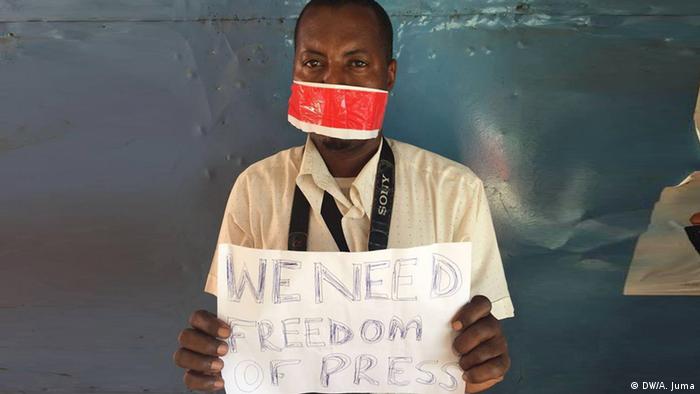
 On the occasion of World Press Day, the Syrian Network for Human Rights (SNHR) issued a report demanding the release of 422 citizen journalists in Syria, most of whom are detained by the Syrian regime, and are now threatened by the COVID-19 pandemic. The report notes that 707 citizen journalists have been killed since March 2011 to date, 78% of them by Syrian Regime forces. The 20-page report shows how the Syrian regime has been well aware of the danger posed by press freedom to its tyrannical rule for decades, abolishing all independent newspapers, and allowing only three official newspapers to be published, which are simply Syrian regime mouthpieces, dedicated to promoting, defending and justifying the regime’s actions. As the report further notes, it’s no exaggeration but simply a statement of fact to say that there is no such thing as a free press under the Syrian regime…..The report distributes the total death toll according to the main parties to the conflict, with the Syrian regime being responsible for the deaths of 551 citizen journalists, including five children, one woman, five foreign journalists, and 47 other citizen journalists due to torture in detention centers, while Russian forces were responsible for the deaths of 22 citizen journalists, and ISIS killed 64, including one child, two women, three foreign journalists, and three under torture. Hay’at Tahrir al Sham also killed eight, including two who died due to torture. Factions of the Armed Opposition were responsible for the deaths of 25 citizen journalists, including one child and three women.
 Hans Thoolen on Human Rights Defenders and their awards