Posts Tagged ‘Digital authoritarianism’

Why tech companies can no longer ignore their role in shaping politics and society

April 25, 2023
A small portrait of Olga Solovyeva

Olga Solovyeva of Advox, a Global Voices project dedicated to protecting freedom of expression online, posted on 19 April 2023 a piece statign that the impact of technology on politics cannot be ignored anymore. It is a long piece that I copy in its totality as it is worth reading and of great rlevance for human rights defenders:

Amidst the rising influence of technology in global politics, particularly in authoritarian regimes, the imperative to acknowledge the political accountability of tech corporations has become increasingly apparent. In recent years, the ramifications of disregarding ethical practices underscore the urgent need for tech companies to prioritize responsible conduct. The manipulation of information online, traffic rerouting, restricting access to the internet, and operating surveillance are some examples of how states can misuse technology. While technology was once expected to become a symbol of resistance and liberation, illiberal regimes now use it to produce various forms of digital unfreedom that extend into material reality. But how do we ensure that Big Tech contributes to democratic practices rather than political oppression?

Why do tech companies have political responsibility?

In an innovation driven sector like technology, legislation cannot keep pace with new developments. Often, neither users nor makers consider the negative consequences of a new technology until they have experienced them, and the industry is left struggling with the ramifications of harm and, as a consequence, its own expanding responsibilities.

In recent years, Big Tech companies have made headlines more often for political events than industry ones. First, the revelations of Cambridge Analytica’s user data harvesting and consequent interference in the 2016 U.S. presidential elections brought public attention to the issues of uncontrolled data collection. However, even since the issues have been flagged up, social networking sites fail to remove mis/disinformation or take action against incidents of violence. Further public discussion questioned social media providers for neglecting the impact of algorithmic feeds on teenagers and young adults, contributing to the mental health epidemic marching through the world. Tech companies are directly involved in international politics, as in Myanmar, where Facebook became the synonym for the internet and eventually a key platform to fuel hatred and incite genocide. There is also the case of Pegasus, an elaborate surveillance software developed by the Israel-based NSO Group, which was used to spy on political activists worldwide.

Digital activists from Global Voices Advox report on the growing use of digital technology for advancing authoritarian regimes worldwide, focusing, among others, on issues such as surveillance, mis/disinformation and access to the internet in different contexts. Autocrats use the whole scale of digital technologies available. In Russia, where the interest of the state lies in keeping opposition views from the information environment, there is a strong emphasis on disinformation and censorship. Tanzania and Sudan are known for internet shutdowns, while in Turkey and Morocco, cases of public digital surveillance have become more common.

At the same time, the tech sector does not necessarily play on the dark side only. Since the Russian invasion of Ukraine, Elon Musk’s SpaceX continued to support Starlink and provide internet access in Ukraine after the Russian invasion disrupted services. And yet, his recent purchase of Twitter brought multiple controversies, further empowering the attention economy of social media, which leads to fragmentation, polarisation and the decline of the public sphere. It’s impossible to separate tech companies from politics, and their role tends to cause controversy.

Good apple, bad apple

If you’re reading this text from your MacBook or iPhone, you probably have recognized the difference between living in a new information space with much less targeted advertising. In February 2022, Apple introduced its new privacy features allowing users to enable or block personal data tracing from the apps installed on the company’s devices, an innovation with significant political, social and economic consequences.

It’s crucial to understand the business decision that underpins the ongoing debate on personal data ethics and regulation. Protecting Apple users’ personal data means they will not be targeted with personally crafted advertising, and their data will not be used to predict consumer behaviour, which enables users’ right to privacy — one of the central categories of online service providers’ moral responsibilities and, essentially, a human right. This guarantee of the right attracts consumers to Apple products.

At the same time, this architectural decision caused significant distress to the market, as the stock prices of Meta and other social media companies plunged that day. Introducing an opt-out particularly for personal data collection means shrinking their potential advertising revenues as less data becomes available to develop personalized ads.

Apple made a policy-level decision, a milestone in the discussion on issues of user privacy regulation. Effectively, it is a subject of government concern on the intersection of information and business ethics, law and policy. This case illustrates the power of one company, which can be not just a game changer in the conversation on tech regulation but a shock for the industry, pushing other businesses to shift their business models and challenge the dynamics of Big Tech.

What is this decision for Apple? An enactment of an ethical stand signalling its political responsibility? An act of an excellent corporate citizen innovating to enable its customers’ rights for privacy? Or is it a marketing move to boost the sale of Apple products through engaging in a non-market activity? Regardless of the motivation, we have witnessed a tech company making a political change on an international level, since Apple products are in demand and sold worldwide.

At the same time, the company engages in other activities that may be seen as controversial. Along with other Big Tech companies, Apple increased its lobbying spending in 2022 as businesses face increased pressure from lawmakers raising antitrust concerns to curb the power of tech giants. Meanwhile, stepping outside the liberal democratic political climate, Apple faces decisions that challenge its political stand. In 2021 the company confirmed storing all personal data of Chinese users inside China-based data centres. China is known for using surveillance as a tool for political prosecution. Even though Apple claimed to maintain a high level of security, journalist sources report that the company handed over the keys to the government. The same year, Apple removed a smart voting app, one of the tools developed by the opposition in Russia to outplay electoral fraud. In both cases, the company’s decision-making had severe and direct political consequences, just like the decision to block personal data tracing on its devices. The only difference was the kind of pressure put on a company by the political system it was operating in.

Where does the political responsibility of Big Tech end?

In 2022 the world saw the global expansion of authoritarian rule, affecting developing states and established democracies. According to the 2022 Freedom House report, only 20 percent of the earth’s population live in a free country, while the remaining 80 percent are equally split between a partially free and not free world. The world is getting more authoritarian, and the political regime of a liberal democracy today is the exception rather than the rule.

Different autocracies pose challenging obstacles to tech companies, which remain the key producers of innovative technology. The role of the state defines the potential expectations of business, and their relationship patterns. In autocracies, political participation and public deliberation face repression through state authorities, and business is shaped by a political economy with the elements of state intervention. The state prevails, and it has more direct control over the company when needed, and the interference in economic life is ordinary and unpredictable. Autocrats are famous for censorship, propaganda, and interventions in electoral systems, all of which are delivered by technology provided by business.

One of the most common examples could be the situation in which a business organization has to obey the law of an authoritarian state to maintain political legitimacy, while the law itself may undermine the moral legitimacy of the company. The case of Apple in China is an example of this. However, it can have different consequences for companies in other countries. For instance, Verizon (the subsidiary that bought out Yahoo! in 2017) was sued for handing data to the Chinese government that led to political prosecution and the torture of dissidents. In authoritarian regimes, legislation is often designed to set out the specific requirements and processes for government agencies to obtain access to personal data, including surveillance purposes. Even though data handovers upon the request, e.g., the subpoena, are common for democratic regimes as well, the difference is how such data is further used and whether there are grounds for balancing it out with other institutional procedures.

Elaborating on the political responsibility of Big Tech

As the intersection of technology and politics continues to expand, grappling with the political implications of new creations becomes imperative for tech innovators. They must take proactive steps to develop robust political responsibility strategies while navigating authoritarian and other ethically fraught environments. Transparency is one way to meet these goals.

The practice of environmental social and governance (ESG) reporting and disclosure on ESG issues is an excellent example of how mandated transparency has led to accountability, and one that can be adapted to technological innovation. Openly revealing who has bought a certain technology will limit the ability of authoritarian governments to abuse it, for example. Additionally, integrating political responsibility as a part of responsible investment portfolios could represent a meaningful step forward to starting an open dialogue about tech, politics and society. This could be done by disclosing on direct political engagement of companies and adding additional transparency about contexts in which business operates.

Yet, such openness would be even more problematic — and potentially impossible — for tech companies that have been developed within the borders and hence the jurisdiction of authoritarian regimes. One of the most illustrative examples is the case of Yandex, a multinational company headquartered in Russia. The company has grown into a major tech player, often referred to as the “Russian Google.” Despite making an occasional compromise with the political system, the company kept the reputation of the most liberal company in the country while showing steady business growth.

However, when Russia invaded Ukraine in February 2022, Yandex faced significant pressure, legislative restrictions, international sanctions and criticism from the public. From the first weeks of the war, YandexNews, daily visited by 40 million people, has been indexing only stories from state-owned media, amplifying the narratives of the “special operation.” Abiding by the law became equivalent to contributing to univocal media coverage dominated by the Russian state.

The war became the most significant trigger that affected the company, as the share price of this prominent business lost over 75 percent of its value. Many company employees, including top management, resigned or left the country in protest of the war led by Russia. Personal sanctions were applied to the company’s CEO and founder. Under pressure, the company sold their media assets to a holding loyal to the state. In December, the company’s founder left Yandex Russia but remained the key shareholder.

Scenarios like these establish a controversial ground for businesses that must come to terms with an authoritarian state’s rules to keep their business going. Albert Hirshman’s “Exit, Voice, Loyalty: Responses to Decline in Firms, Organizations and States” suggests a framework of three strategies for responding to the perceived decrease in performance of an organization or a state. Using it as a guide to an organizational strategy, a tech company facing authoritarianism could leave, protest or comply.  However, as the suppression of public dissent usually characterizes authoritarianism, realistically, only two strategies are left: to stay or to go.

Nevertheless, both strategies bring further ethical concerns. With a lot said about the downsides of collaborating with autocrats, how ethical is it towards the employees and customers for a business to leave the declining state? Moreover, the business remains a profit-generating enterprise first of all, and very few countries in the world would make a market for a product so the company’s leadership could keep to the standard of political responsibility. We can’t all live in Norway, after all.

As the influence of tech companies continues to grow, it falls to civil society, journalists, tech users, and watchdog organisations to keep these firms accountable. Demanding transparency and collaborating to come up with new fair policies that could support tech companies in tough contexts could be one way forward. Meanwhile, it is important to educate the public and create incentives for consuming tech other than instant gratification. By working together, these stakeholders can start shaping a more ethical tech landscape, where common good carries more weight than corporate interest.
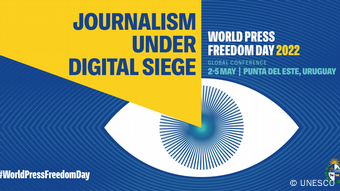
3 May 2022 – World Press Freedom Day: a lot to report

May 7, 2022

This day is one on which the world stands still to think about press freedom and journalists who are persecuted. I want to start with some quotes from an excellent piece in the Economist on 2 May by Indian reporter Rana Ayyub who wonders whether plaudits such as “brave” normalise their persecution:

When a journalist is killed or incarcerated or assassinated, obituaries scream bravado, editorials claim courage. Have such plaudits normalised the persecution of journalists? Why does a journalist have to be brave to report facts as they are? Why does she need to be persecuted for her story to reach the world? Consider Gauri Lankesh, Daphne Caruana Galizia and Jamal Khashoggi—all journalists with a profile, all brazenly killed in broad daylight. Their murders dominated the front pages of international publications. But their killers, men in power, remain unquestioned not just by the authorities but often by publishers and editors who develop a comfortable amnesia when meeting those in power. They do not want to lose access to them.

“Journalists are the new enemy of the state; we are going through one of the toughest phases in the history of the profession. We document the truth at a time marked both by a voracious demand for news and by the persecution of minorities, genocide and war crimes. We witness savage attacks on minorities in India, Myanmar, China, Palestine or Ukraine even as bumbling editors still frame arguments and narratives through the prism of “‘both sides”. For example attacks on Palestinians, even during Ramadan, are often referred to as “clashes”. Despite one side having grenades thrown at them, and pelting stones in defence, the lens of the mainstream media remains firmly aligned with the oppressor. In India attacks on Muslims by Hindu nationalists often are reported as “riots” or “clashes”, too. The distinction between oppressor and oppressed can be blurred as convenient“….

Journalism was never a nine-to-five profession. We knew it was an unconventional calling, and one where we might not leave the office for days, or where our families might have no communication from us as we report on crucial investigations, wars and undercover operations. Journalism schools taught us the ethics of our profession, but they did not warn us about nervous breakdowns, or about spending more time in courtrooms than newsrooms. We owe it to the next generation of journalists to create a safer environment in which to work. They should fear only the distortion of truth, never reporting the truth itself.

At the Global Conference for World Press Freedom Day, May 2-5 in Uruguay, DW Akademie hosted a panel on digital authoritarianism. International media experts (Nanjala Nyabola, Laís Martins, Vladimir Cortés Roshdestvensky and Annie Zaman) discussed fighting disinformation and censorship.

Digital authoritarianism – when governments assert power and control information using digital tools and the internet – disrupts journalism and can endanger reporters and human rights defenders.

 UNESCO Logo World Press Freedom Day Conference 2022, Uruguay

Regardless of recognition of press freedom under international legislations and under state constitutional provisions, the attack on journalists and ultimately on access to information remains a growing concern. According to the UN, 55 journalists were killed in 2021, while 62 of them were killed in 2020. A number of global networks of journalists have led the work of advocating press freedom and provide a platform for journalists to fight such state and non-state actors in unison.

Mid-day.com lists some of the major networks: https://www.mid-day.com/amp/lifestyle/culture/article/press-freedom-day-five-global-journalist-networks-that-advocate-press-freedom-23225560

Network of Women in Media, India (NWMI)

The NWMI is a network of over 600 women journalists across India providing a space or a forum for women in Indian media to come together and share information, exchange ideas, discuss media ethics and promote gender equality in media. The collective aims to provide a holistic system to support women journalists in terms of space, resources and access to justice in case of rights violations. It also works for getting recognition, fair pay and decent working conditions for women independent journalists in the country. https://nwmindia.org/

International Federation of Journalists (IFJ)

IFJ is a Paris-based organisation representing as many as 6,00,000 media professionals across 140 countries. The collective works to strengthen labour rights of journalists and advocates for their fair pay, decent working conditions and gender equality in media recruitment at a global level. One can access records and data documented by IFJ through their campaigns focusing on violence against journalists, impunity to the perpetrators and countries where media freedom is curbed through state laws or private entities.

https://www.ifj.org/who/about-ifj.html

Reporters Sans Frontiers or Reporters without Borders (RSF)

With 115 correspondents across the world, RWB is a non-profit organisation started by four journalists and headquartered in Paris. RWB is known for its annual Press Freedom Index, one of the most credible indicators of the status of media freedom in over 180 countries of the world. In addition to this, RWB also tracks censorship activities and various kinds of abuse that journalists are subjected to and communicates the information in five different languages. RWB works in cooperation with international rights based organisations to further recommendations to the state in order to provide legal and material resources for journalists and advocate their safety as media personnel.

https://rsf.org/en/who-are-we

Committee to Protect Journalists (CPJ)

CPJ is known for its Global Impunity Index analysing the state impunity provided to murderers of journalists in democracies as well as in war-torn countries. As an independent and non-profit organisation based in New York City, CPJ documents attacks on journalists and the subsequent press freedom violations and works with the state actors to provide rapid response assistance, legal support and other resources to journalists in danger.

https://cpj.org/news/

Article 19

Article 19 mainly works to improve access to information, protect the civic spaces to discuss and dissent and strengthen human rights in the digital space too. Its key areas of work include information, censorship, gender and sexuality, freedom of religion and belief, equality and hate speech and media freedom among others. In line with its objectives to create a safe space for free flow of information, the organisation channelises its resources for the protection of journalists and human rights defenders. Article 19’s annual Global Expression Report and GxR metric provides a detailed picture of the condition of freedom of expression across the world. https://www.article19.org/about-us/

Media Defence

Media Defence’s focus lies on providing legal advice, support and resources to journalists, independent journalists and citizen journalists, who are under threat for their reportage and enable them to carry out reporting on issues of larger public interest. An international human rights organisation, in addition to documenting cases, it also intervenes to provide legal recourse to the journalists undergoing trial. https://www.mediadefence.org/legal-resources/

And of course – marking World Press Freedom Day, Reporters Without Borders (RSF) published their 2022 World Press Freedom Index that indicates a two-fold increase in polarization exacerbated by information disorder — that is, media polarization fuelling divisions within countries, as well as polarization between countries at the international level. See: https://rsf.org/en/index

Within democratic societies, divisions are growing as a result of the spread of opinion media following the ‘Fox News model’ and the spread of disinformation circuits that are amplified by the way social media functions,” the watchdog said in a statement.

At the same time, the disparity between open societies and autocratic governments that dominate their media and online platforms while waging propaganda campaigns against democracies is eroding democratic institutions around the world. Therefore, the polarization on different levels is fuelling increased tensions, according to RSF.

Assessing the state of journalism in 180 countries and territories worldwide, the World Press Freedom Index showed how the crisis in the world reflects on the media.

See also: https://humanrightsdefenders.blog/2020/05/03/world-press-freedom-day-2020-a-small-selection-of-cases/ and https://humanrightsdefenders.blog/2020/05/04/world-press-freedom-day-2020-a-few-more-links/

https://www.economist.com/by-invitation/2022/05/02/rana-ayyub-says-we-should-stop-calling-journalists-brave

https://www.dw.com/en/world-press-freedom-day-panel-how-to-counter-digital-authoritarianism/a-61554434

https://www.mid-day.com/amp/lifestyle/culture/article/press-freedom-day-five-global-journalist-networks-that-advocate-press-freedom-23225560

https://www.occrp.org/en/daily/16279-2022-world-press-freedom-index-warns-on-news-chaos-media-polarization

The Unfreedom Monitor: Global Voices adds to the monitoring toolbox

April 5, 2022

On 5 April 2022 Nanjala Nyabola, Advox Director at Global Voices introduced The Unfreedom Monitor, a methodology for tracking digital authoritarianism worldwide

The Unfreedom Monitor is an Advox research initiative that examines the growing phenomenon of networked authoritarianism or digital authoritarianism. “Digital authoritarianism” describes the use of technology to advance repressive political interests. It is not purely confined to authoritarian regimes. Democratic states also use and sell advanced technology to track and/or surveil citizens, spread mis-/disinformation, and disempower citizens’ civic and political participation. Nor is it only states that perpetrate digital authoritarianism—corporations located in democratic countries are key suppliers of the technology that is used. 

The Unfreedom Monitor

Authoritarian regimes have long had a complicated relationship with media and communications technologies. The Unfreedom Monitor is a Global Voices Advox research initiative examining the growing phenomenon of networked authoritarianism or digital authoritarianism.

Download a PDF of the briefing document.

..One major aim of this project is to provide richer context that transcends unique national or thematic situations. It would be an omission to focus solely on the internet and ignore, for example, the effects of the mechanisms of growing repression on press freedom and human rights. In the countries we studied, we found a strong correlation between declining press freedom and growing digital authoritarianism. Information, after all, is the raw material of governance, and both online spaces and traditional media serve the important function of making information available to people and communities to enable them to make independent evaluations of their governments. The impetus to control information on the internet is directly connected to the impetus to control information shared by the press. 

The briefing document provides an overview of key developments in digital authoritarianism in 11 countries and explains the theoretical framework and methodology behind The Unfreedom Monitor project. The document also provides a basis for expanding this research to other countries to deepen our understanding of digital authoritarianism globally, as well as its crucial implications for the future. The preliminary sample of 11 countries was chosen to reflect a range of factors: system of government, approach to human rights (including rankings in indexes), and corporate relations. The countries are: Brazil, Ecuador, Egypt, India, Morocco, Myanmar, Russia, Sudan, Tanzania, Turkey, and Zimbabwe.  

Desk research supplemented qualitative study of a dataset comprising media items exploring issues, events, actors, narrative frames, and responses, to identify trends and patterns of digital authoritarianism. We also conducted weekly seminars with the research team to gain a sense of any cross-cutting themes and commonalities that emerged. One interesting outcome was finding that while clients and their interests may be varied, only a handful of companies—many based in nominally democratic countries—were selling the technology that makes some digital authoritarian practices possible.

Another four researchers also worked with four cross-cutting themes concerning digital authoritarianism to develop an approach that can be used across contexts. These themes were: data governance, speech, access, and information. The tendency with internet research is to think about ideas or development in thematic isolation, and we encouraged this cohort of researchers to think both broadly and deeply about what unites all these separate ideas. 

The report finds that digital authoritarianism is not confined to authoritarian states. Rather, it is a culture—of increasing executive power, legislation, and global capital flows—that allows the state to interfere in citizens’ lives and to stifle or frustrate civic engagement. There is no single predictive factor, but digital authoritarianism is closely related to the contraction of press freedom, and resistance to political transitions. Moreover, it is a transnational process, and the availability of technology in one part of the world will eventually have political consequences in another.

This adds to existing efforts such as: https://humanrightsdefenders.blog/2021/10/12/report-freedom-on-the-net-2021/

https://humanrightsdefenders.blog/2021/04/24/world-press-freedom-index-2021-is-out/

https://humanrightsdefenders.blog/2021/12/26/to-counter-domestic-extremism-human-rights-first-launches-pyrra/

https://globalvoices.org/2022/04/05/introducing-the-unfreedom-monitor-a-new-project-of-global-voices-advox/